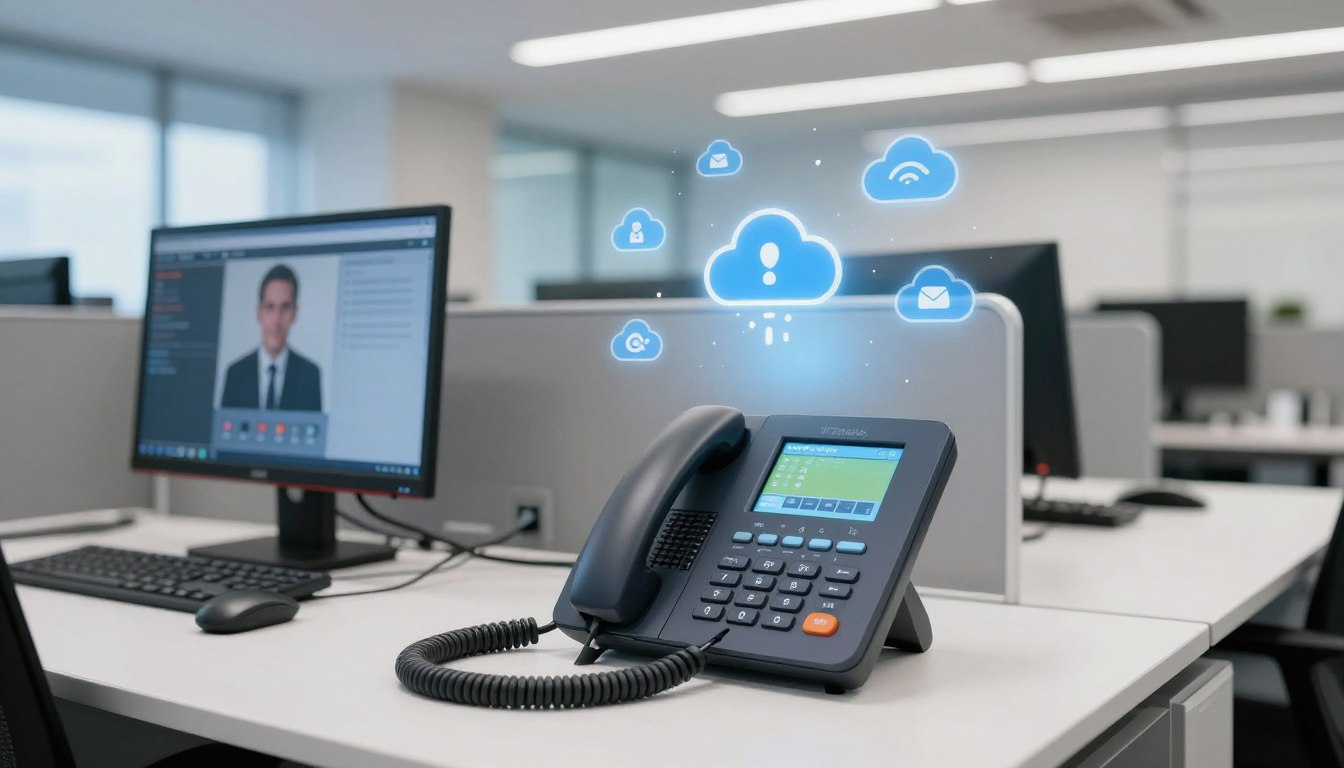
Business communication in Singapore has transformed dramatically over the past few years. Traditional phone systems that served companies for decades are reaching their end of life. Office communication now demands more than just voice calls.
Companies need video conferencing capabilities. Teams require mobile flexibility. Remote work has become standard practice. These changes make ip phone systems essential for modern businesses.
The shift from analog to digital happened gradually. But the move to voice internet protocol technology accelerates every month. Singapore businesses recognize that staying competitive means upgrading their communication infrastructure.
Ready to Upgrade Your Office Communication?
I-Weblogic has been installing phone systems since 2003. We’ve helped hundreds of Singapore businesses transition from analog to IP phone systems since early 2020. Get expert guidance for your seamless migration today.
WhatsApp Us NowCall +65 8782 7613
What Are IP Phone Systems?
An ip phone system uses internet protocol to transmit voice communications over data networks. Unlike traditional telephone lines that require dedicated copper wiring, voip phone systems convert voice into digital packets. These packets travel through your existing internet connection.
The technology behind voice internet protocol has matured significantly. Modern voip systems deliver crystal-clear call quality. They offer features that traditional phone systems cannot match.
A sip ip phone connects directly to your network infrastructure. The session initiation protocol handles call setup and management. This standardized approach ensures compatibility across different devices and providers.

How Voice Internet Protocol Works
Voice internet protocol technology converts analog audio signals into digital data. Your phone system captures your voice through a microphone. The system then compresses this audio using specialized codecs.
These compressed packets travel across your internet connection. They reach the recipient’s phone through the same data network that handles your email and web browsing. The receiving device decompresses the packets back into audio.
This process happens in milliseconds. Modern voip phone systems include quality of service features. These features prioritize voice traffic over other data to ensure smooth conversations.
Key Components of IP Phone Systems
Every voip system includes several essential components. Understanding these parts helps you make informed decisions about your business communication needs.
IP Phones
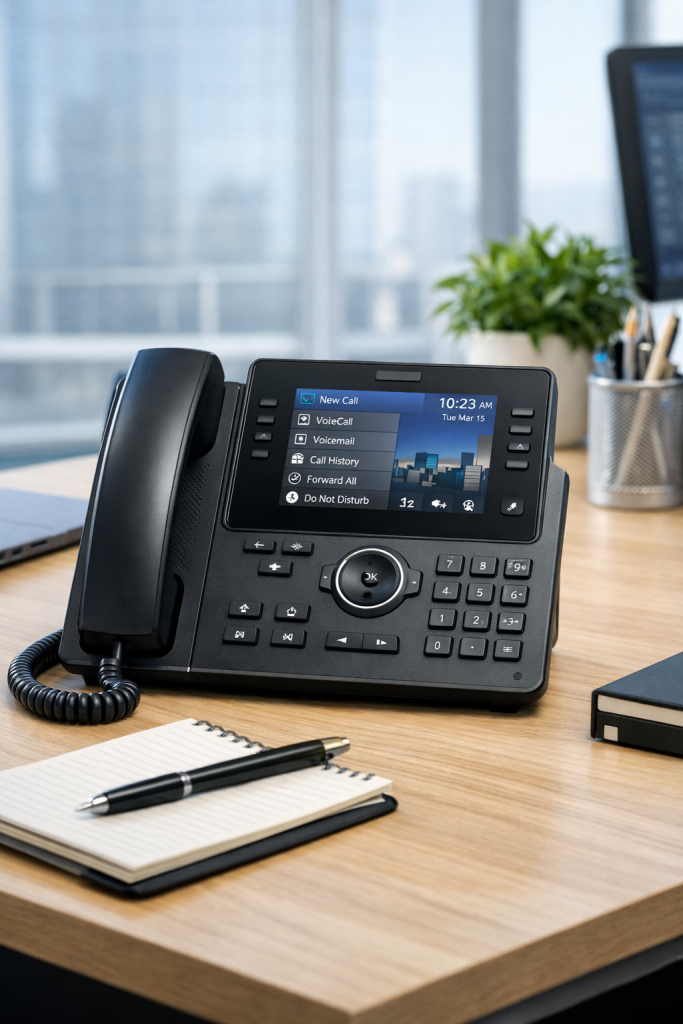
Physical devices that connect to your network. These voip phones include displays, keypads, and network ports. Many models offer touchscreens and video capabilities.
- Desktop ip phone units with ethernet connections
- Wireless voip phones for mobility
- Softphone applications for computers
- Mobile apps that turn smartphones into business phones
PBX Server
The private branch exchange manages call routing and features. Modern systems use cloud-based servers or on-premise solutions depending on business requirements.
- Call routing and forwarding logic
- Voicemail systems and storage
- Auto-attendant functionality
- Conference bridge capabilities
Network Infrastructure
Your internet connection and local network carry all voice traffic. Proper configuration ensures reliable service and excellent call quality throughout your organization.
- High-speed internet connection with sufficient bandwidth
- Managed network switches with quality of service
- Power over Ethernet for phone power delivery
- Backup internet connection for redundancy
Service Provider
Your voip service provider connects your system to the public telephone network. They provide phone numbers and manage external call routing.
- SIP trunking services for external calls
- Local Singapore phone numbers
- International calling capabilities
- Technical support and maintenance
Benefits of IP Phone Systems for Singapore Businesses
Modern businesses choose voip phone systems for compelling reasons. The advantages extend far beyond simple cost savings. These systems transform how teams communicate and collaborate.

Significant Cost Savings
Traditional phone systems require substantial upfront investment. You need expensive PBX hardware, dedicated phone lines, and specialized installation. The cost per line adds up quickly as your business grows.
An ip phone system dramatically reduces these expenses. You eliminate monthly charges for multiple phone lines. Long-distance and international calls cost a fraction of traditional rates.
Maintenance costs drop significantly. Cloud voip systems require no on-site hardware to maintain. Your service provider handles updates and technical support remotely.
The average Singapore business saves between thirty and fifty percent on communication costs. Larger organizations with international operations see even greater savings. These cost reductions directly impact your bottom line.
Unlimited Scalability
Business growth creates communication challenges with traditional systems. Adding new phone lines requires physical installation. You need additional hardware and complex configuration.
Voip phone systems scale effortlessly. Adding new users takes minutes instead of days. Your administrator simply provisions new accounts through a web interface.
This flexibility supports business growth without major infrastructure investments. You can expand to new offices across Singapore or internationally. Remote workers receive the same phone system features as office staff.
Seasonal businesses benefit tremendously. Add temporary lines during busy periods. Remove them when demand decreases. You pay only for what you need.
Advanced Features That Traditional Systems Cannot Match
Modern voice internet protocol systems include sophisticated capabilities. These features improve productivity and enhance customer service significantly.
- Video conferencing integrated with voice calls
- Screen sharing during conversations
- Call recording for quality and training
- Voicemail to email transcription
- Auto-attendant with intelligent routing
- Call queuing and distribution
- Mobile apps with full system access
- Seamless call transfer between devices
- Find me follow me call routing
- Presence indicators showing availability
- Hot desking for flexible workspaces
- Location-independent operation
- Detailed call analytics and reporting
- Real-time dashboard monitoring
- Customer interaction tracking
- Performance metrics for teams
- Integration with CRM systems
- Automated quality monitoring
Perfect for Remote and Hybrid Work
The pandemic changed workplace expectations permanently. Employees now expect flexibility to work from anywhere. Traditional phone systems tie workers to physical office locations.
A voip phone transforms remote work capabilities. Your team members access the same phone system features from home. Clients cannot tell whether employees work from the office or remotely.
This flexibility improves employee satisfaction. It expands your talent pool beyond Singapore. You can hire the best candidates regardless of location.
Business continuity improves dramatically. Natural disasters or office closures no longer disrupt communication. Your team stays connected and productive from any location with internet access.
IP Phone vs Digital Phone: Understanding the Critical Differences
Many Singapore businesses still operate traditional digital phone systems. These systems served companies well for decades. But technology has evolved significantly. Understanding the differences helps you make informed upgrade decisions.

Technology Foundation
Digital phones use circuit-switched technology. They require dedicated phone lines from your telecommunications provider. Each phone line represents a fixed capacity connection.
These systems depend on physical infrastructure. Copper wiring connects phones to a central PBX cabinet. Adding capacity means installing more physical lines and hardware.
An ip phone operates completely differently. It uses packet-switched technology over data networks. Your existing internet connection carries all voice traffic. No dedicated phone lines are necessary.
This fundamental difference creates numerous advantages. Voip systems use bandwidth more efficiently. They share network capacity dynamically based on demand.
End of Life for Traditional Systems
Telecommunications providers worldwide are decommissioning traditional phone networks. Singapore follows this global trend. The public switched telephone network faces planned obsolescence.
Many manufacturers have discontinued digital phone system production. Replacement parts become scarce. Technical support becomes difficult to find.
This end-of-life situation creates risks for businesses. System failures become harder to repair. Finding technicians familiar with old technology grows challenging.
The cost of maintaining legacy systems increases yearly. Parts cost more. Service calls take longer. Eventually, continued operation becomes impractical.
Comprehensive Comparison Table
| Feature | IP Phone Systems | Digital Phone Systems |
| Technology | Internet Protocol over data networks | Circuit-switched dedicated lines |
| Infrastructure Required | Existing internet connection | Dedicated copper phone lines |
| Installation Cost | Low to moderate | High initial investment |
| Monthly Operating Cost | Significantly lower | Higher with per-line charges |
| Scalability | Add users instantly through software | Requires physical line installation |
| Call Quality | Excellent with proper network setup | Consistently good but basic |
| Remote Work Support | Full functionality anywhere | Limited to office location |
| Video Capabilities | Integrated video conferencing | Not available |
| Mobile Integration | Native mobile apps included | Not possible |
| Advanced Features | Voicemail to email, call analytics, CRM integration, auto-attendant | Basic voicemail, limited features |
| Maintenance | Remote updates, cloud-managed | On-site service required |
| Business Continuity | Works from any location with internet | Fails if office is inaccessible |
| International Calls | Very low cost, often included | Expensive per-minute charges |
| Future Support | Ongoing development and improvement | Being phased out worldwide |
| Integration Options | Connects with modern business software | Very limited integration |
Why Businesses Migrate to IP Phone Systems
The comparison makes migration benefits clear. But specific business drivers accelerate the transition to voip technology.
Cost pressure affects every organization. Communication expenses consume significant budget. Voip systems reduce these costs immediately. The savings fund other business priorities.
Workforce expectations have changed permanently. Employees demand work flexibility. Traditional phone systems cannot support distributed teams effectively. An ip phone system enables seamless remote work.
Customer service requirements grow more sophisticated. Clients expect video options. They want callback features and intelligent routing. Modern voip phone systems deliver these capabilities.
Technology integration drives business efficiency. Your phone system should connect with customer databases. It should integrate with help desk software. Digital phone systems cannot offer these integrations.
Future-proofing protects your investment. Traditional systems face certain obsolescence. Voip technology continues evolving and improving. You invest in communication infrastructure that grows with your business.
Concerned About Migration Complexity?
I-Weblogic specializes in seamless transitions from digital to IP phone systems. We handle every detail including number porting, staff training, and post-installation support. Your business communication continues without disruption.
Get Free Migration ConsultationCall +65 8782 7613
Understanding SIP IP Phone Technology
Session Initiation Protocol forms the foundation of modern business communication. This standard enables different systems and devices to communicate effectively. Understanding sip ip phone technology helps you appreciate system capabilities.

What is SIP Technology?
Session Initiation Protocol is an application-layer protocol. It handles signaling and control for multimedia communication sessions. These sessions include voice calls, video conferences, and instant messaging.
A sip ip phone uses this protocol to establish connections. When you make a call, SIP handles the setup process. It negotiates call parameters between devices. It manages the call throughout its duration.
The protocol works independently from the actual media transmission. SIP establishes the connection. Other protocols like RTP carry the actual voice data. This separation provides flexibility and efficiency.
Benefits of SIP for Business Communication
SIP technology offers numerous advantages for office connectivity. The standardized approach ensures compatibility across different manufacturers and systems.
Your voip phone from one vendor works seamlessly with systems from others. This interoperability prevents vendor lock-in. You maintain flexibility in choosing equipment and service providers.
SIP enables advanced features that businesses need. Presence information shows colleague availability. Instant messaging integrates with voice calls. Video conferences connect seamlessly with phone conversations.
The protocol supports unified communication strategies. All communication channels work together cohesively. Your team accesses everything through a single interface.
SIP Trunking Explained
SIP trunking replaces traditional phone lines with virtual connections. Your business connects to the public telephone network through your internet connection. No physical phone lines are necessary.
This approach reduces costs significantly. You pay for concurrent call capacity rather than individual lines. Most businesses need far fewer concurrent calls than total phone numbers.
Scalability becomes effortless with SIP trunking. Add capacity instantly without physical installation. Scale up during busy periods and down during slow times.
Disaster recovery improves dramatically. Route calls anywhere if your office becomes inaccessible. Your phone system continues functioning from any location.
Leading IP Phone Hardware for Singapore Businesses
Selecting quality hardware ensures reliable communication. Two manufacturers dominate the Singapore business phone market. Both offer excellent options for different business needs and budgets.

Grandstream IP Phones: Quality and Value
Grandstream provides reliable voip phones at competitive prices. The company offers comprehensive product lines for every business requirement. Small startups to large enterprises find suitable models.
These phones deliver excellent call quality. They support modern voice codecs for clear conversations. The build quality ensures years of reliable service.
Grandstream devices integrate seamlessly with various voip systems. They support standard SIP protocol implementation. This compatibility provides deployment flexibility.
Entry-Level Models

Basic voip phone models suit small businesses and home offices. These devices provide essential calling features without unnecessary complexity.
- Two to four SIP accounts support
- HD audio quality for clear calls
- Power over Ethernet capability
- Affordable price point under two hundred dollars
Mid-Range Business Phones

Popular models for general business use. These phones balance features with affordability for growing organizations.
- Color LCD displays with intuitive interfaces
- Six to twelve line keys for multiple lines
- Bluetooth headset compatibility
- Gigabit Ethernet pass-through
Executive Solutions

Premium devices for executives and power users. These models include video capabilities and extensive feature sets.
- Large touchscreen displays for easy navigation
- Built-in video conferencing cameras
- Android operating system for apps
- Premium audio with noise cancellation
Avaya IP Phones: Enterprise Grade Performance
Avaya ip phone models represent enterprise-grade communication devices. The brand carries strong reputation in corporate environments. Large organizations trust Avaya for mission-critical communication.
These phones deliver exceptional reliability. They undergo rigorous testing before deployment. The build quality exceeds consumer-grade alternatives significantly.
Advanced features support complex business requirements. Avaya devices integrate deeply with unified communication platforms. They provide sophisticated call handling capabilities.
J Series Phones

Standard business phones for general users. These models provide reliable performance for everyday communication needs.
- High-definition voice quality
- Programmable feature keys
- Built-in gigabit Ethernet switches
- Energy-efficient design
9600 Series Premium

Premium devices for demanding users. These phones suit managers and customer service professionals.
- Large color touchscreen interfaces
- Extensive line appearance support
- Advanced call center features
- Superior audio quality with wideband codecs
Conference Phones

Specialized devices for meeting rooms and conference spaces. These phones optimize group communication scenarios.
- Multiple omnidirectional microphones
- High-quality speakers for room coverage
- Wireless connectivity options
- Recording capabilities built in
Choosing the Right Hardware for Your Business
Several factors influence phone hardware selection. Understanding these considerations helps you make appropriate choices for your organization.
Budget constraints affect every purchasing decision. Grandstream offers excellent value for cost-conscious businesses. Avaya ip phone models suit organizations requiring premium features and support.
User requirements vary across your organization. Reception staff need different features than executives. Sales teams have different needs than accounting departments.
Integration requirements matter significantly. Ensure chosen devices work with your voip system. Verify compatibility before purchasing any hardware.
Future needs deserve consideration during selection. Choose devices that can grow with your business. Expandable systems provide better long-term value.
Key Considerations for IP Phone System Implementation
Successful deployment requires careful planning. Several technical and operational factors determine implementation success. Understanding these elements prevents common problems.

Network Infrastructure Requirements
Your network infrastructure determines voip system performance. Inadequate networks create call quality problems. Proper setup ensures excellent communication experiences.
Internet connection speed and reliability matter tremendously. Each concurrent call requires specific bandwidth. Calculate total capacity based on maximum simultaneous calls.
Quality of service configuration prioritizes voice traffic. Network switches must support these features. Proper configuration prevents voice quality degradation during high data usage.
Power over Ethernet simplifies phone installation. It eliminates separate power adapters. Network switches with PoE capability power phones through ethernet cables.
Call Quality Optimization
Excellent call quality requires attention to multiple factors. Network configuration plays the primary role. But several other elements contribute to voice clarity.
Codec selection affects both quality and bandwidth usage. Modern codecs provide excellent quality with minimal bandwidth. Your system should support wideband audio for superior clarity.
Network jitter and packet loss destroy call quality. Quality of service features minimize these problems. Regular network monitoring identifies issues before they affect users.
Acoustic environment influences perceived quality. Office noise cancellation features help significantly. Choose phones with advanced audio processing capabilities.
Security Considerations
Voip systems require robust security measures. Voice traffic contains sensitive business information. Proper protection prevents unauthorized access and eavesdropping.
Encryption protects voice communications from interception. Ensure your system supports transport layer security. All signaling and media should use encrypted channels.
Network segmentation isolates voice traffic from other data. Virtual LANs provide this separation. Dedicated voice VLANs improve both security and performance.
Strong authentication prevents unauthorized system access. Implement complex passwords and regular updates. Consider two-factor authentication for administrative access.
Training and Adoption
Technology succeeds only when users adopt it effectively. Comprehensive training ensures smooth transition. Your team needs to understand new features and capabilities.
User documentation should cover all common tasks. Provide quick reference guides for daily operations. Include troubleshooting steps for typical problems.
Ongoing support helps users adjust to new systems. Designate internal champions who understand the technology. These people assist colleagues and answer questions.
Change management facilitates successful adoption. Communicate benefits clearly to all stakeholders. Address concerns proactively during the transition period.
Selecting the Right Service Provider in Singapore
Your service provider relationship significantly impacts system success. The right partner ensures smooth operation and reliable support. Several factors distinguish excellent providers from mediocre ones.

Technical Expertise and Experience
Provider technical knowledge determines implementation success. Experienced teams identify potential problems early. They design solutions that work reliably from day one.
Local Singapore experience matters tremendously. Providers familiar with local infrastructure understand regional challenges. They know which solutions work best in specific situations.
Manufacturer certifications demonstrate technical competence. Certified technicians receive ongoing training. They stay current with latest technology developments.
Service and Support Quality
Responsive support keeps your business running smoothly. Communication problems require immediate attention. Your provider should offer multiple support channels.
Response time commitments provide accountability. Service level agreements define expected response times. Clear escalation procedures ensure serious issues receive priority attention.
Local support presence enables faster problem resolution. Singapore-based technicians can visit your location when necessary. Remote support handles most issues effectively.
Comprehensive Solution Offerings
Full-service providers deliver end-to-end solutions. They handle equipment supply, installation, configuration, and ongoing support. This comprehensive approach simplifies vendor management.
Integration capabilities extend system value. Your phone system should connect with other business applications. Experienced providers design these integrations effectively.
Migration services ease transition from legacy systems. Providers should handle number porting and user training. Seamless cutover minimizes business disruption.
Request Your Free IP Phone System Consultation
Complete this form to schedule a comprehensive consultation with our communication experts. We’ll assess your current setup, discuss your requirements, and design the perfect solution for your business. Full Name *Email Address *Phone Number *Company Name *Number of EmployeesTell Us About Your Communication Needs
Include details about your current system, pain points, and desired featuresSubmit Consultation Request
Frequently Asked Questions About IP Phone Systems
How much does an IP phone system cost for a small business in Singapore?
Costs vary based on business size and requirements. Small businesses with five to ten users typically spend between two thousand and five thousand dollars for initial setup. This includes basic ip phone hardware and installation services.
Monthly operating costs range from thirty to sixty dollars per user. This covers voip service provider fees, SIP trunking charges, and system maintenance. Most businesses save thirty to fifty percent compared to traditional phone systems.
Cloud-based voip systems require lower upfront investment. You avoid purchasing expensive on-premise PBX hardware. Monthly subscription fees include all system features and updates.
Can I keep my existing phone numbers when switching to VoIP?
Yes, number porting transfers your existing phone numbers to your new voip system. This process maintains business continuity and customer relationships. Clients continue calling the same numbers they know.
Number porting typically takes seven to fourteen business days in Singapore. Your service provider coordinates with your current telecommunications company. The actual cutover happens quickly with minimal disruption.
Both local Singapore numbers and toll-free numbers can be ported. International numbers may have different requirements. Discuss your specific situation with your voip service provider.
What internet speed do I need for reliable VoIP performance?
Each concurrent call requires approximately one hundred kilobits per second of bandwidth. Calculate total requirements based on maximum simultaneous calls. Add twenty percent buffer for optimal performance.
A business with ten concurrent calls needs at least one point two megabits per second dedicated to voice. Your total internet connection should be significantly faster. This ensures voice quality during high data usage periods.
Connection reliability matters more than raw speed. Stable internet connection with low jitter delivers better call quality. Consider backup internet connection for business continuity.
Do IP phones work during power outages?
Power over Ethernet phones require network power to function. Your network switches and internet equipment need backup power. Uninterruptible power supply units provide this protection.
Battery backups keep essential communication running during outages. Size your UPS based on desired runtime and equipment power consumption. Four-hour runtime typically suffices for most situations.
Mobile voip apps provide additional redundancy. Employees can make receive calls using smartphones during infrastructure failures. Cloud-based systems enable operation from any location with internet.
How long does IP phone system installation take?
Installation timeline depends on business size and complexity. Small offices with fewer than ten phones typically complete setup in one to two days. This includes equipment installation, configuration, and basic user training.
Larger deployments with multiple locations require more time. Plan two to four weeks for comprehensive implementations. This allows proper planning, network preparation, and thorough testing.
Cloud-based voip systems deploy faster than on-premise solutions. No local server installation is necessary. Users can begin making calls within hours of receiving devices.
What is the difference between a VoIP phone and a SIP phone?
A voip phone is any device that makes calls over internet protocol networks. This broad category includes various technologies and protocols. The term describes the general concept of internet-based telephony.
A sip ip phone specifically uses Session Initiation Protocol for call signaling. SIP has become the dominant standard for voip communication. Most modern business phone systems use SIP exclusively.
In practical terms, the distinction matters little for end users. When people discuss business voip phones today, they typically mean SIP-compatible devices. These phones work with standard voip systems and providers.
Can IP phone systems integrate with CRM and other business software?
Modern voip systems offer extensive integration capabilities. They connect with customer relationship management platforms, help desk systems, and other business applications. These integrations significantly improve productivity.
Common integrations include screen pop functionality. Customer information appears automatically when calls arrive. Click-to-dial features enable calling directly from business applications. Call logging captures all communication history.
Integration complexity varies by platform. Popular CRM systems like Salesforce offer pre-built connectors. Custom applications may require API development. Discuss integration requirements with your service provider during planning.
Is call quality better with IP phones or traditional digital phones?
Properly configured ip phone systems deliver superior call quality compared to traditional digital phones. Modern voip technology supports high-definition audio codecs. These codecs provide wider frequency range and clearer sound.
Call quality depends heavily on network infrastructure. Adequate bandwidth and quality of service configuration ensure excellent performance. Poor network setup creates quality problems regardless of phone technology.
Advanced features enhance perceived quality further. Noise cancellation removes background sounds. Echo suppression eliminates feedback. Automatic gain control maintains consistent volume levels throughout conversations.
Conclusion: Modernize Your Business Communication Today
Office communication technology has reached a critical transition point. Traditional digital phone systems face inevitable obsolescence. Forward-thinking Singapore businesses are migrating to ip phone systems now.
The benefits extend far beyond simple cost savings. Modern voip technology enables remote work flexibility. It provides advanced features that transform customer service. It integrates with business applications to boost productivity.

The technical comparison between ip phone vs digital phone reveals clear advantages. Voip systems offer superior scalability and flexibility. They cost less to operate and maintain. They support business continuity during disruptions.
Hardware options from manufacturers like Grandstream and Avaya provide excellent choices. These devices deliver reliable performance at various price points. Quality equipment ensures years of dependable service.
Implementation requires careful planning and expert execution. Network infrastructure must support voice traffic properly. Security measures protect sensitive communications. User training ensures successful adoption.
Selecting the right service provider makes all the difference. I-Weblogic brings over twenty years of phone system installation experience. We understand Singapore business requirements intimately. Our team has successfully migrated hundreds of companies from analog and digital systems to modern voip technology since early 2020.
The time to upgrade is now. Waiting creates unnecessary risks as traditional systems age. Parts become scarce and support diminishes. Migration complexity increases as technology gaps widen.
Start your communication modernization journey today. A free consultation identifies your specific requirements. We design solutions that fit your business perfectly. Implementation happens smoothly with minimal disruption.
Transform Your Business Communication with Expert Guidance
I-Weblogic has been Singapore’s trusted phone system partner since 2003. We specialize in seamless migrations from outdated systems to modern IP phone technology. Get your free consultation today and discover how easy upgrading can be.
WhatsApp +65 8782 7613Call Now
I-Weblogic Pte Ltd – Your Trusted Communication Technology Partner Since 2003