A lost key is rarely just a lost key. It can mean an uncontrolled entrance, an expensive rekeying exercise, and no clear way to know who may have entered a restricted area. For businesses managing staff movement, visitors, equipment, and multiple locations, the question is practical: what does access control do that traditional locks cannot?
Access control manages who can enter a door, gate, room, or designated area, when they can enter, and in many cases, records the event. It replaces a single physical key with a controlled system of credentials, readers, locks, software, and policies. The result is more than a secured door. It is a workplace security tool that gives managers measurable control without making day-to-day access difficult for employees.
What Does Access Control Do in a Business Setting?
At its core, an access control system makes an authorization decision before a door opens. When an employee presents a card, fob, mobile credential, PIN, or biometric identifier, the system checks whether that person has permission to enter that particular area at that time. If the answer is yes, it releases the electronic lock. If not, the door remains secured and the attempted entry can be recorded.
This matters because access should not be the same for everyone. A receptionist may need access to the front office during business hours. A network administrator may need access to the server room at any time. A contractor may require temporary access to one work area for two days, but nowhere else.
Traditional keys cannot apply these distinctions easily. Once copied or issued, a key can be used until it is returned, recovered, or the lock is changed. Access control allows permissions to be added, changed, or removed centrally. When an employee leaves or a contractor completes a project, their credential can be disabled without replacing door hardware across the site.
The Four Business Functions of Access Control
1. It protects people, premises, and sensitive assets
The most visible role of access control is preventing unauthorized entry. Controlled doors help protect offices outside operating hours, stockrooms, equipment closets, laboratories, records rooms, and executive areas. In retail environments, they can restrict access to back-of-house inventory and cash-handling spaces. In schools and education facilities, they help separate public reception areas from staff and student-only zones.
The objective is not to put barriers everywhere. It is to apply the right level of control to areas where unauthorized access creates real risk. A well-planned system keeps common spaces convenient while adding stronger controls around valuable assets, confidential information, and safety-sensitive areas.
2. It creates accountability through entry records
Most electronic access control systems create an audit trail. Depending on the system configuration, managers can review events such as granted access, denied access, doors held open, forced-door alarms, and attempts to use an inactive credential.
These records are useful after an incident, but their value is broader than investigations. They can help facilities teams identify doors that are regularly propped open, confirm when vendors arrived, and understand whether access schedules match actual operating hours. In a multi-site business, centralized reporting also gives management greater visibility without requiring someone at each location to manually check locks and keys.
An audit trail should be treated responsibly. Access data may involve employee privacy and should be collected, retained, and reviewed according to company policy and applicable requirements. The goal is operational accountability, not unnecessary surveillance.
3. It reduces the administrative burden of keys
Key management becomes difficult quickly as an organization grows. Someone must issue keys, maintain a register, chase returned keys, approve replacements, and decide what to do after a lost master key. The cost of a missing key is often not the replacement itself. It is the uncertainty around who may still hold access.
With electronic credentials, administrators can assign access based on an employee’s role, department, location, or schedule. A single credential can work across approved doors, while access rights remain different for each person. Temporary staff can receive time-limited permissions, and access can be revoked immediately when circumstances change.
This is particularly valuable during office moves, expansion projects, and periods of staff turnover. Instead of creating another layer of keys and lock cylinders, businesses can establish a scalable access structure from the beginning.
4. It supports faster, safer workplace operations
Security is the primary purpose, but access control also improves how a facility runs. Staff do not need to locate keys for routine entry. Facilities teams can grant access remotely in many system designs. Visitors can be admitted through controlled reception procedures rather than being given broad access to the building.
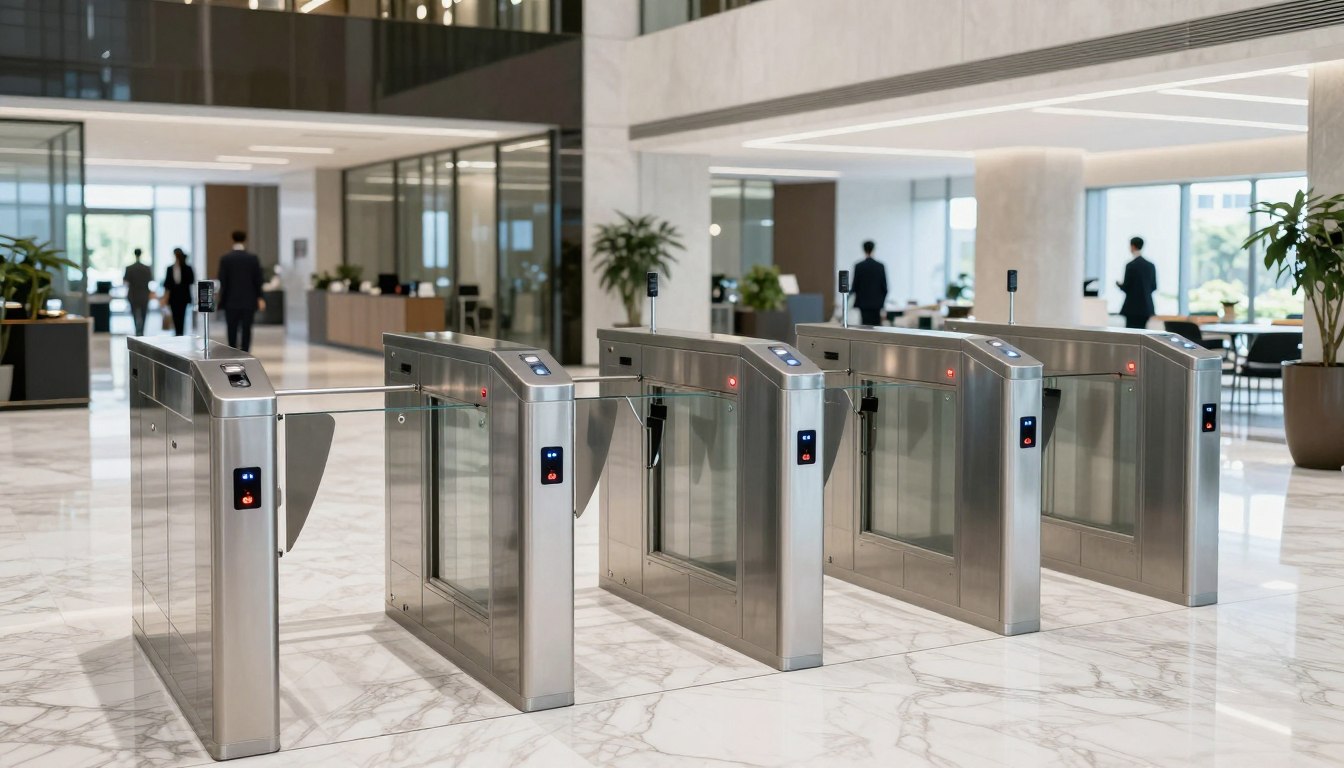
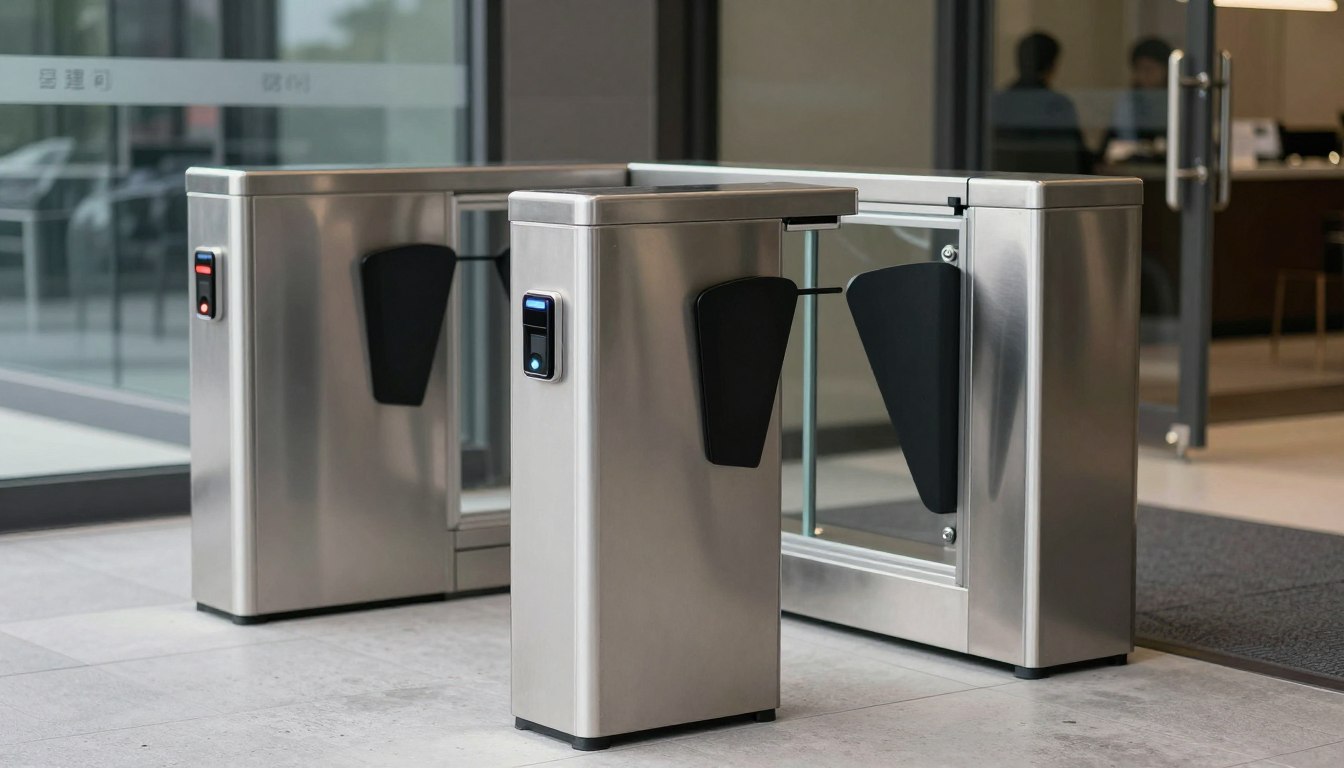
When connected with turnstiles, intercoms, CCTV, alarms, elevators, and building management systems, access control can support coordinated responses. For example, a forced-door event can alert security personnel and prompt nearby cameras to review the relevant entrance. A visitor credential can be limited to a lobby and meeting room. A staff credential can activate only during approved shift hours.
Integration should be planned around a real operational requirement, not added because it sounds advanced. A small office may only need a few controlled doors and basic user management. A corporate campus, warehouse, or multi-tenant building may benefit from deeper integration and centralized administration.
What an Access Control System Is Made Of
The visible reader beside the door is only one part of the system. A dependable installation combines several components that must work together correctly.
Credentials are what users present to prove identity. These may be proximity cards, key fobs, PINs, mobile credentials, or biometrics such as fingerprints or facial recognition. Readers capture the credential and send it for validation. The controller makes or relays the authorization decision, while an electronic lock, strike, or magnetic lock secures and releases the door.
The system also needs suitable power, door hardware, exit devices, cabling, network connectivity where required, and management software. Door contacts and request-to-exit devices help the system understand whether a door is closed, opened normally, or forced open.
This is why access control is not simply an IT purchase or a locksmith task. It sits at the intersection of physical security, electrical hardware, structured cabling, and network infrastructure. Poor cable routing, undersized power supplies, unsuitable locks, or unreliable network design can undermine a system that otherwise uses quality components.
Choosing the Right Level of Control
There is no universal access control design. The appropriate solution depends on the premises, risk profile, headcount, workflows, and future plans.
A small professional office may need card access at the main entrance, a secure server room, and an administrator who can add or remove users. A growing retailer may need centrally managed access across outlets, with different rights for store managers, delivery staff, and maintenance vendors. A larger organization may need turnstiles, biometric verification for sensitive rooms, visitor management, and integration with security cameras.
Biometrics can provide stronger assurance that the person presenting a credential is the authorized individual, but they require careful consideration of privacy, user acceptance, fallback procedures, and local requirements. Mobile credentials offer convenience and can reduce card handling, but they depend on compatible devices, user enrollment, and a clear process for lost or replaced phones.
Cloud-managed systems can simplify administration across locations, while on-premises platforms may suit organizations that require more direct control over data and infrastructure. Neither choice is automatically better. The right option is the one that meets security, operating, and scalability needs without creating unnecessary complexity.
Why Installation Planning Matters
A controlled door must remain safe and usable during normal operations, emergencies, and power interruptions. That means the choice between fail-safe and fail-secure locking, emergency egress requirements, fire alarm interfaces, and door hardware compatibility must be assessed before installation.
For example, a magnetic lock may release when power is lost, which can support emergency exit requirements but may not be appropriate for every high-security application. A fail-secure electric strike may remain locked without power, but the exit route and life-safety requirements still need proper design. These details cannot be decided by product selection alone.
A practical implementation begins with a site assessment: which doors need control, who uses them, what credentials are appropriate, how traffic flows through the building, and how the system will connect to power and network infrastructure. It should also consider future doors, additional floors, new outlets, and changing staffing patterns.
As an end-to-end infrastructure partner, I-Weblogic can coordinate access control with structured cabling, networking, CCTV, and turnstile requirements so these systems support one another rather than becoming separate projects with separate points of failure.
Access Control Is a Management System, Not Just Door Hardware
The strongest technology cannot compensate for weak administration. Businesses should define who approves access, how quickly permissions are removed after role changes, how visitor access is handled, and who reviews exceptions such as repeated denied entries or doors held open.
It also helps to avoid assigning broad access by default. Start with the minimum access needed for each role, then add permissions where there is a clear business reason. This approach reduces risk while making access reviews more manageable.
A well-designed system makes secure behavior easier than insecure behavior. When employees can enter the spaces they need quickly, when managers can update permissions without delay, and when facilities teams can see what is happening at key doors, security becomes part of normal operations rather than an obstacle to them.
The right next step is to map your doors, users, and operational risks before choosing readers or credentials. That simple exercise often reveals where a targeted access control investment can reduce disruption, protect critical areas, and give your business more confidence in every entry point.