
When your office internet drops, phones cut out, or a relocation exposes years of patchwork wiring, the problem usually is not just bandwidth. It is the foundation underneath it. For many businesses, that foundation is structured cabling.
What Is Structured Cabling?
If you are asking what structured cabling is, the simplest answer is this: it is a standardized approach to designing and installing the cabling infrastructure that supports your network, communications, and connected systems. Instead of running cables in an ad hoc way every time a new device, desk, or access point is added, structured cabling creates an organized framework that supports current operations and future changes.
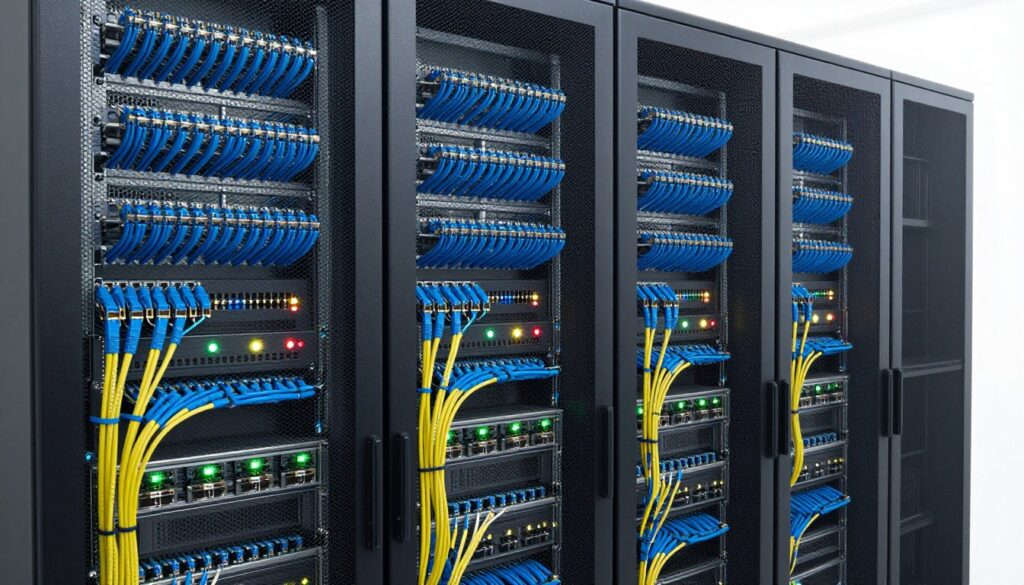
That framework can include copper structured cabling, fiber optic cabling, patch panels, racks, outlets, labeling, and the spaces where everything is terminated and managed. The goal is not only connectivity. The goal is predictable performance, easier maintenance, and a system that can scale without becoming difficult to manage.
For a business, this matters more than it sounds. Structured cabling affects internet performance, IP phones, Wi-Fi backhaul, CCTV, access control, printers, meeting rooms, and sometimes even building management systems. When the cabling is poorly planned, every connected service becomes harder to troubleshoot and more expensive to expand.
Why Structured Cabling Matters in Real Operations
Implementing structured cabling is the most effective way to eliminate network downtime. A lot of organizations only think about cabling when something stops working or when they move offices. By that stage, the cost is rarely limited to the cable itself. There is downtime, lost productivity, vendor finger-pointing, and often a rushed upgrade that could have been handled more efficiently with better planning.
Structured cabling reduces that risk because it creates order. Ports are labeled. Pathways are planned. Network rooms are organized. Capacity is considered in advance. That means your team can identify issues faster, add users or devices without unnecessary disruption, and support growth without rebuilding the entire infrastructure each time requirements change.
This is especially relevant for businesses managing more than simple desktop connectivity. If your environment includes wireless access points, VoIP phones, surveillance cameras, biometric access systems, or multiple departments with different network needs, cabling is no longer a background item. It is part of operational reliability.
What a Structured Cabling System Includes
A structured cabling system is typically built around several connected parts rather than one continuous run of cable. In practical terms, that usually means a main distribution area, intermediate or floor distribution points where needed, horizontal cabling to work areas, backbone cabling between rooms or floors, and clearly terminated outlets for devices and users.
Copper cabling, such as Cat6 or Cat6A, is often used for office endpoints, phones, wireless access points, and many networked devices. Fiber is commonly used for higher-speed backbone connections, longer distances, or environments that need stronger support for future bandwidth demands. Which option makes sense depends on layout, device density, speed requirements, and budget.
The hardware around the cabling is just as important as the cable itself. Patch panels, cabinets, containment, labeling, testing, and documentation all affect how easy the system is to maintain. A neat-looking installation is not only about presentation. It directly affects troubleshooting time, change management, and long-term reliability.
Structured Cabling vs. Point-to-Point Wiring
The easiest way to understand the value is to compare it with point-to-point wiring. In a point-to-point setup, cables are often added one by one as needs arise. That may seem cheaper in the short term, especially in a small office, but over time it creates clutter and inconsistency. Moves, adds, and changes become harder. Faults take longer to isolate. Capacity planning is largely reactive.
Structured cabling takes the opposite approach. It assumes your environment will change and builds for that reality from the start. New desks, extra cameras, upgraded Wi-Fi, or another department on the same floor can be accommodated within a planned system rather than through repeated workarounds.
There are cases where a very small site with minimal change can operate with simpler wiring. But once a business depends on stable connectivity across teams and systems, the cost of unstructured growth usually catches up.
Where Businesses Use Structured Cabling
Most business environments benefit from structured cabling, but the priorities can differ by site type. In a corporate office, the focus is often on workstation connectivity, meeting rooms, wireless coverage, and IP telephony. In schools or training facilities, it may need to support dense device usage, security systems, and AV integration. In retail, the priorities often include POS systems, CCTV, back-office networking, and multi-site consistency.
For growing companies, the value often becomes clear during expansion or relocation. A new office fit-out is the right time to install cabling that supports both current headcount and expected growth. Retrofitting later is possible, but usually more disruptive and less efficient.
What Good Structured Cabling Looks Like
Good structured cabling is not defined by one cable category or one brand of hardware. It is defined by whether the system is appropriate for the business using it. A well-designed installation should match the layout of the site, the services being supported, the expected device count, and the speed and resilience the business needs.
That means planning matters. For example, a site with heavy wireless use still needs strong cabling because access points rely on wired backhaul. A business adding high-resolution CCTV or multiple access control points may need more outlets and switch capacity than initially expected. An office with plans to expand within two years should not be designed only for today’s occupancy.
Documentation also separates a professional installation from a short-term fix. If your team or service provider cannot easily identify cable routes, outlets, or patching records, even simple changes become inefficient.
Common Mistakes That Cause Problems Later
One common mistake is underestimating future growth. Businesses often ask for the minimum number of data points needed for day one, then end up paying more to add extra runs after walls, ceilings, and furniture are already in place.
Another is focusing only on internet access and overlooking other systems. Modern workplaces rely on a shared infrastructure for phones, cameras, access control, Wi-Fi, and sometimes audio-visual systems. If those needs are not considered together, the result is fragmented structured cabling and overlapping contractor work.
There is also the issue of poor installation quality. Even when the right cable is chosen, performance suffers if termination, routing, bend radius, testing, or labeling are handled poorly. This is why structured cabling should be treated as infrastructure, not just another part of the fit-out checklist.
How to Plan a Structured Cabling Project
The best starting point is not the cable type. It is the business requirement. How many users will the space support? Which systems need connectivity? Are there plans for expansion, office reconfiguration, or higher security requirements? Will the site rely heavily on wireless, VoIP, surveillance, or fiber uplinks between floors?
From there, the design should account for floor layout, equipment room locations, outlet quantities, containment routes, rack space, power considerations, and testing standards. This is also where coordination matters. When cabling, networking, and physical security are planned together, the final environment is usually cleaner, easier to manage, and less disruptive to deliver.
For many organizations, this is where working with an experienced systems integrator adds value. A provider that understands not only cabling, but also networking and security infrastructure, can help prevent design gaps that only show up after handover. That joined-up approach is one reason businesses choose firms like I-Weblogic when reliability and scalability are priorities.
What Is Structured Cabling Worth to a Business?
The return is not just technical. Structured cabling supports business continuity. It reduces time spent tracing faults, lowers the friction of office changes, and makes it easier to support new technologies without rebuilding the physical layer each time.
It also gives decision-makers more control. Instead of reacting to recurring connection issues or piecemeal installation requests, you have a framework that supports planned growth. That is valuable for IT teams, facilities teams, and business owners alike.
The exact design will always depend on your site, your systems, and your plans. But the principle stays the same: when the cabling is organized, tested, and built for change, the rest of your technology has a better chance to perform the way your business needs it to.
If your workplace depends on stable connectivity, investing in structured cabling is the smartest decision for long-term business reliability