When a front entrance becomes a bottleneck, the problem is rarely just the gate. It is usually the whole chain behind it – credentials, readers, network connectivity, cabling, door logic, visitor handling, and how all of that ties back to daily operations. That is why turnstile access control integration matters. It is not simply about installing a physical barrier. It is about making entry control reliable, fast, and manageable for the people who run the site.
For offices, schools, industrial sites, and multi-tenant buildings, a turnstile can improve control at the perimeter or lobby. But the real business value comes when it works as part of a larger system. A standalone turnstile may restrict movement. An integrated one can verify identity, log every event, support visitor workflows, align with fire and life safety rules, and reduce the burden on reception or security teams.
What turnstile access control integration actually means
Turnstile access control integration is the process of connecting turnstiles to the systems that decide who gets in, when they get in, and what happens when an exception occurs. That usually includes card or biometric readers, access control software, controllers, structured cabling, power, network infrastructure, CCTV, intercoms, and emergency release logic.
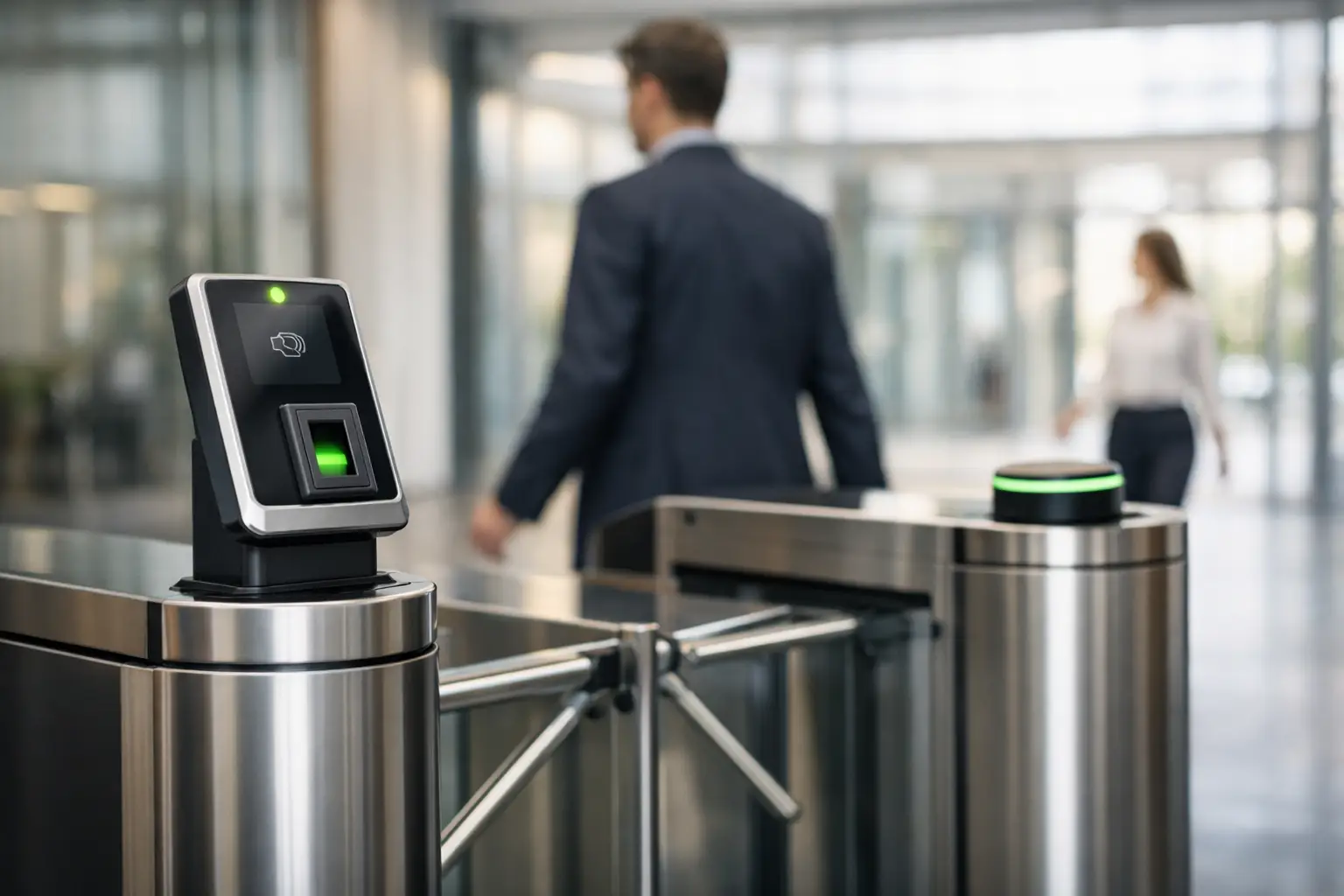
In practical terms, a person presents a credential. The reader sends that request to the access control system. If the person is authorized, the turnstile unlocks for a single passage and records the event. If the credential is invalid, expired, or used at the wrong time, the lane stays locked and the event can trigger an alert or camera bookmark.
This sounds straightforward, but the details matter. The type of turnstile, the direction of traffic, the location of the readers, the network path back to the controller, and the fallback behavior during outages all affect how well the system performs in the real world.
Why businesses invest in turnstile access control integration
The first reason is better entry control without adding friction to every arrival. A well-planned system helps prevent tailgating, keeps unauthorized visitors out of staff-only areas, and creates a clearer record of who entered and when. For businesses with compliance requirements or sensitive areas, that audit trail is often just as important as the gate itself.
The second reason is operational efficiency. Reception teams should not spend their morning resolving access issues caused by poor reader placement, slow credential checks, or network instability. When the integration is planned correctly, staff can move through quickly while exceptions are easier to identify and handle.
There is also a planning advantage. Companies expanding into larger offices or multiple sites often want one consistent access policy across doors, turnstiles, elevators, and restricted rooms. Integration supports that standardization. Instead of treating the lobby as a separate security project, it becomes part of the same managed environment.
Where integration projects succeed or fail
Most issues in turnstile deployments do not come from the turnstile itself. They come from assumptions made around infrastructure.
Cabling and power are not minor details
A turnstile depends on stable communication and clean power. If the cable routes are an afterthought, or if the power design does not account for reader loads, controllers, and backup requirements, reliability suffers. Intermittent faults at the entrance quickly become a visible business problem because everyone experiences them.
This is one reason integrated implementation matters. The entrance lane, the reader, and the backend system should not be designed in isolation from structured cabling and network planning.
Network design affects response time
If access requests are delayed, even by a small amount, users notice. A turnstile lane that hesitates can create queues and frustration during peak hours. The network path, controller architecture, and segmentation strategy all influence performance and security.
It depends on the site size and architecture. A small office may need a relatively simple setup. A multi-floor corporate environment or campus may require more careful design around controller placement, failover, and traffic separation from other business systems.
Safety and emergency behavior must be defined early
Turnstiles cannot be planned as security-only devices. In an emergency, the system may need to unlock, drop arms, or allow free egress depending on code requirements and site policy. These behaviors should be coordinated with life safety systems and facilities teams from the start.
This is where many projects run into rework. If emergency release logic is addressed too late, it can affect equipment selection, wiring, and approvals.
Choosing the right approach for the site
Not every facility needs the same turnstile access control integration model. A corporate lobby focused on visitor experience will have different priorities from a warehouse or school entrance.
Corporate offices
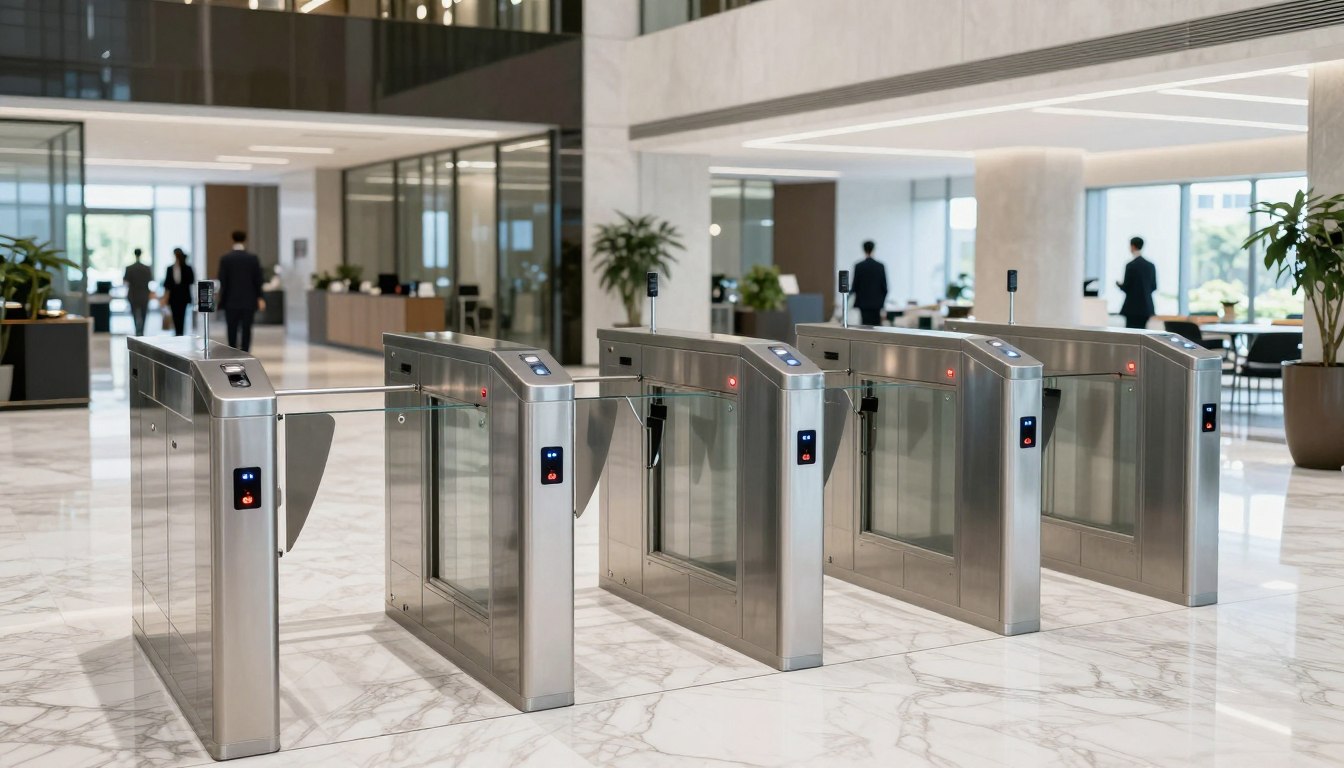
In office environments, speed and appearance usually matter alongside security. Waist-high optical lanes are often chosen where the goal is to maintain a professional front-of-house experience while improving entry control. Integration with staff badges, visitor passes, intercoms, and lobby monitoring is common.
Education and institutional sites
Schools and higher education facilities often need a balance between controlled access, high throughput, and changing user groups. Students, faculty, contractors, and visitors may all require different rules. Integration with central credential systems and scheduled access policies becomes more important here.
Industrial and restricted facilities
Higher-security environments may require stronger anti-passback controls, biometrics, or full-height turnstiles. In these cases, the integration design usually prioritizes identity assurance and perimeter discipline over aesthetics.
The right fit depends on traffic volume, risk level, user behavior, and the wider security plan. Installing a more restrictive turnstile than the site needs can slow operations. Installing a lighter-control option in a high-risk area can leave obvious gaps.
The business case goes beyond security
Turnstile access control integration often gets approved as a security upgrade, but the benefits reach further into operations.
It can reduce reliance on manual sign-in processes and lower the load on front desk staff. It can support occupancy and movement reporting, which is useful for planning and investigations. It can also help businesses consolidate vendors by aligning entrance control with cabling, CCTV, and network infrastructure under one implementation plan.
That last point matters more than many buyers expect. When separate contractors handle the gate, the access platform, the cabling, and the network, troubleshooting tends to bounce between teams. A coordinated systems integrator can reduce that friction because the entrance is treated as one connected environment, not four separate scopes.
Planning for long-term reliability
A turnstile is a visible asset, but reliability depends on what users do not see. Good planning considers maintenance access, spare capacity, controller locations, cable pathways, and how the system will be supported after go-live.
Growth should also be part of the design. Many businesses start with one lobby or one floor, then expand the same access policy to other entrances, tenant areas, or new offices. If the initial integration leaves no room for additional readers, controllers, or reporting needs, future upgrades become more expensive than they need to be.
This is where an experienced implementation partner adds value. Since 2003, I-Weblogic has worked across physical security, cabling, and network infrastructure, which is exactly the kind of coordination turnstile projects need to perform well after installation, not just on handover day.
Questions decision-makers should ask before moving ahead
Before approving a project, it helps to ask a few practical questions. How many people will use the entrance during peak periods? What happens if the network connection drops? Will visitors use the same lane design as employees? How will the system behave during a fire alarm or evacuation? Can the current access platform support the turnstile logic, or will additional controllers and licensing be required?
These questions shape both cost and outcome. They also reveal whether the project is being approached as a simple equipment purchase or as a true integration effort.
A better entry point starts with better coordination
The strongest turnstile projects are not defined by the hardware alone. They are defined by how well physical entry, credentials, cabling, software, and operational policy work together. When those pieces are aligned, the entrance becomes easier to manage, more secure, and less disruptive to everyday business.
If your site is considering turnstiles, the right next step is not just selecting a model. It is making sure the whole environment behind that lane is designed to support the way your business actually operates.