
A slow office network rarely starts with the Wi-Fi. More often, the real problem sits behind the walls, above the ceiling, in the comms room, or across a site that has grown faster than its underlying systems. That is why a clear answer to what is telecom infrastructure matters for business leaders. It is not just about internet access or phone lines. It is the full physical and network foundation that allows people, devices, systems, and locations to communicate reliably.
For an operations manager, that foundation affects productivity. For an IT manager, it affects uptime, performance, and security. For a business owner planning a move, expansion, or upgrade, it affects whether the new environment will support growth without recurring disruption.
What is telecom infrastructure?
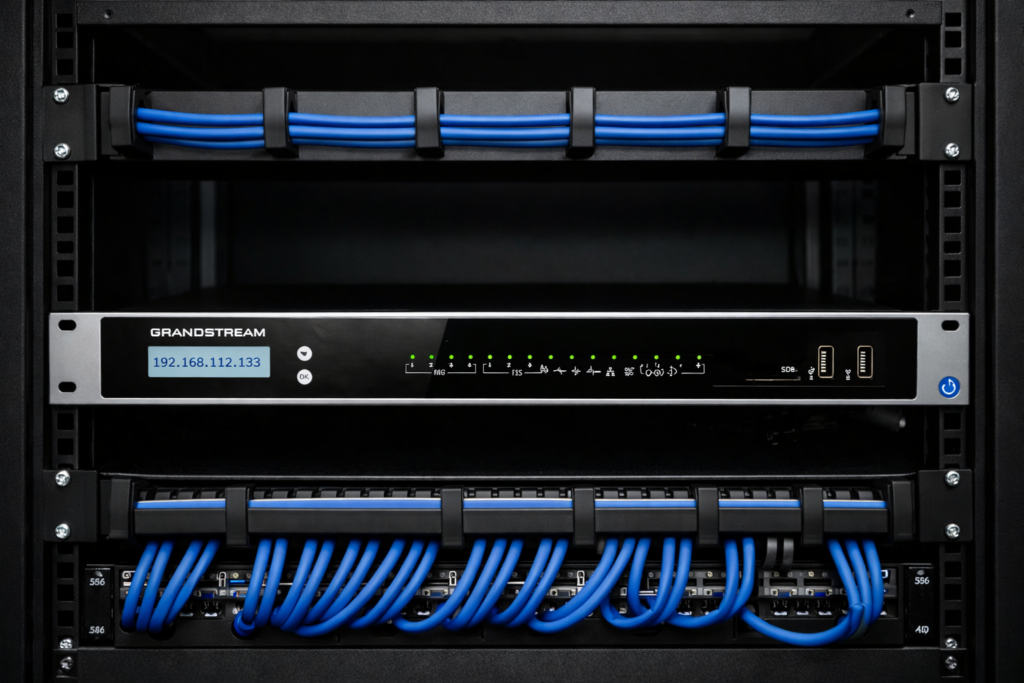
Telecom infrastructure is the combined set of physical components and communication systems that carry voice, data, and connectivity across a business environment. In practical terms, that includes structured cabling, fiber optic runs, network racks, switches, routers, wireless access points, IP telephony, internet links, and the supporting pathways and termination points that keep everything organized and functional.
In many business settings, telecom infrastructure also overlaps with related systems that depend on the same backbone. CCTV, access control, intercoms, and other smart building technologies often run over the same network or share the same cabling pathways. That is one reason fragmented planning causes problems. When each system is treated in isolation, businesses often end up with duplicated work, capacity shortfalls, or inconsistent standards across sites.
A better way to think about telecom infrastructure is this: it is the operating base layer for modern business communication. If that layer is weak, every connected service above it becomes harder to manage.
The main parts of telecom infrastructure
At the physical level, cabling is where everything begins. Structured cabling creates an organized layout for data and voice connections throughout an office, retail site, campus, or industrial facility. This includes copper cabling for common workstation and device connectivity, as well as fiber optic cabling where higher bandwidth, longer distances, or better future capacity are needed.
From there, active network equipment moves traffic through the environment. Switches connect endpoints. Routers direct data between internal networks and external services. Firewalls protect access at the edge. Wireless access points extend connectivity to mobile devices, meeting rooms, guest users, and flexible work areas.
Voice remains an important part of telecom infrastructure, although it looks different now than it did years ago. Traditional phone systems have largely given way to IP telephony, which carries calls over the data network. That shift gives businesses more flexibility, but it also means voice quality depends heavily on network design, bandwidth planning, and proper segmentation.
Then there is the supporting infrastructure that decision-makers often notice only when it is missing: racks, patch panels, labeling, cable management, containment, power planning, and equipment rooms. These are not cosmetic details. They affect maintainability, troubleshooting speed, and whether future upgrades can be completed without avoidable downtime.
Why telecom infrastructure matters to business operations
The business case is straightforward. Reliable telecom infrastructure supports communication, collaboration, security, and continuity. Poor infrastructure creates friction that shows up as dropped calls, weak wireless coverage, unstable video meetings, slow applications, and long resolution times when something fails.
That impact is not limited to IT. A front desk cannot process visitors efficiently if access control and intercom systems are unstable. A school cannot rely on digital learning tools if classroom connectivity is inconsistent. A multi-site retailer cannot maintain standard operations if stores have different cabling quality, network performance, or telecom layouts.
This is why telecom infrastructure should be treated as an operational asset, not just a technical installation. When designed properly, it helps businesses work faster, respond more confidently, and scale with fewer interruptions.
What telecom infrastructure looks like in a modern workplace
In older environments, telecom systems were often deployed in layers over time. A phone vendor handled telephony. An electrician ran extra points when needed. A network provider installed switches later. Security systems came in through another contractor. The result was usually functional, but not coordinated.
A modern workplace needs a more integrated approach. Voice, data, wireless, surveillance, and access systems increasingly depend on one another. Meeting room technologies rely on stable networking. Cloud applications need predictable bandwidth. Hybrid teams need dependable wireless coverage and high-quality voice traffic. Smart security devices need power, connectivity, and secure segmentation.
That does not mean every business needs the most advanced design available. It means the infrastructure should match actual operational needs, with room for realistic growth. A single office with 25 staff has different requirements from a regional campus, and a warehouse has different constraints from a corporate floorplate. Good planning starts with use case, layout, device count, expected traffic, and business risk tolerance.
Common telecom infrastructure issues businesses run into
Many infrastructure problems develop quietly. A site may appear to work well enough until headcount increases, more cloud services are introduced, or a relocation exposes the lack of documentation. At that point, hidden weaknesses become expensive.
One common issue is underbuilt cabling. Businesses add devices over time, but the original installation did not anticipate extra access points, security endpoints, VoIP handsets, or room-based AV equipment. Another issue is poor wireless design, where coverage exists on paper but performance drops under actual user density.
There is also the problem of inconsistent implementation across locations. One office may have clean rack layouts, labeled patching, and proper firewall segmentation, while another site operates with improvised extensions and limited documentation. That inconsistency raises support costs and makes upgrades harder to standardize.
Security is another concern. As more devices connect to the network, telecom infrastructure becomes part of the organization’s wider security posture. Weak segmentation, unmanaged ports, exposed hardware, or legacy edge devices can create unnecessary risk.
How to evaluate whether your telecom infrastructure is fit for purpose
The first question is not whether the system works. It is whether it works reliably under normal business pressure. That includes peak usage, not just quiet periods.
A practical review usually looks at several areas at once: cabling condition and capacity, wireless coverage, network performance, internet resilience, voice quality, rack organization, power and pathway planning, and security controls. Documentation matters too. If no one can clearly map what is installed, where it runs, and how it supports critical systems, future maintenance becomes slower and riskier.
It also helps to assess the business context. Are you planning an office relocation? Expanding to another floor? Adding surveillance or biometric access? Migrating more services to the cloud? These changes can quickly turn a previously adequate setup into a constraint.
In many cases, the right move is not a full replacement. It may be a phased upgrade that addresses the highest-risk areas first, such as backbone cabling, wireless redesign, or improved segmentation between user, voice, and security devices. The best answer depends on age, layout, usage, and budget.
What good telecom infrastructure planning includes
Good planning starts early, especially for new offices, fit-outs, and relocations. Waiting until furniture is installed or teams are ready to move in usually leads to avoidable rework.
A sound plan covers present requirements and near-term expansion. That means understanding how many users, devices, and systems the environment must support, then designing cabling, switching, wireless, and security integration accordingly. It also means allowing spare capacity where growth is likely.
Coordination matters as much as technical specification. Telecom infrastructure touches office design, facilities, security, and business operations. When these workstreams are aligned, businesses avoid conflicts between ceiling space, pathway routes, access control points, Wi-Fi placement, and equipment room needs.
This is where an experienced systems integrator adds value. Instead of treating network cabling, telephony, wireless, and physical security as separate projects, the work can be planned as one connected environment. For businesses that want fewer handoffs and clearer accountability, that approach tends to reduce delays and improve long-term reliability. Companies such as I-Weblogic are often brought in for exactly that reason when secure, scalable infrastructure needs to be implemented as a coordinated whole.
What is telecom infrastructure really worth?
he true value of a business is often found in its operations. When asking what is telecom infrastructure, you realize its value is not measured only by bandwidth or hardware count. It is measured by how well the business operates because the underlying systems are dependable
That is the real point. Telecom infrastructure is not background wiring that gets attention only during a fit-out. It is a business-critical foundation that supports communication, security, and day-to-day performance. When it is planned properly, most people barely notice it, and that is usually the best sign it is doing its job.