Door Access System Singapore: The Hidden Trap of Office Relocation and Why Your Main Contractor Cannot Handle Enterprise IT

Urgent Door Access Repair Singapore: Why Your System Fails & How We Fix It in Under 2 Hour
It is 8:30 AM. Your staff is gathered outside, keycards are failing, and the office is locked. For two hours, you have been losing money, productivity, and your professional reputation. When you finally reach your original supplier, they tell you the system is “out of warranty” and refuse to prioritize your call—leaving you stranded.
You aren’t just dealing with a “tech issue”; you are dealing with a complete business stoppage. When your door access system stops, your business stops.
At I-Weblogic, we do things differently. When clients call us in this exact situation—even if we didn’t install the system ourselves—we don’t check for warranties before we act. We understand that your business doesn’t have time for bureaucracy. We send our expert team on-site immediately to get you back inside. Most of the time, we solve the crisis in under two hours.
We bridge the gap where others fail. Most businesses call their main contractor, only to be told it is an “IT issue.” Then, they call their IT provider, who blames the hardware installer. At I-Weblogic, we are IT professionals who specialize in physical security integration. We don’t just “bolt on” hardware; we ensure it communicates perfectly with your network, and we stand by our work.
Our Service Commitment: “No Solution, No Fee.” We understand the urgency when you are locked out of your office. That is why we stand by our “No Solution, No Fee” service commitment. If our expert team is unable to resolve your door access issue, there is no service fee. You can count on us for:
- Rapid Response: On-site in under 2 hour for urgent lockouts.
- Expert Troubleshooting: Specialization in ZK, Hikvision, HID, Suprema, and biometric systems.
- Preventative Strategy: We don’t just open the door; we identify the root cause so this never happens again.
Don’t wait for your next hardware failure to scramble for support. If you are experiencing issues or need a system that actually works for your business, reach out to us today.
[HAVE AN URGENT DOOR ACCESS ISSUE?] Stop waiting hours for generic support. Get professional IT-driven access solutions that keep your office running. 📞 Call us now: +65 8782 7613 📧 Email: info@i-weblogic.com [Get A Free Site Security Audit & Maintenance Plan]
Installing a standalone CCTV camera in your existing conference room feels simple. Replacing a traditional lock with a basic fingerprint door access unit seems straightforward. Anyone with a screwdriver and a YouTube tutorial can manage these tasks.
But when you sign a commercial lease for a brand-new corporate space in Singapore, the stakes skyrocket. Commercial rental rates are exceptionally high, easily costing companies S$20,000 to S$30,000 per month for a standard mid-sized office floor. Every single day of delay on your fit-out directly bleeds cash. If your office opening is pushed back by just one week due to technical failures, your business throws thousands of dollars down the drain in dead rent. Managing a relocation of this scale is not as easy as 1-2-3; it requires a veteran System Integrator (SI) with wide-ranging network engineering experience to deploy a flawless, zero-downtime ecosystem.
The harsh reality? Most office managers discover too late that their appointed renovation contractor excels at carpentry, painting, and false ceiling installation but possesses zero understanding of network topology, wireless coverage planning, or multi-system security integration.
i-Weblogic has spent 23 years serving as Singapore’s elite system integrator for commercial office projects. We architect the invisible digital nervous system that powers modern workplaces while your renovation company focuses on what they do best: making spaces look beautiful.
The Easy Staples: Deploying Advanced Office Door Access and CCTV Systems
Every Singapore office manager begins their security planning with two fundamental questions. How do we control who enters our premises? How do we monitor what happens inside?
The door access control system market in Singapore has evolved dramatically. Gone are the days when a simple card reader sufficed for corporate security.
Modern Door Access System Technologies Available in Singapore
Recognition door access systems now dominate the enterprise market. Face recognition door access eliminates the hygiene concerns that emerged during recent health crises.
Fingerprint door access remains popular for smaller offices with 20 to 50 employees. The technology has matured significantly, with false rejection rates dropping below 0.01 percent in quality systems.
Card-based access control still holds value in high-traffic corporate environments. Mifare card technology offers excellent security when paired with proper software management platforms.

Multi-Factor Authentication Advantage
The most secure installations combine multiple authentication methods. Fingerprint card pin systems require employees to present both biometric data and a physical credential.
This dual-layer approach significantly reduces unauthorized access risks. If someone steals a card, they still cannot enter without the correct fingerprint. If someone spoofs a fingerprint, they still need the physical card.
Software platforms now allow administrators to adjust security requirements by zone. Executive areas can demand three-factor authentication while general office spaces use simpler single-factor systems.
CCTV System Installation Requirements for Singapore Offices
CCTV for office Singapore installations has shifted entirely to IP-based infrastructure. Analog systems belong to the previous decade.
IP CCTV Singapore deployments integrate seamlessly with your network infrastructure. This creates both opportunities and challenges that renovation contractors simply cannot navigate.
POE CCTV Camera Advantages
Power over Ethernet technology revolutionized CCTV system installation complexity. A single Cat 8 LAN cable delivers both power and data to each camera.
This eliminates the need for separate electrical conduits to every camera location. Installation costs drop by 30 to 40 percent compared to traditional wiring methods.
POE CCTV camera systems also simplify future maintenance. Technicians only need to trace one cable type instead of managing separate power and data infrastructure.
Storage and Retention Planning
Singapore workplace safety regulations often require minimum retention periods for video footage. Financial institutions typically mandate 90-day retention while general offices need 30 days.
A single 4K IP camera generates approximately 2 to 3 terabytes per month. An office with 20 cameras requires dedicated storage infrastructure that your IT vendor must properly size.
Cloud storage options exist but monthly costs quickly exceed on-premise solutions for footage-heavy installations. Hybrid approaches often provide the best balance.
Network Bandwidth Considerations
Each IP camera consumes 4 to 8 Mbps of network bandwidth continuously. Twenty cameras can saturate a basic office internet connection during peak recording periods.
Proper CCTV installations use dedicated network switches and VLANs to separate security traffic from general office data. This prevents cameras from interfering with critical business applications.
Your renovation contractor cannot design this network segregation. Only experienced system integrators understand the topology requirements.
Integration Between Door Access and CCTV Systems
The real power emerges when door access control and video surveillance work together as a unified security platform.
When someone swipes their access card, the system can automatically trigger the nearest camera to begin recording. If an unauthorized access attempt occurs, the software captures both the credential used and a video snapshot of the person.
Time Attendance Integration Benefits
Many Singapore companies leverage their door access system for dual purposes. The same fingerprint reader that controls entry also records employee attendance.
Time attendance software pulls data directly from the access control database. Employees cannot forget to clock in because the act of entering the office automatically creates their attendance record.
This eliminates the need for separate time clock hardware and reduces administrative overhead. HR departments access comprehensive reports showing arrival times, departure times, and total hours worked.
- Automatic overtime calculation based on entry and exit timestamps
- Integration with payroll systems for seamless salary processing
- Exception reporting for late arrivals or early departures
- Remote access for employees working from multiple office locations
Request Time Attendance Solution
Access Control System Software Management
The brain of any door access control system Singapore installation lives in its management software. This determines how effectively administrators can respond to security incidents.
Modern platforms offer mobile apps that allow security managers to grant temporary access remotely. When a contractor arrives unexpectedly, reception can issue a one-time credential without calling IT support.
User Management Features
Enterprise-grade access control systems need sophisticated user hierarchy management.
- Role-based permissions controlling who can access which zones
- Time-based restrictions limiting access to specific hours
- Visitor management workflows for temporary credentials
- Bulk import capabilities for large employee databases
- Integration with Active Directory for automatic provisioning
Audit and Compliance Tracking
Regulated industries require comprehensive access audit trails.
- Complete logs of all access attempts with timestamps
- Video verification tied to credential usage events
- Failed access attempt alerts and notifications
- Compliance reporting for regulatory requirements
- Data retention policies matching legal obligations
Emergency Response Capabilities
Critical security situations demand immediate system-wide control.
- Global lockdown functions securing all entry points instantly
- Evacuation mode unlocking emergency exits automatically
- Panic button integration triggering security protocols
- Fire alarm integration managing safe egress routes
- Remote access allowing off-site crisis management
Integration Ecosystem Options
Best-in-class systems connect with broader building management platforms.
- Elevator control restricting floor access by credential
- Parking management linking vehicle and personnel records
- Visitor reception systems streamlining guest registration
- Building automation adjusting HVAC based on occupancy
- Meeting room booking system coordination
Don’t Compromise Your Move-In Deadline
Speak directly with an i-Weblogic integration expert right now. Our engineering team has successfully delivered 847 Singapore office projects over 23 years. We understand the exact coordination points where renovation contractors fail and security systems stall.
Email Us: info@i-weblogic.com
Scaling Up to Premium Traffic Flow: The Role of Corporate Turnstiles
When your Singapore office houses more than 100 employees, traditional door access systems create bottlenecks during peak entry hours. Morning rush periods see employees queuing at card readers.
Enterprise-grade turnstile systems solve this throughput challenge while maintaining robust security. But integration complexity increases exponentially compared to simple door readers.
Turnstile Gate Singapore Market Options
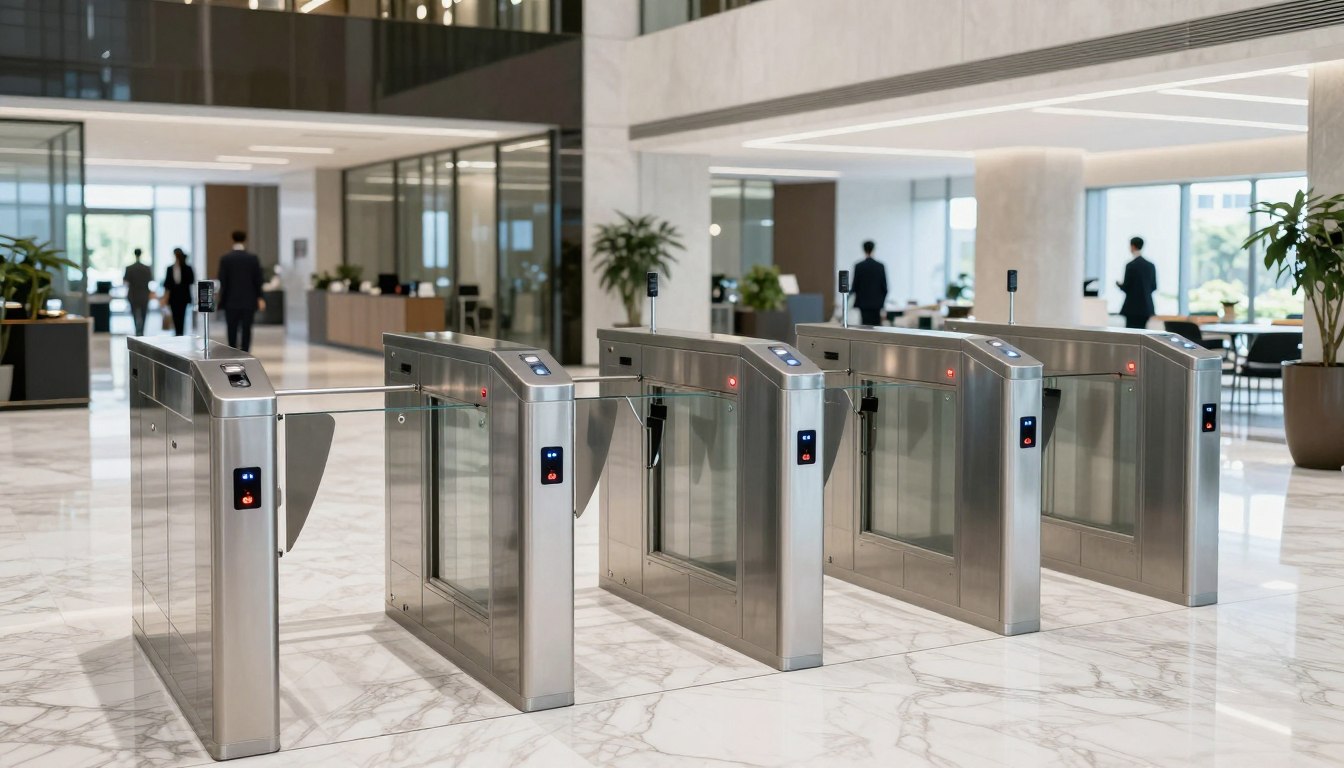
The turnstile Singapore market offers three primary categories, each suited to different security postures and aesthetic requirements.
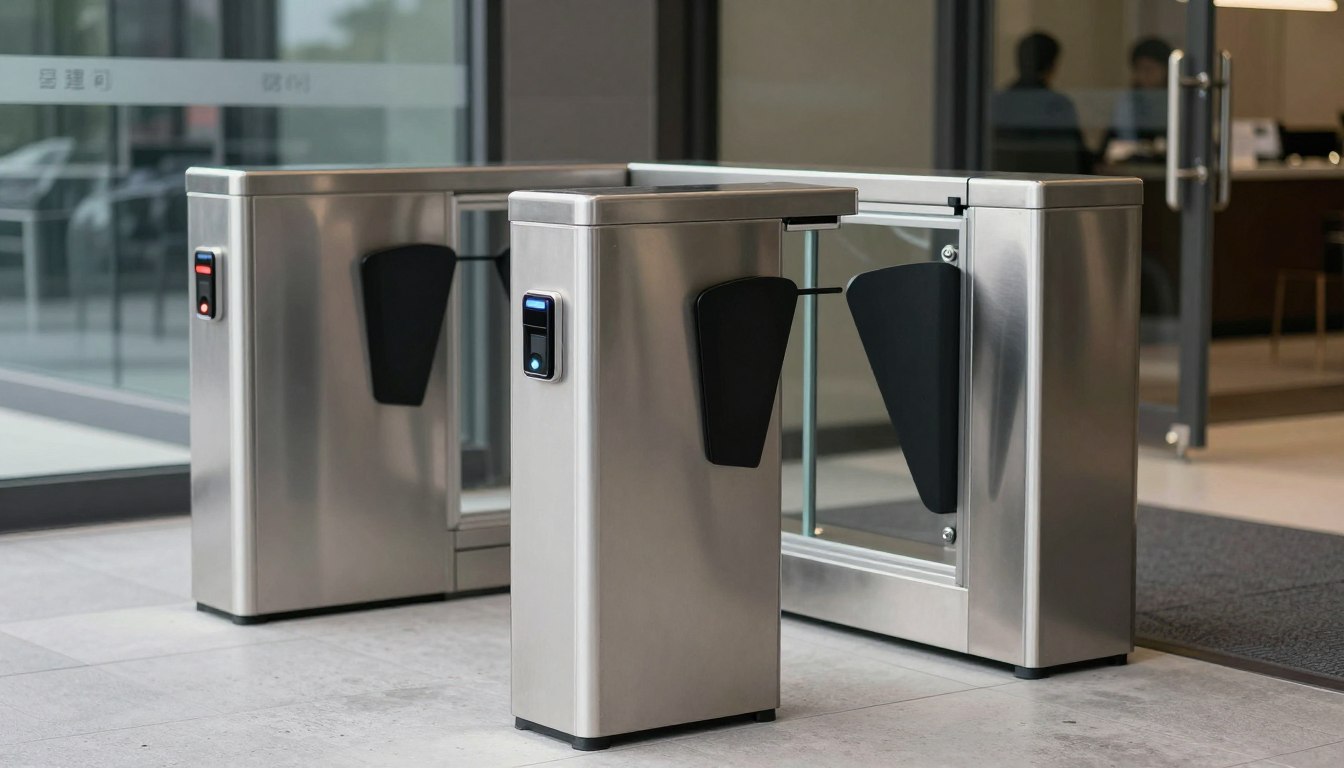
Speed gate turnstiles dominate premium office installations. These elegant barriers slide open in under one second, allowing rapid throughput while presenting a sophisticated appearance.
Full height turnstiles provide maximum security for sensitive facilities. The floor-to-ceiling barriers prevent unauthorized individuals from jumping over or crawling under the access point.
Tripod turnstiles offer the most economical solution for basic traffic management. While less elegant than speed gates, they deliver reliable access control at approximately one-third the cost.

Speed Gate Turnstile Features
Premium speed gates process 30 to 40 people per minute during peak periods. The barriers open bidirectionally based on credential authentication.
Advanced models include anti-tailgating sensors that detect when multiple people attempt to pass on a single authorization. The system immediately triggers an alarm and captures video evidence.
Integration with elevator control systems allows the turnstile to automatically call an elevator to the authenticated user’s authorized floor. This creates a seamless arrival experience.

Full Height Turnstile Applications
Manufacturing facilities and data centers frequently require full height barriers. The complete enclosure prevents any possibility of unauthorized bypass.
These turnstile systems integrate with mantrap configurations for maximum security zones. The system ensures only one person occupies the chamber at any time.
Emergency egress functions automatically unlock during fire alarms or power failures. Life safety codes require free egress regardless of security status.

Tripod Turnstile Economics
Budget-conscious projects often deploy tripod units for secondary entrances while reserving speed gates for main lobbies.
These basic turnstile systems still integrate with the same access control software as premium models. Administrators manage all entry points from a single platform.
Throughput capacity reaches 20 to 25 people per minute, sufficient for most secondary access points with moderate traffic volumes.
Turnstile System Integration with Building Infrastructure
Successful turnstile installations require coordination between seven different building systems. This complexity explains why renovation contractors fail so spectacularly at these deployments.
Critical Integration Points
Each turnstile requires power, network connectivity, access control software integration, fire alarm linkage, elevator control coordination, video surveillance correlation, and visitor management system connection.
The fire alarm integration alone involves coordination with licensed fire protection engineers. Singapore regulations mandate specific egress requirements that override security functions during emergencies.
Elevator control integration requires deep knowledge of lift controller protocols. Different manufacturers use incompatible communication standards requiring specialized gateway hardware.
- Access control software sending authenticated floor numbers to elevator controllers
- Turnstile sensors confirming successful passage before calling the lift
- Load balancing algorithms distributing employees across multiple elevator banks
- VIP express elevator access for executive-level credentials
Get Turnstile Integration Quote
Visitor Management Integration with Turnstile Systems
Modern offices cannot function with fortress-like security that creates friction for legitimate guests. Visitor management solutions bridge this gap.
Reception staff use dedicated software to register guests, capture identification documents, print temporary badges, and automatically issue time-limited access credentials to the turnstile system.
Pre-Registration Workflows
Enterprise visitor management systems allow employees to pre-register expected guests through a web portal or mobile app.
When the visitor arrives, they simply scan a QR code sent via email. The system prints their badge and activates their turnstile credential automatically.
This eliminates reception desk queues during busy periods when multiple meetings begin simultaneously. Guests experience a professional, streamlined arrival process.

Parking Integration with Turnstile Access Control
Large corporate facilities often coordinate parking access with building entry credentials. The same card that opens the turnstile also raises the carpark barrier.
This creates comprehensive tracking of employee presence. Security teams can verify that employees who accessed parking also entered the building, flagging potential security anomalies.
- Single-direction traffic flow control
- Basic card reader authentication
- Manual visitor badge management
- Standalone operation independent of other systems
- Basic entry logging
- Standard throughput capacity
- Bidirectional automated traffic management
- Multi-factor biometric authentication
- Automated visitor pre-registration and badge printing
- Unified integration with elevators, parking, and building systems
- Comprehensive analytics and compliance reporting
- Optimized throughput with anti-tailgating detection
- AI-powered crowd flow optimization
- Touchless recognition door access technology
- Complete visitor lifecycle management platform
- Integration with meeting room booking system
- Predictive analytics for traffic pattern optimization
- Emergency egress compliance with life safety systems
Meeting Room Booking System Coordination
The most sophisticated installations link turnstile access with meeting room booking systems. When a visitor credential is issued, the software automatically grants access to the specific meeting room reserved for their appointment.
This prevents visitors from wandering into unauthorized areas. The access control system guides them to their designated meeting space through restricted pathways.
Need Direct-Source Engineering Pricing for Your Office Fit-Out?
Contact our project squad today for comprehensive turnstile system quotations. i-Weblogic maintains direct partnerships with premium manufacturers, eliminating double-brokered markups. Our 23-year track record includes installations for Singapore’s largest financial institutions, law firms, and multinational corporations.
WhatsApp Us: +65 87827613 (Fast Response)
Email Us: info@i-weblogic.com
The True Powerhouse Core: Server Rooms, UPS, and Network Infrastructure
Most office managers fixate on visible security features while ignoring the invisible backbone that makes everything function. Your door access system, CCTV cameras, and turnstile gates are merely endpoints.
The real foundation lives in properly engineered network infrastructure, reliable power systems, and professionally designed server room environments. This is where renovation contractors reveal their complete incompetence.
Structured LAN Cable Infrastructure Design
Your renovation contractor will happily pull Cat 6 cable wherever you point. But they cannot design the network topology that determines whether your office systems work reliably for the next decade.
Cat 8 LAN cable represents the current professional standard for new office installations. This specification supports 40 Gbps data rates over distances up to 30 meters, future-proofing your infrastructure investment.
Cable Topology Planning
Professional network design follows strict hierarchical architecture.
- Core switch layer providing backbone connectivity
- Distribution layer serving departmental zones
- Access layer delivering endpoint connections
- Redundant pathways preventing single points of failure
- Future expansion capacity of 40 percent minimum
Cable Certification Requirements
Every installed cable must undergo professional testing and certification.
- Continuity testing verifying end-to-end connectivity
- Length verification ensuring specification compliance
- Performance testing measuring actual data rates
- Documentation providing as-built records
- Warranty coverage requiring certified installation
Cable Management Systems
Proper infrastructure requires organized cable pathways.
- Cable tray systems supporting main distribution routes
- Vertical cable managers organizing rack installations
- Horizontal managers maintaining patch panel organization
- Color coding schemes enabling rapid troubleshooting
- Labeling standards documenting every connection
Wireless Integration Planning
Modern offices blend wired and wireless infrastructure seamlessly.
- Access point placement maximizing coverage and capacity
- POE switch selection powering wireless infrastructure
- Controller architecture managing multiple access points
- Guest network segregation maintaining security
- Roaming optimization ensuring seamless connectivity
Server Room Environmental Design
Every access control system, CCTV recording platform, and network switch requires a properly engineered server room environment. Temperature, humidity, power quality, and physical security all demand professional attention.
Cooling Infrastructure Requirements
IT equipment generates substantial heat loads that standard office air conditioning cannot handle. A typical server rack produces 5 to 10 kilowatts of heat continuously.
Precision cooling systems maintain consistent temperatures between 20 and 25 degrees Celsius with humidity levels between 40 and 55 percent. These tight tolerances prevent equipment failures.
Hot aisle cold aisle configurations optimize cooling efficiency by separating equipment intake and exhaust airflows. This can reduce cooling costs by 30 to 40 percent compared to random rack placement.
- Redundant cooling units preventing single points of failure
- Environmental monitoring alerting administrators to temperature anomalies
- Emergency cooling protocols activating backup systems automatically
- Regular maintenance schedules ensuring consistent performance
Uninterruptible Power Supply Systems
Power failures destroy data, corrupt databases, and damage sensitive electronics. Enterprise UPS systems provide multiple layers of protection that your renovation contractor cannot specify correctly.
UPS Sizing Calculations
Proper UPS selection requires precise load calculations accounting for current equipment plus future growth capacity.
A common mistake involves sizing UPS systems based only on current server loads while ignoring all the security systems, network switches, and CCTV recorders that also need backup power.
Professional designs include 30 to 40 percent headroom above calculated loads. This prevents overload situations when equipment is added during normal business growth.
Runtime Requirements
Singapore office UPS systems typically target 30 to 60 minutes of runtime. This allows graceful shutdown of systems during extended outages.
Critical facilities may require 4 to 8 hours of runtime, necessitating large battery banks that consume significant floor space.
Generator integration extends runtime indefinitely. The UPS bridges the gap during the 10 to 30 second interval before generators stabilize.
Maintenance Bypass Design
Enterprise UPS systems include maintenance bypass switches allowing service without powering down protected equipment.
This capability enables battery replacement, preventive maintenance, and component upgrades during normal business hours.
Manual bypass panels also provide emergency workarounds if the UPS system itself fails catastrophically.
Network Switch Configuration
Your door access control system, POE CCTV cameras, IP phone systems, and general office data all share network infrastructure. Proper switch configuration ensures these services coexist without interference.
VLAN Segmentation Strategy
Virtual LAN configuration separates different types of traffic logically while using shared physical infrastructure. This improves both security and performance.
Security systems operate on dedicated VLANs isolated from general office networks. This prevents potential compromises of user workstations from affecting access control systems.
Voice VLANs prioritize IP phone traffic ensuring consistent call quality even when data networks experience congestion. Quality of Service policies reserve bandwidth for real-time applications.
- Management VLAN restricting administrative access to authorized personnel
- Guest VLAN providing internet access without internal network exposure
- Printer VLAN isolating potentially vulnerable devices
- Security VLAN segregating CCTV and access control traffic
IP Phone Systems Infrastructure
Modern offices have completely abandoned traditional PBX phone systems in favor of IP-based communication platforms. These systems share your data network but require specialized configuration.

Voice Quality Requirements
IP phone systems demand consistent network performance. Jitter, latency, and packet loss all degrade call quality immediately.
Professional installations configure Quality of Service policies ensuring voice traffic receives priority over email downloads and web browsing.
Separate power over Ethernet switches often serve voice infrastructure exclusively. This isolation prevents data network problems from affecting phone service.
Physical Security for Server Rooms
The same access control technology deployed throughout your office requires even stricter application to IT infrastructure spaces.
Server rooms demand biometric authentication, video surveillance, environmental monitoring, and intrusion detection working together as an integrated security platform.
- Run cables wherever client points
- Install any switch client purchases
- Plug everything into wall outlets
- Hope it works after handover
- No documentation provided
- No future expansion planning
- Design network topology matching business requirements
- Specify appropriate switch capacity and features
- Engineer UPS systems with proper runtime calculations
- Test and certify all infrastructure components
- Deliver comprehensive as-built documentation
- Plan 40 percent expansion capacity minimum
Micro-Managing the Construction Timeline: Synchronized Engineering Squads
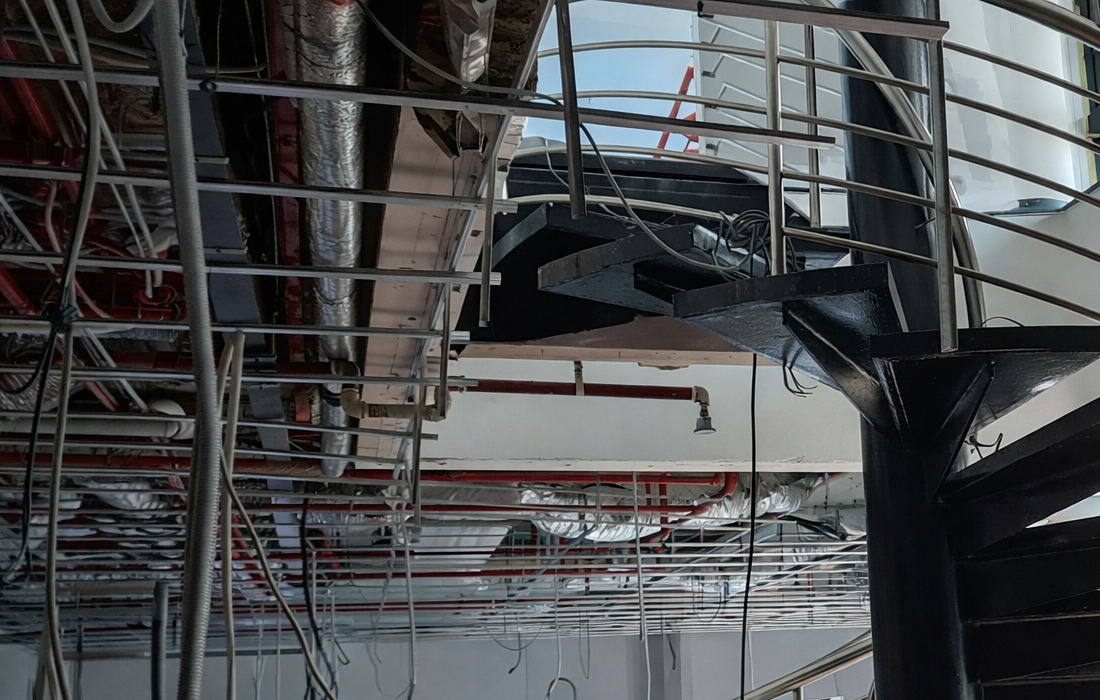
Last-Minute” Crisis. In the real-world sequence of a Singapore commercial fit-out, the low-voltage IT vendor faces a brutal structural challenge: IT infrastructure is always the absolute last phase to be executed. The main renovation contractor consumes 90% of the project calendar for heavy carpentry, flooring, and painting. By the time the walls are closed and the site is handed over for technical deployment, there is barely any time left on the clock before your official lease move-in date. This compressed, high-pressure final window leaves zero room for error. A generic contractor or an unvetted technician will panic, mismatch cable configurations, or fail to sync the backend systems on time. It takes an elite engineering squad with decades of on-site experience to compress complex deployment timelines, coordinate dynamically with the main builder, and safely commission 10 doors of synchronized security and wireless connectivity overnight.
Critical Path Integration Points
Your door access system cannot be installed until doors exist. Your CCTV cameras cannot be positioned until ceiling heights are final. Your network infrastructure cannot be tested until power is stable.
These dependencies create a complex web of prerequisites that must be managed actively. i-Weblogic embeds dedicated project coordinators into construction schedules specifically to manage these integration points.
Pre-Construction Coordination
Successful projects begin with detailed planning before any demolition work starts.
- Joint site surveys with renovation contractor teams
- Identification of cable pathway routing before walls are built
- Coordination of electrical rough-in requirements
- Server room location finalization and environmental specifications
- Equipment delivery scheduling to match installation windows
During Construction Milestones
Active coordination continues throughout the construction phase.
- Weekly progress meetings reviewing upcoming integration points
- Cable installation synchronized with ceiling closure schedules
- Equipment mounting coordinated with final finish work
- Power system testing before IT equipment installation
- Problem escalation protocols preventing schedule slippage
Testing and Commissioning
Final verification ensures all systems function correctly before handover.
- Individual component testing validating basic functionality
- Integration testing verifying system interoperability
- User acceptance testing confirming business requirements
- Performance benchmarking documenting system capabilities
- Training delivery preparing staff for go-live
Handover Documentation
Professional projects conclude with comprehensive documentation packages.
- As-built drawings reflecting actual installed conditions
- Equipment manuals and warranty documentation
- Software licenses and administrator credentials
- Maintenance schedules and recommended service intervals
- Emergency contact procedures and escalation paths
Specialized Engineering Squad Structure
i-Weblogic deploys dedicated engineering teams for each system category. This specialization ensures expert installation quality impossible for generalist contractors.
Low Voltage Electrical Team
Licensed electricians certified specifically for data and communications cabling handle all structured wiring infrastructure.
This team coordinates directly with high voltage contractors ensuring proper separation between power and data cable pathways.
They understand grounding requirements, electromagnetic interference mitigation, and fire stopping regulations that general contractors often miss.
Network Engineering Team
Certified network professionals configure switches, routers, wireless access points, and security appliances according to detailed design specifications.
This squad tests every cable run, verifies VLAN configurations, and validates quality of service policies before declaring network infrastructure complete.
They provide detailed network documentation enabling future IT staff to troubleshoot and expand systems effectively.
Security Systems Team
Specialists trained on specific access control and CCTV platforms handle all security system installations and programming.
This team coordinates with building management to integrate fire alarm systems, elevator controls, and emergency egress requirements.
They conduct thorough testing of fail-safe modes, backup power systems, and alarm notification paths.
Coordination with Main Contractor Milestones
The key to on-time delivery involves synchronizing system integration work with renovation contractor schedules. This requires active communication and flexible resource allocation.
Coordination Meeting Cadence
Successful projects maintain weekly coordination meetings bringing together all stakeholder teams. These sessions review upcoming milestones and resolve scheduling conflicts before they cause delays.
i-Weblogic project managers attend these meetings armed with detailed installation schedules showing exact dependencies on renovation work completion.
When conflicts arise, our teams can often adjust installation sequences or deploy additional resources to maintain overall project timelines.
- Three-week look-ahead schedules preventing surprise conflicts
- Risk registers tracking potential delay scenarios
- Mitigation plans providing backup approaches
- Decision logs documenting scope changes and approvals
Quality Control and Testing Protocols
Every installed component undergoes systematic testing before being marked complete. This disciplined approach prevents last-minute surprises during final commissioning.
Component-Level Testing
Each individual device receives factory acceptance testing before leaving our warehouse and site acceptance testing after installation.
Door access readers verify fingerprint recognition accuracy. CCTV cameras confirm image quality and night vision performance. Network switches validate port functionality and power delivery.
This catches defective equipment early before it becomes buried in walls or integrated into larger systems.

Training and Knowledge Transfer
The most sophisticated systems fail if administrators cannot operate them effectively. Comprehensive training ensures your team can leverage all installed capabilities.
- Access control software navigation and user management
- CCTV system operation and footage retrieval
- Time attendance report generation and payroll integration
- Basic troubleshooting procedures for common issues
- Emergency response protocols and system overrides
- Backup and disaster recovery procedures
- Proper door access system usage and authentication methods
- Visitor sign-in procedures and escort requirements
- Meeting room booking system operation
- IP phone system features and call handling
- Wireless network connection and guest access
- Security awareness and incident reporting
- Preventive maintenance schedules and procedures
- Component replacement protocols
- System monitoring and alert response
- Vendor escalation processes
- Documentation update procedures
- Annual system health assessment
Direct Source Engineering Control: Competitive Pricing Without Double-Brokered Markups
The Singapore office fit-out market suffers from excessive layers of middlemen. Your renovation contractor subcontracts security work to a systems integrator who subcontracts specific product categories to specialty vendors.
Each layer adds 20 to 30 percent markup. By the time equipment reaches your project, costs have inflated by 60 to 80 percent above direct-source pricing.
i-Weblogic maintains direct relationships with premium manufacturers across all product categories. Our 23-year track record and consistent volume purchasing provide access to pricing levels unavailable to smaller contractors.
This direct-source control translates to 30 to 40 percent cost savings for clients compared to traditional procurement through general contractors. The same equipment, the same installation quality, but without inflated middleman fees.
Direct Manufacturer Partnerships
Our established relationships deliver tangible advantages.
- Factory-direct pricing eliminating distributor markups
- Priority allocation during component shortages
- Direct technical support from engineering teams
- Customization options unavailable through distributors
- Extended warranty programs for volume customers
Transparent Pricing Models
We provide detailed cost breakdowns showing exactly where your money goes.
- Equipment costs at actual procurement prices
- Installation labor broken down by system category
- Project management fees clearly stated
- Testing and commissioning costs identified separately
- No hidden fees or surprise charges
Single Point of Accountability
Managing multiple vendors creates coordination nightmares.
- One project manager coordinating all system categories
- Unified warranty covering integrated solutions
- Single point of contact for support requests
- Consolidated billing simplifying procurement
- Integrated maintenance contracts covering all systems
Engineering Value-Add
True system integrators provide design expertise impossible from product vendors.
- Technology-agnostic recommendations matching business needs
- Future-proofing strategies protecting infrastructure investments
- Optimization of system interactions and integration points
- Risk mitigation through proper redundancy design
- Lifecycle cost analysis beyond initial procurement
Your office relocation project represents a critical business milestone. The systems installed during this fit-out will serve your organization for 10 to 15 years.
Trusting this infrastructure to a renovation contractor who views IT as an afterthought creates unnecessary risk. You deserve a partner who understands that your door access system, CCTV infrastructure, network backbone, and power systems form the invisible foundation supporting daily operations.
i-Weblogic brings 23 years of Singapore commercial office expertise to your project. We have successfully delivered 847 office fit-out projects across every industry sector. Our specialized engineering squads embed themselves into your construction timeline, working in perfect synchronization with your renovation contractor.
The result? Systems that work flawlessly on move-in day. Infrastructure that scales with your business growth. Documentation that empowers your IT team. And pricing that reflects direct-source procurement without inflated markups.
Secure Total Project Peace of Mind
Send your office floorplans or layout directly to i-Weblogic today. Our senior engineering team will provide a comprehensive system integration proposal within 48 hours. No obligation. No sales pressure. Just professional analysis showing exactly what your office needs and what it will cost.
Email RFQ/Floorplans: info@i-weblogic.com
Join the 847 Singapore companies who chose engineering excellence over contractor convenience. Your move-in deadline is too important to trust to amateurs.
If you need expert help with your office security infrastructure, view our full suite of professional services here.