
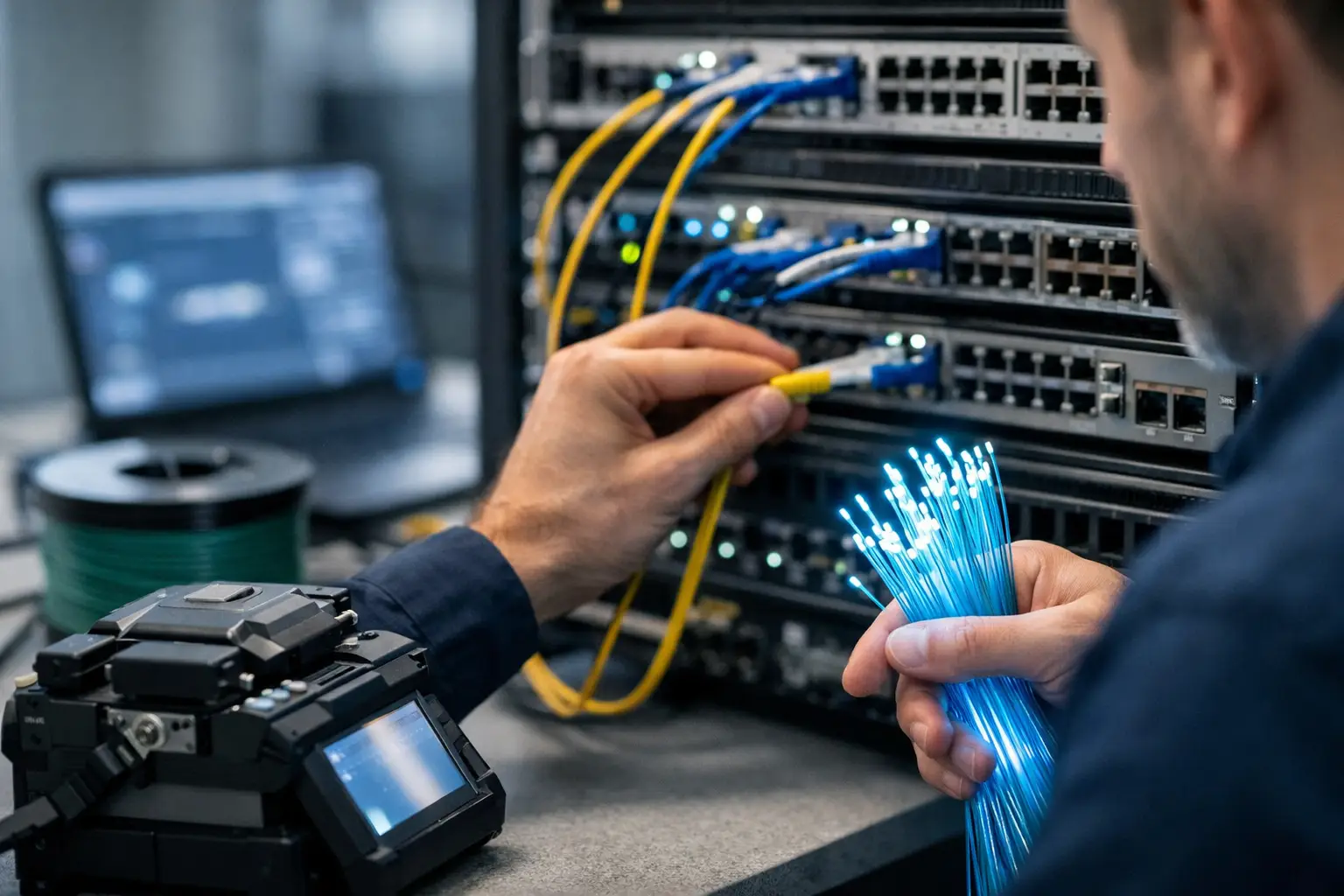
When a business starts seeing dropped calls, slow file transfers, unreliable Wi-Fi backhaul, or recurring bottlenecks between floors and departments, the problem is often deeper than internet speed. In many cases, the real issue is the cabling backbone. Fiber optic network installation gives organizations a stronger foundation for day-to-day operations, especially when growth, security, and uptime matter.
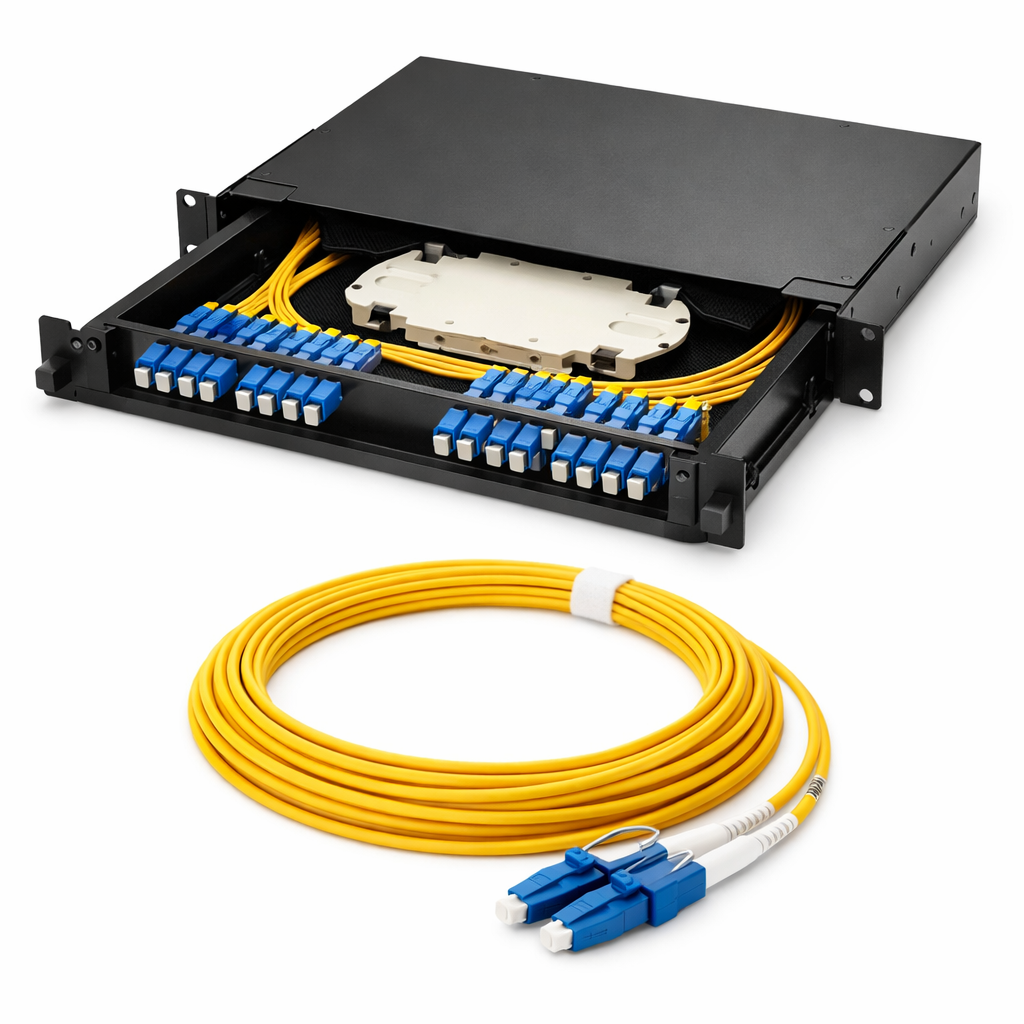
For business leaders, this is not just a technical upgrade. It affects how teams work, how systems communicate, and how well a site can support future demand. Whether you are fitting out a new office, upgrading a warehouse, connecting multiple buildings, or replacing aging copper infrastructure, the quality of the fiber installation has a direct impact on performance and reliability.
Why fiber optic network installation matters
Fiber is designed for high-speed data transmission over longer distances with far less signal loss than traditional copper cabling. That makes it especially useful in commercial environments where traffic volumes are rising and network expectations are higher than they were even a few years ago.
A modern workplace depends on more than email and web browsing. Businesses now run cloud platforms, IP telephony, surveillance systems, access control, video conferencing, enterprise applications, and wireless networks from the same infrastructure environment. If the underlying cabling is undersized or poorly installed, those systems begin to compete for capacity and stability.
A properly planned fiber optic network installation helps solve that by giving your network room to perform. It supports faster uplinks, cleaner interconnection between switches, stronger backbone connectivity across floors or buildings, and better readiness for future expansion. It also helps reduce the performance dips that come from using infrastructure that was never designed for current workloads.
Where businesses benefit most from fiber
Not every environment needs fiber in every endpoint, but many organizations benefit from fiber in the backbone and distribution layers. Corporate offices often use it to connect server rooms, telecom closets, and floor distribution points. Schools and campuses rely on it for building-to-building connectivity. Retail groups use it to support multi-site consistency, while warehouses and industrial facilities need it for long cable runs and dependable transmission in demanding environments.
The business case becomes stronger when there is a need for speed, distance, stability, or future scalability. If your organization is adding more users, more devices, or more bandwidth-heavy systems, fiber usually becomes less of a luxury and more of a practical requirement.
That said, the right design still depends on the site. Some businesses need a full backbone upgrade. Others only need targeted fiber runs to support wireless access points, surveillance aggregation, or server room interconnections. Good planning starts with the operational requirement, not with a one-size-fits-all specification.
What a professional fiber optic network installation includes
A business-grade installation should begin with a site assessment. This is where route planning, distance requirements, cable type selection, containment pathways, equipment locations, and termination points are reviewed in relation to the actual building layout. It is also where practical constraints show up, such as limited riser space, occupied offices, live production areas, or the need to keep current systems running during the project.
From there, the scope usually covers cable routing, pulling and protection, termination, patching, testing, labeling, and documentation. The installation itself must be handled carefully. Fiber is highly capable, but it is also less forgiving when routing is rushed, bend radius is ignored, or terminations are poorly executed.
Testing is one of the most important stages. A cable that appears installed correctly is not necessarily performing to standard. Certification and loss testing confirm whether the installation meets the intended performance level and whether the network team can rely on it once it goes live.
Documentation matters just as much. Clear labeling, route records, termination details, and test results make future maintenance easier and reduce troubleshooting time later. For businesses managing multiple vendors or internal IT teams, this often saves more time than expected.
Common decisions during fiber optic network installation
One of the first choices is single-mode versus multimode fiber. The right option depends on distance, speed requirements, equipment compatibility, and long-term planning. Multimode may suit shorter in-building runs, while single-mode is often chosen for longer distances or higher future bandwidth expectations. The cheapest option upfront is not always the best value over the life of the infrastructure.
Another decision is whether to install only for today’s requirements or build additional capacity now. In many commercial projects, adding spare cores during the initial installation is far more cost-effective than reopening pathways later. This is especially true in occupied offices, secure facilities, or sites with restricted access windows.
There is also the question of integration. Fiber does not operate in isolation. It connects to switching, wireless, security, voice, and structured cabling environments. If those elements are planned separately, gaps tend to appear. Coordinated implementation is often the difference between a clean rollout and a project that creates new issues while solving old ones.
The risks of poor installation
Fiber can deliver excellent performance, but poor workmanship quickly undermines the investment. Common problems include excessive bend loss, damaged cable jackets, contaminated connectors, weak termination quality, poor pathway protection, and incomplete testing. These issues may not fail immediately. In some cases, they show up later as intermittent faults, unexplained packet loss, or instability under higher loads.
For business operations, that delayed failure is costly. Troubleshooting network issues after occupancy, during trading hours, or in a live production environment is far more disruptive than doing the installation correctly the first time. This is why experience matters. The contractor should understand not only the cabling standard, but also how the infrastructure supports actual business use.
In office moves and renovations, another risk is project fragmentation. One vendor handles cabling, another handles networking, and another manages access control or CCTV. Each may complete their portion, but without a coordinated view of routes, cabinet space, power, and switching requirements, the final environment can feel patched together. A systems integrator approach reduces that risk.
Planning around business continuity
For most organizations, downtime is not acceptable simply because an upgrade is underway. That means installation planning should account for work sequencing, migration windows, temporary service continuity, and site safety. In some cases, fiber can be installed and tested in parallel before services are migrated. In others, phased work is needed so departments remain operational.
This is especially relevant in occupied offices, schools, healthcare settings, and retail environments. The technical design may be sound, but if the project disrupts users unnecessarily, the business still pays the price. A well-managed installation balances engineering requirements with the realities of the workplace.
This is where an experienced provider adds value beyond the cable itself. Since 2003, I-Weblogic Pte Ltd has worked with organizations that need infrastructure projects delivered with practical coordination, not just technical completion. That matters when fiber installation sits alongside network upgrades, physical security systems, or broader office infrastructure changes.
How to evaluate a fiber installation partner
Businesses should look beyond price alone. A lower quote may exclude testing depth, documentation quality, pathway remediation, or coordination with active network equipment. The better question is whether the provider understands the full environment and can deliver an installation that supports performance over time.
Ask how the design is validated, what testing is included, how routes will be protected, and how the team plans to minimize disruption. It is also worth checking whether the contractor can coordinate with your switching, wireless, telephony, and security requirements. The more interconnected the environment, the more valuable that wider capability becomes.
A strong partner will also be realistic. Not every site needs the most expensive design, and not every legacy environment should be replaced all at once. Good advice usually includes trade-offs, such as where existing infrastructure can remain, where upgrades are urgent, and where future-proofing makes financial sense.
A stronger foundation for growth
Fiber optic network installation is best viewed as foundational infrastructure. When it is designed properly and installed with care, it supports faster communication, more reliable systems, and smoother growth across the business. It helps IT teams reduce recurring bottlenecks, gives operations more confidence in site performance, and creates a better platform for everything from wireless expansion to security integration.
If your business is planning a relocation, expansion, renovation, or network refresh, this is the right time to assess whether your current backbone can still support where the organization is heading. The right fiber design does not just meet current demand. It gives your business more room to operate with confidence.
Beyond the physical installation, our team provides comprehensive managed IT services singapore
to ensure your infrastructure stays optimized. We also ensure all network deployments align with local data protection laws, keeping your business compliant and secure.

Pingback: Turnstile Gate Integration Singapore: The Hidden Costs