
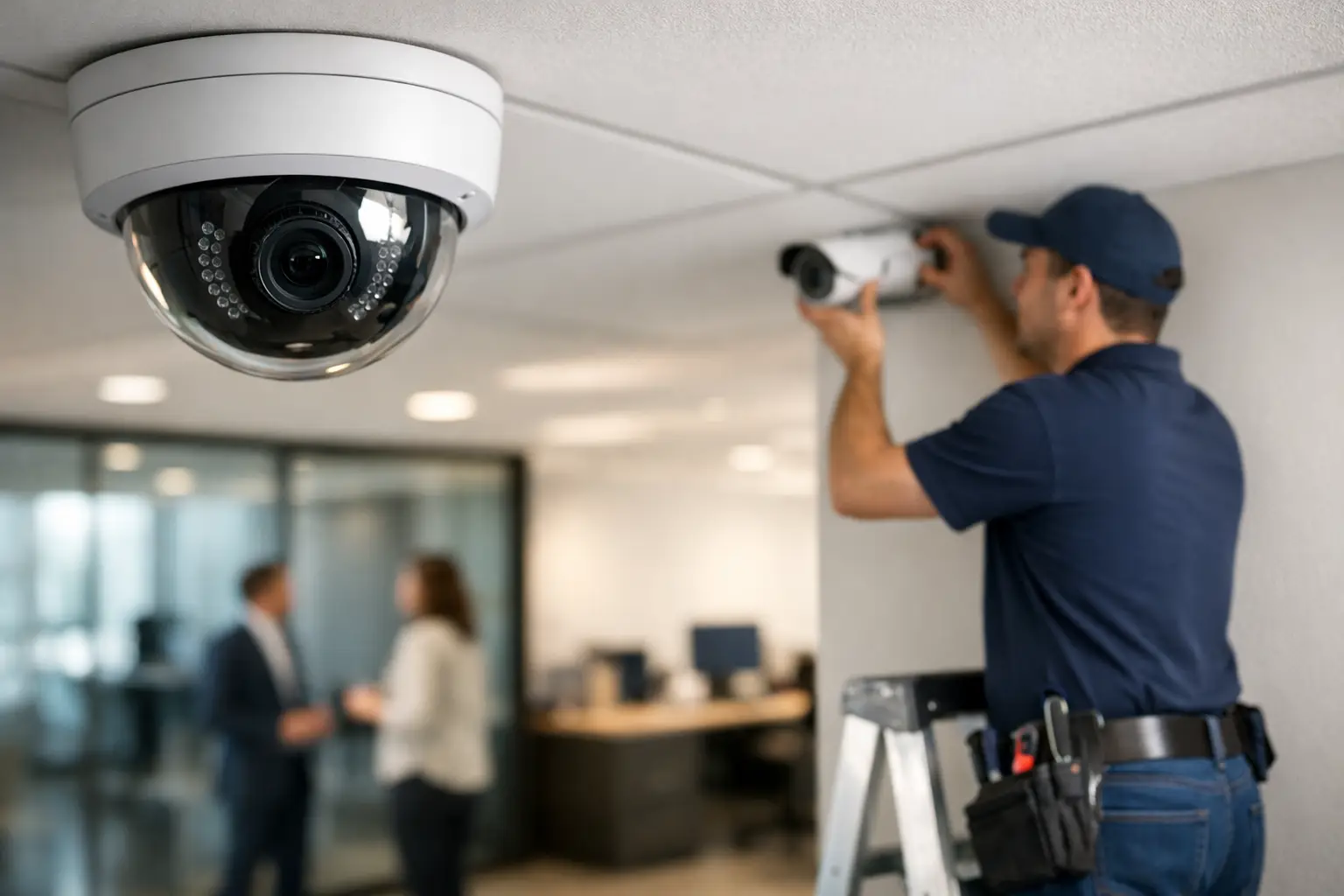
A missing camera angle usually gets noticed after an incident, not before. That is why cctv installation for business should never be treated as a simple hardware purchase. For most organizations, the real issue is not whether cameras are installed. It is whether the system actually supports daily operations, protects key areas, and fits the wider infrastructure already in place.
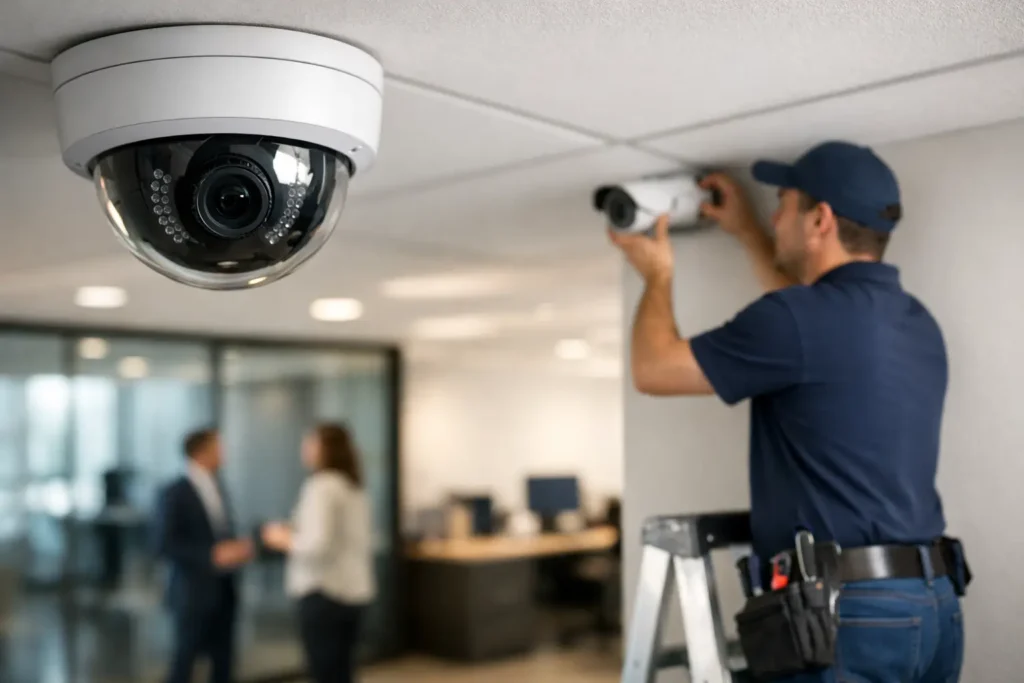
Business environments have different risks, layouts, and operating patterns. A small office may need clear coverage of entrances, reception, and shared work areas. A warehouse may care more about loading bays, stock movement, after-hours access, and perimeter visibility. A school, clinic, or retail chain has another set of concerns entirely. The right system starts with those realities, not with a generic camera count.
What good CCTV installation for business really involves
A business-grade CCTV system is part security tool, part operational asset. It helps deter theft and unauthorized access, but it can also support incident review, process monitoring, compliance requirements, and dispute resolution. That only happens when installation is planned around business use, not just equipment placement.
Camera selection matters, but so do positioning, lighting conditions, retention requirements, network capacity, and how footage will be accessed when something goes wrong. A clear image at the front door is useful. A usable system that records reliably, stores footage properly, and allows authorized staff to retrieve evidence quickly is far more valuable.
This is where many projects go off course. Some businesses buy cameras first and figure out the rest later. That often leads to blind spots, poor image quality, overloaded network segments, or storage that runs out sooner than expected. The result is a system that looks complete on paper but falls short in practice.
Start with risk, layout, and business priorities
The best installation plans begin with a site assessment. This is less about counting doors and more about understanding how people, visitors, goods, and vehicles move through the space. Entry and exit points are obvious priorities, but they are rarely the only ones. Reception counters, server rooms, cash handling areas, stock rooms, lift lobbies, corridors, parking areas, and back-of-house delivery zones may all require different levels of coverage.
A proper assessment should also consider what the cameras need to capture. In some areas, general situational awareness is enough. In others, you may need facial recognition quality at close range, license plate visibility, or detailed views of transactions. One camera type will not suit every location.
There is also a practical trade-off between broader coverage and tighter detail. A wide-angle camera can cover more floor space, but that may reduce the level of detail available when zooming in on an incident. More cameras can improve coverage, but that affects budget, cabling, storage, and maintenance. The goal is not maximum hardware. It is fit-for-purpose coverage.
Why infrastructure matters as much as the cameras
CCTV is often discussed as a standalone security product, but in a business environment it depends heavily on underlying infrastructure. Cabling quality, switch capacity, power delivery, rack organization, and network segmentation all influence whether the system performs reliably over time. Because high-resolution IP cameras consume significant bandwidth, proper network planning is essential. By prioritizing cybersecurity at the network level and ensuring robust data storage protocols, you protect your footage from unauthorized access while maintaining system performance
For IP-based CCTV, network design is especially important. High-resolution video consumes bandwidth, and multiple cameras streaming continuously can create avoidable congestion if the system is dropped into an already busy network without planning. In a small office, that may cause intermittent slowdowns. In a larger site, it can affect business applications or make video retrieval frustratingly slow.
This is one reason experienced integrators look beyond camera specs. They assess whether existing structured cabling can support the deployment, whether Power over Ethernet is available where needed, and whether core networking equipment has the capacity for current demand and future expansion. When CCTV, access control, and office connectivity are all treated as part of one environment, the result is usually more stable and easier to manage.
Choosing the right cameras and recording setup
There is no single best camera for every business. Dome cameras are common for indoor areas because they are discreet and harder to tamper with. Bullet cameras are often used outdoors or in longer-range positions where a visible deterrent is useful. Turret and fisheye models may suit specific layouts, while PTZ cameras can help monitor large open areas, though they should not replace fixed coverage where constant recording is required.
Resolution should be chosen based on purpose, not marketing labels. Higher resolution can improve detail, but it also increases storage demand and network load. Frame rate, low-light performance, dynamic range, and lens selection may be just as important depending on the environment. A dim loading area or a glass-fronted entrance with strong backlight can expose weaknesses quickly.
Recording architecture also deserves careful thought. Some businesses prefer on-site network video recorders for direct control. Others want centralized management across multiple sites. Retention periods vary based on internal policy, industry expectations, and how often footage is likely to be reviewed. Storing too little footage creates risk. Storing more than necessary can add cost without much benefit. The right answer depends on the business, the incident profile, and any compliance obligations.
Installation quality affects long-term performance
Even well-chosen equipment can disappoint if the installation is careless. Camera height, angle, field of view, cable routing, and mounting stability all affect real-world performance. So does commissioning. If a system is not properly configured and tested, issues such as glare, overexposure, dead zones, and poor nighttime visibility may go unnoticed until there is a problem to investigate.
Professional installation should include clear labeling, organized termination, proper power planning, and verification that recording, playback, remote access, and user permissions all work as intended. For larger businesses, this should also include documentation that makes future support easier. Expansion becomes simpler when the original installation is structured, not improvised.
This matters even more during office moves, renovations, or phased upgrades. Businesses often need new security coverage without major disruption to staff or daily operations. In those cases, coordination between cabling, networking, and camera deployment can reduce downtime and avoid repeat work. That integrated approach is where providers such as I-Weblogic Pte Ltd often add the most value, because CCTV is aligned with the broader infrastructure rather than installed in isolation.
Compliance, privacy, and internal policy
A CCTV system should strengthen control, not create uncertainty. Businesses need to be clear about why cameras are being used, who can access footage, how long recordings are retained, and whether signage or policy updates are required. Legal obligations vary by location and industry, so compliance with government security guidelines should be reviewed early.
There is also an internal trust component. Over-monitoring can create unnecessary friction if camera placement appears excessive or poorly explained. Most businesses do better when surveillance is targeted at genuine security and operational needs. Staff generally understand the need to secure entrances, high-value assets, and restricted areas. Problems arise when camera coverage feels vague in purpose or inconsistent in governance.
When a cheaper system costs more
Budget matters, especially for SMEs and multi-site deployments. But the lowest upfront quote is rarely the lowest total cost. Cheap cameras may have weaker low-light performance, shorter service life, or inconsistent firmware support. Poor installation can lead to call-backs, blind spots, and patchwork fixes. When you prioritize quality, a professional cctv installation for business actually lowers your long-term costs by preventing constant maintenance and blind spots.
Limited storage can force difficult compromises. Weak network planning can introduce hidden performance issues elsewhere.
A better approach is to prioritize the areas that carry the highest risk or highest business value, then design for expansion. That may mean installing core coverage now with spare capacity for future cameras, access control integration, or centralized monitoring later. Scalable planning usually protects investment better than overbuying or underbuilding.
What businesses should ask before approving a project
Before moving ahead, decision-makers should be confident on a few practical points. They should know what each camera is meant to achieve, how long footage will be stored, whether the existing network can support the deployment, and who will manage user access and maintenance. They should also understand any dependencies with structured cabling, power, internet connectivity, or site access.
Just as important, they should ask how the system will perform six or twelve months from now. Can it scale if the office expands? Can it support another branch? Will remote viewing remain secure? Will troubleshooting be straightforward if an issue appears after hours? These questions tend to separate a quick install from a dependable business system.
CCTV works best when it is planned as part of a wider operating environment. When cameras, cabling, network design, and security policy are aligned, businesses get more than footage. They get visibility, accountability, and a setup that supports growth instead of creating another system to work around.

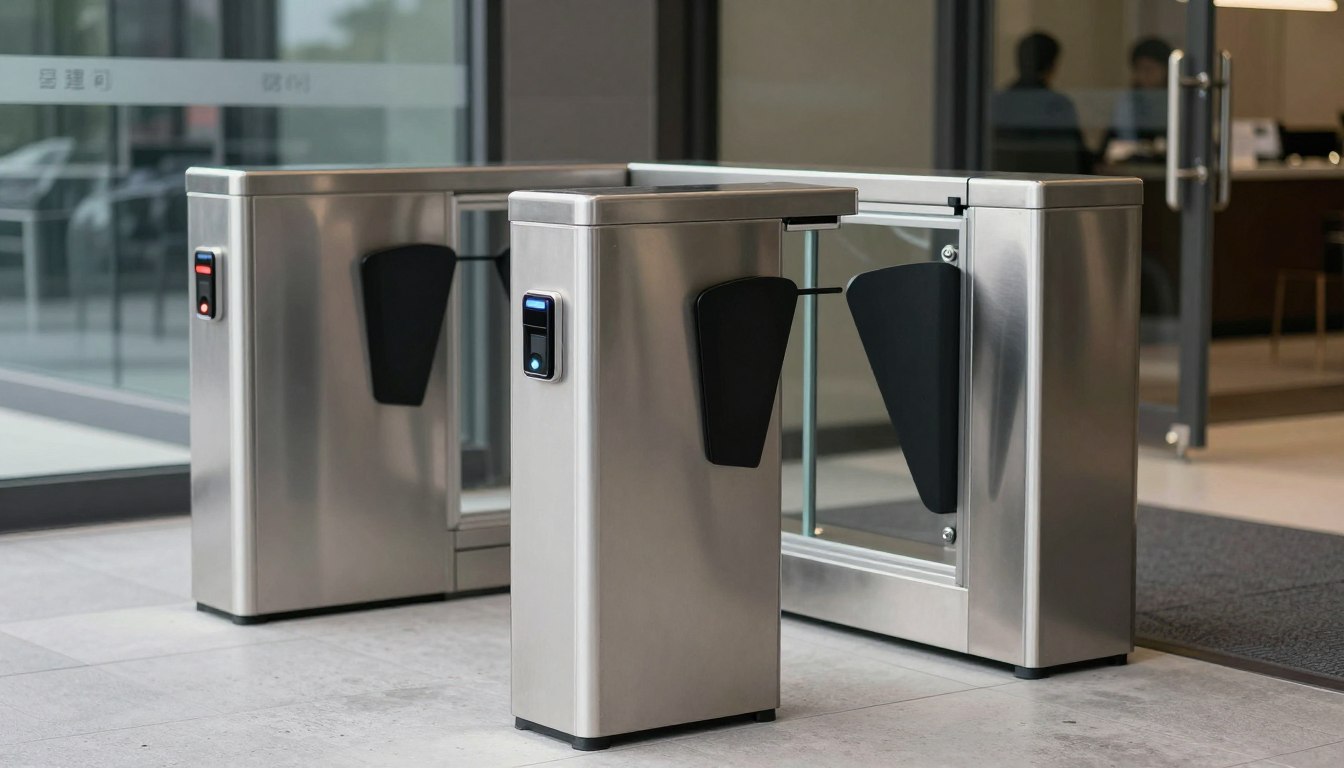
Pingback: Choosing a Keyless Entry System for Office - I-Weblogic Pte Ltd
Pingback: Fiber Optic Network Installation for Business - I-Weblogic Pte Ltd