Why Face Recognition is the Future of Office Security in Singapore

Singapore offices face unprecedented security challenges in 2026. Data breaches cost businesses millions annually. Card-based entry systems prove vulnerable to cloning and unauthorized access.
Traditional authentication methods can no longer protect modern workplaces. Employees lose access cards regularly. Buddy punching inflates payroll costs through time attendance fraud.
Face recognition door access systems solve these critical vulnerabilities. This biometric technology eliminates physical credentials entirely. Authentication happens in milliseconds using unique facial features that cannot be shared, stolen, or duplicated.
Security Challenges with Traditional Access Methods
Card-Based System Vulnerabilities
Access cards create significant security gaps for Singapore businesses. Cards get lost, stolen, or shared among employees regularly. Replacement costs accumulate quickly when staff misplace credentials.
Card cloning technology has become accessible to unauthorized individuals. Criminals can duplicate access cards in seconds. Your office becomes vulnerable the moment one card goes missing.
Comprehensive door access system solutions address these fundamental weaknesses. Modern approaches eliminate physical tokens that create security risks.

PIN Code and Fingerprint Limitations
PIN code systems suffer from password sharing and weak authentication. Employees write codes down or share them with colleagues. Four-digit combinations provide minimal security protection.
Fingerprint scanners face hygiene concerns in post-pandemic workplaces. Staff hesitate to touch shared surfaces. Fingerprint readers require physical contact that modern employees avoid.
Environmental factors affect fingerprint recognition accuracy significantly. Humidity in Singapore degrades scanner performance. Dirty or wet fingers cause authentication failures.
How Face Recognition Access Control Works

Biometric Authentication Technology
Face recognition systems capture unique facial geometry during enrollment. Advanced algorithms map over 80 nodal points on each face. These distinctive features create a digital template for each employee.
The authentication process happens automatically when staff approach entry points. Cameras detect faces from several meters away. Recognition occurs in under two seconds without requiring any action.
Modern facial recognition door access systems operate with 99.9% accuracy. False acceptance rates remain below 0.001% for quality systems. This precision exceeds traditional authentication methods significantly.
Integration Capabilities
Face recognition door access systems integrate seamlessly with existing infrastructure. Connection with time attendance tracking eliminates manual clock-in procedures. Access control and payroll systems synchronize automatically.
Integration with CCTV installation provides comprehensive security monitoring. Video footage links directly to access events. Security teams review both visual records and authentication data simultaneously.

- Automatic time attendance logging with facial authentication
- Real-time access event notifications to security personnel
- Integration with building management systems for automation
- Synchronization with HR databases for employee data
- Connection with alarm systems for enhanced security response
- API compatibility with enterprise software platforms
Benefits of Face Recognition for Singapore Offices
Enhanced Security and Access Control
Facial recognition eliminates unauthorized entry through shared credentials. Each employee’s face serves as a unique, non-transferable access token. Security breaches from lost or stolen cards become impossible.
Access control systems maintain detailed audit trails automatically. Every entry event records timestamp, location, and individual identity. Compliance reporting becomes straightforward with complete access histories.

Improved Operational Efficiency
Contactless authentication accelerates employee entry during peak hours. Staff walk through entry points without stopping or searching for cards. Morning arrivals process 40% faster with biometric door access systems.
Time attendance data flows automatically into payroll systems. HR departments eliminate manual timesheet processing entirely. Payroll accuracy improves while administrative overhead decreases significantly.
Advantages
- Zero physical credentials to manage or replace
- Touchless operation maintains workplace hygiene
- Instant authentication reduces entry bottlenecks
- Automated time tracking eliminates buddy punching
- Scalable across multiple office locations
Considerations
- Initial implementation investment required
- Privacy policies must address data protection
- Lighting conditions affect recognition accuracy
- Employee enrollment time during deployment
- Network connectivity essential for cloud solutions
Cost Savings Over Time
Organizations eliminate ongoing access card expenses completely. Card production, printing, and replacement costs disappear. Singapore businesses save thousands annually on credential management alone.
Reduced time theft saves substantial payroll expenses. Buddy punching prevention recovers 2-5% of total labor costs. These savings typically justify system investment within eighteen months.
Technical Considerations for Singapore Offices

Climate and Environmental Factors
Singapore’s tropical climate demands specific hardware considerations for face recognition systems. High humidity levels affect electronic components without proper protection. Quality face recognition door access systems use weatherproof enclosures rated IP65 or higher.
Temperature fluctuations between air-conditioned interiors and outdoor conditions create condensation. Industrial-grade terminals include anti-fog technology and temperature compensation. These features maintain consistent recognition accuracy regardless of environmental conditions.
Direct sunlight exposure challenges camera sensors at outdoor entry points. Advanced systems incorporate anti-glare technology and automatic brightness adjustment. Proper installation positioning minimizes lighting interference during operation.
Data Privacy and PDPA Compliance
Singapore’s Personal Data Protection Act governs biometric data collection and storage. Organizations must obtain explicit employee consent before enrollment. Privacy policies must clearly explain data usage and retention. All collected information, including access logs and biometric templates, is securely stored and protected within your internal security network
, ensuring that sensitive data remains localized and compliant with data privacy standards
Facial recognition data requires encryption both in transit and at rest. Access control databases need secure storage with restricted administrative access. Regular security audits verify compliance with PDPA requirements.
PDPA Compliance Checklist: Obtain written consent from all employees. Document legitimate business purposes for data collection. Implement data retention policies with automatic purging. Provide employees access to their biometric data. Establish secure data deletion procedures for terminated staff.
Network Infrastructure Requirements
Face recognition door access systems require reliable network connectivity. Local area networks must support multiple access points simultaneously. Cloud-based solutions need consistent internet bandwidth for real-time authentication.
Network segmentation improves security by isolating access control traffic. Dedicated VLANs prevent unauthorized access to biometric databases. Backup connectivity options ensure continued operation during network disruptions.
On-Premise Solutions
- Complete data control within organization network
- Faster authentication without internet dependency
- Enhanced privacy with local data storage
- Higher upfront infrastructure investment
Cloud-Based Systems
- Lower initial deployment costs
- Automatic software updates and maintenance
- Multi-location management from single platform
- Requires stable internet connectivity
Need Expert Guidance on Face Recognition Systems?
Our Singapore-based specialists provide comprehensive assessments tailored to your office security requirements. Get professional recommendations on system design, PDPA compliance, and installation planning.
Essential Features in Modern Face Recognition Systems
Advanced Recognition Capabilities
Top-tier systems recognize faces wearing glasses, masks, or hats. Algorithms compensate for accessories and partial facial coverage. Recognition accuracy remains high even with significant facial variations.
Multi-angle detection captures faces from various approach angles. Employees don’t need to stop and position themselves precisely. Authentication succeeds whether staff walk straight toward or past the device.

Anti-Spoofing Technology
Liveness detection prevents authentication using photographs or videos. Infrared sensors verify three-dimensional facial structure. This technology blocks spoofing attempts using printed images or screens.
Advanced systems detect subtle facial movements during authentication. Micro-expressions confirm the presence of a living person. These anti-spoofing measures protect against sophisticated fraud attempts.
Capacity and Speed Performance
Enterprise-grade face recognition door access systems store 50,000+ facial templates. Large organizations manage entire employee populations in single databases. Database searches complete in milliseconds regardless of total entries.
Recognition speed directly impacts employee experience during peak traffic. Quality systems authenticate users in 0.5 to 2 seconds. This throughput prevents bottlenecks at high-traffic entry points.
| Feature Category | Entry-Level Systems | Enterprise Solutions |
| Database Capacity | 3,000 – 10,000 faces | 50,000+ faces |
| Recognition Speed | 1 – 3 seconds | 0.5 – 1 second |
| Accuracy Rate | 97 – 98% | 99.7 – 99.9% |
| Anti-Spoofing | Photo detection | 3D liveness + IR sensing |
| Operating Distance | 0.5 – 1 meter | 1 – 3 meters |
| Multi-Device Sync | Limited (2-5 devices) | Unlimited network devices |
Integration with Complementary Security Systems

Turnstile and Barrier Integration
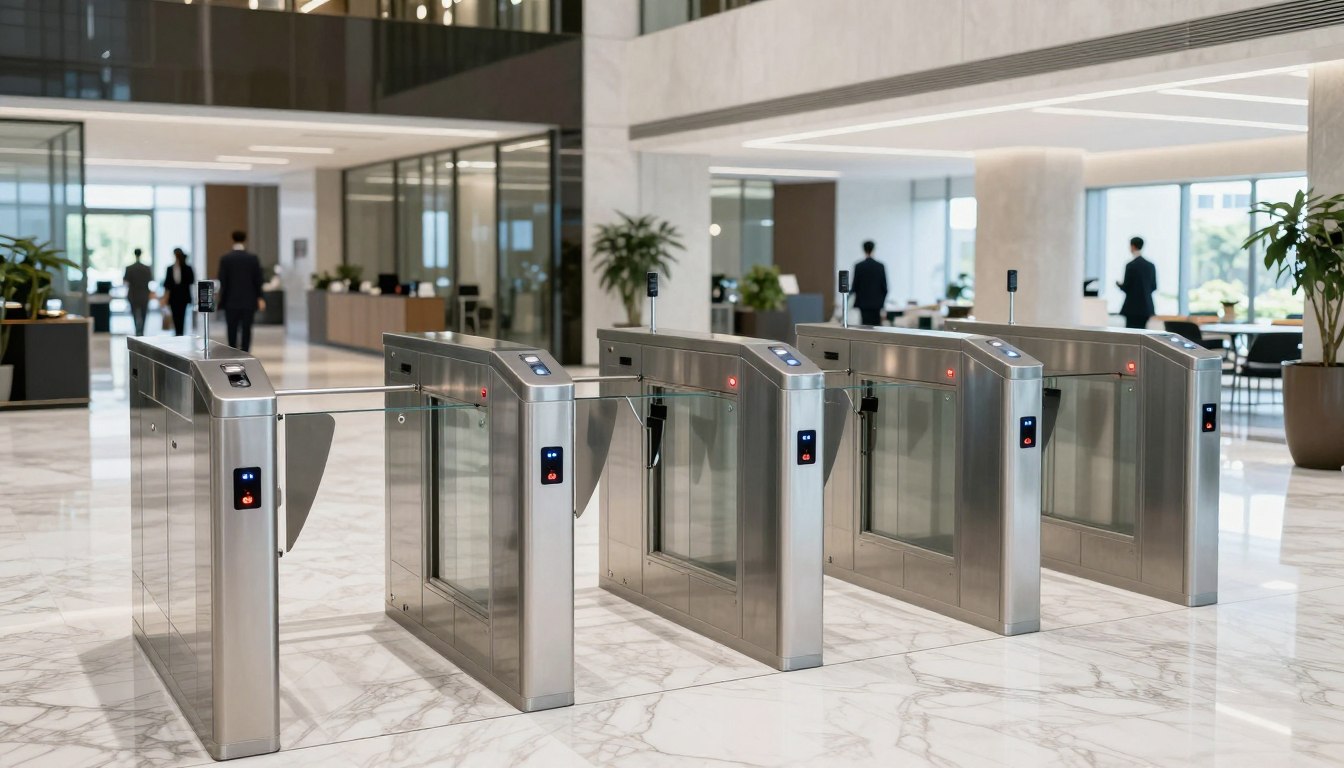
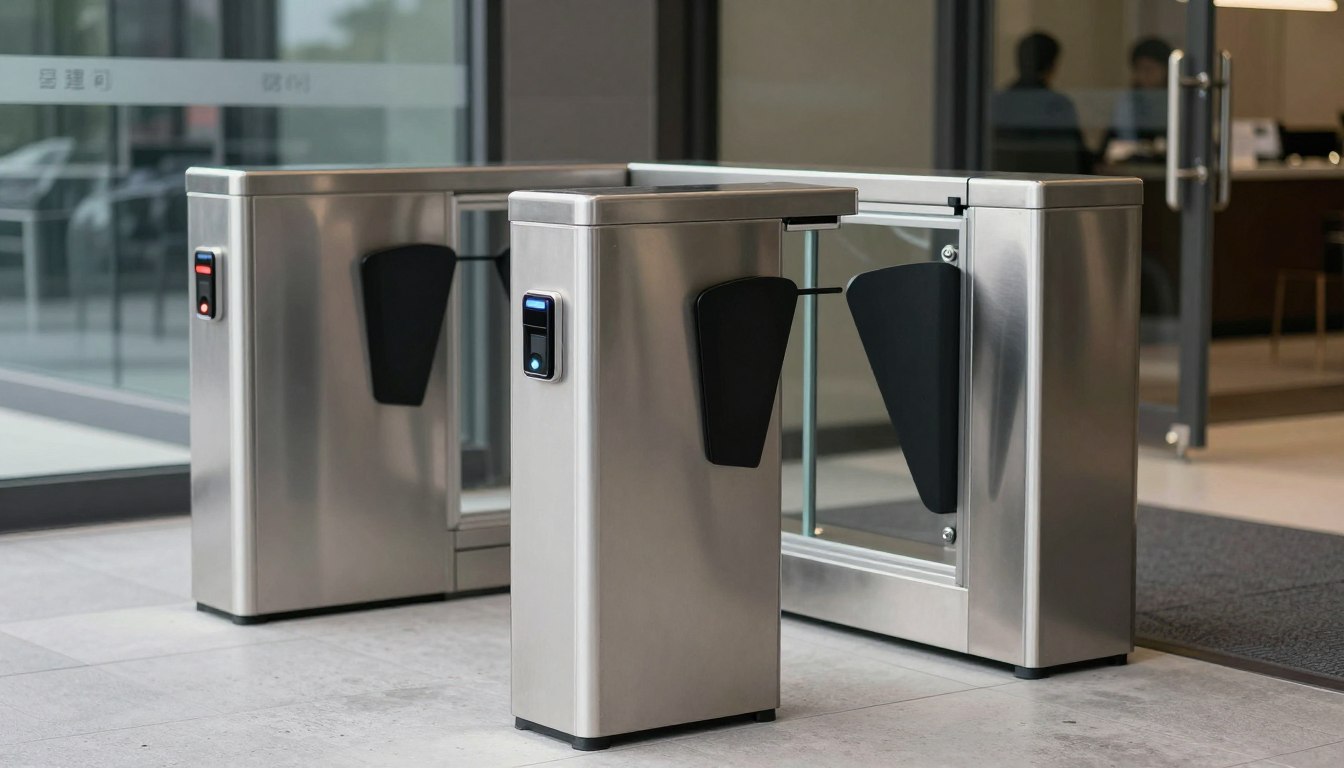
Face recognition systems control physical barriers automatically after authentication. Integration with turnstile gate installations prevents tailgating effectively. Barriers only open for authenticated individuals, closing immediately afterward.
Optical turnstiles provide elegant access control for corporate lobbies. Speed gates process authenticated employees rapidly during rush hours. Anti-passback features prevent credential sharing by tracking directional entry and exit.
Visitor Management Solutions
Modern systems handle both employee and visitor access seamlessly. Visitor pre-registration creates temporary facial profiles valid for specific timeframes. Reception staff enroll visitors quickly using tablet-based enrollment stations.
Visitor access automatically expires at scheduled times. Access zones restrict visitors to designated areas only. Host employees receive real-time notifications when visitors arrive.
Alarm System Coordination
Access control integration with alarm systems enables intelligent security responses. Unauthorized access attempts trigger immediate alerts to security personnel. Video verification provides instant visual confirmation of security events.
After-hours access by authorized employees disarms alarm systems automatically. This coordination eliminates false alarms from legitimate employee entry. Security teams focus on genuine threats rather than authorized activity.
Why Professional Installation Matters

Optimal Device Positioning
Camera height and angle dramatically affect recognition performance. Professional installers position terminals at optimal heights between 1.4 to 1.6 meters. This range accommodates various employee heights without adjustment.
Mounting angle prevents ceiling light interference and shadow creation. Installers consider natural and artificial lighting throughout the day. Proper positioning maintains consistent recognition rates regardless of time.
Distance from entry points balances authentication speed with security. Terminals placed too close create congestion during peak hours. Professional placement allows natural walking pace authentication.
Network Configuration and Security
Enterprise networks require specialized configuration for access control systems. Professional installation includes VLAN setup for security isolation. Network switches receive proper quality-of-service settings for priority traffic.
Database servers need secure configuration following industry best practices. Installers implement encryption protocols for all data transmission. Regular security patches and updates become part of ongoing maintenance.
Professional installation ensures seamless integration with existing infrastructure. Experienced technicians connect biometric door access systems with building management platforms. CCTV installation, time attendance, and access control operate as unified security solutions.
Beyond just hardware, reliable security is built on a stable foundation; learn more about how our Managed IT Services can provide the expert backbone your business infrastructure needs
Employee Enrollment and Training
Successful deployment requires systematic employee enrollment procedures. Professional implementation includes organized enrollment sessions for entire staff. Each employee receives clear instructions on proper positioning for enrollment.
Multiple facial images at various angles improve recognition accuracy. Enrollment captures faces with and without common accessories. This comprehensive enrollment prevents authentication failures during daily use.
Staff training covers both normal operation and exception handling. Employees learn manual override procedures for system maintenance periods. Security personnel receive administrator training for user management and troubleshooting.
DIY Installation Risks: Improper positioning causes recognition failures and employee frustration. Incorrect network configuration creates security vulnerabilities. Inadequate enrollment procedures result in high false rejection rates. Professional installation eliminates these costly problems through expert implementation.
Selecting the Right Face Recognition System for Your Office
Assessing Your Security Requirements
Office size determines system capacity and device quantity. Small offices with under 100 employees need different solutions than enterprise campuses. Access point count affects total system cost and complexity.
Security level requirements vary by industry and data sensitivity. Financial institutions need higher security standards than general offices. Compliance requirements influence system selection significantly.

Comparing System Providers
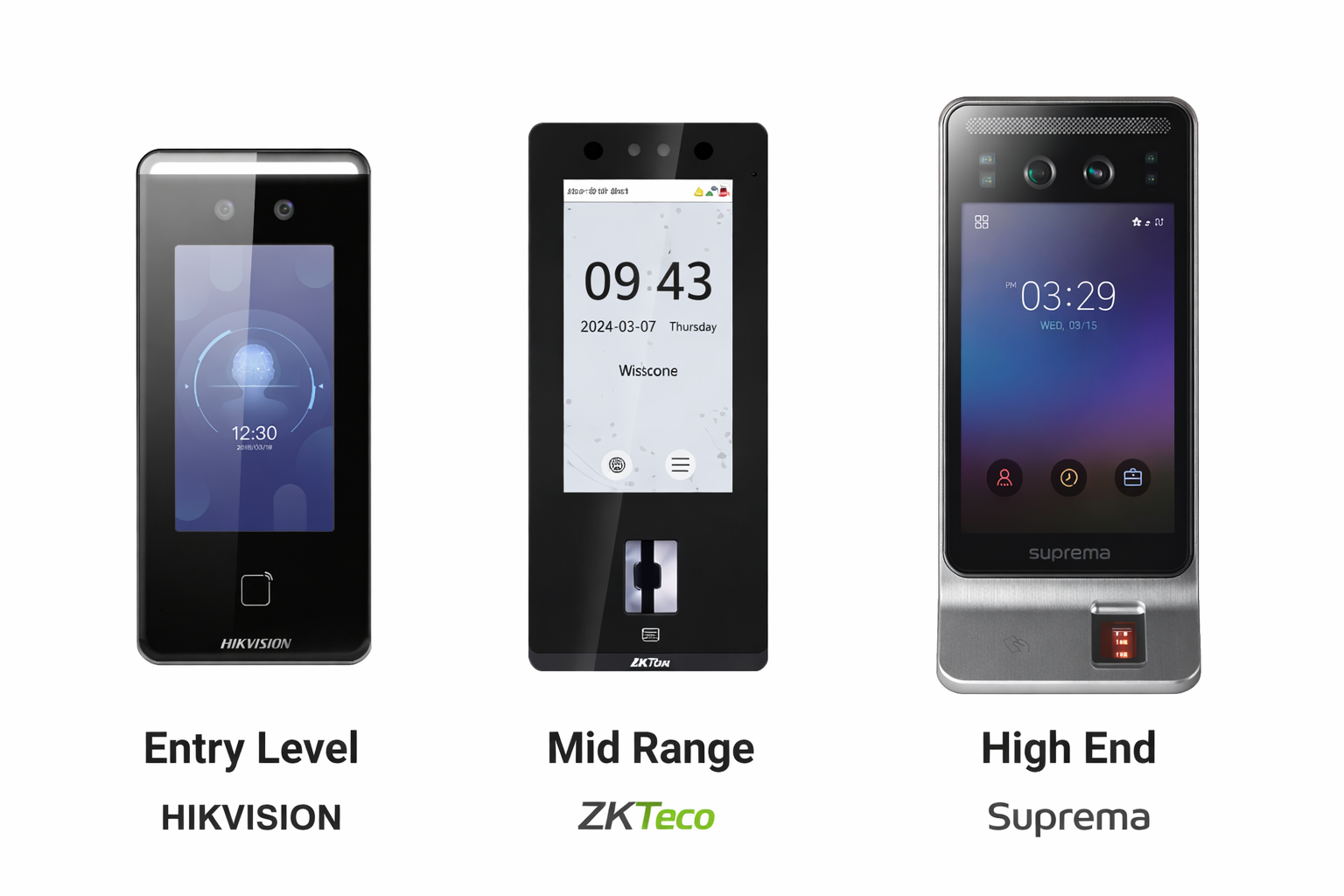
Leading manufacturers offer varying features and price points. International brands provide extensive product ranges with proven reliability. Local Singapore suppliers offer responsive support and faster service.
Total cost of ownership extends beyond initial hardware prices. Ongoing maintenance, software licensing, and support contracts affect long-term expenses. Professional service agreements ensure continued optimal performance.
System Evaluation Criteria
- Recognition accuracy under Singapore conditions
- Database capacity for future growth
- Integration capabilities with existing systems
- PDPA compliance features and documentation
- Local technical support availability
- Warranty coverage and service response time
- Software update policy and frequency
Implementation Timeline
- Initial consultation and site assessment
- System design and proposal development
- Equipment procurement and testing
- Network preparation and configuration
- Physical installation and integration
- Employee enrollment and training
- System testing and optimization
- Go-live and ongoing support
Future Trends in Face Recognition Access Control

Artificial Intelligence Enhancements
Machine learning algorithms continuously improve recognition accuracy through operation. Systems learn from authentication patterns and environmental variations. Accuracy increases over time without manual calibration.
AI-powered analytics identify unusual access patterns automatically. Security teams receive alerts about abnormal employee behavior. Predictive analytics help prevent security incidents before they occur.
Contactless Technology Advancement
Recognition distances continue expanding with improved camera technology. Next-generation systems authenticate from 5+ meters away. Employees walk through entry points without slowing down.
Mobile device integration adds flexibility to access control. Smartphones become enrollment stations for temporary visitors. Employees manage guest access through mobile applications.
Multi-Modal Biometric Authentication
Future systems combine multiple biometric authentication methods for enhanced security. Facial recognition works alongside iris scanning or voice recognition. Multi-factor biometric authentication provides maximum security for sensitive areas.
Behavioral biometrics analyze walking patterns and movement characteristics. These additional data points further reduce false acceptance rates. Security systems become virtually impossible to deceive.
Securing Your Singapore Office for the Future
Face recognition door access systems represent the evolution of workplace security. Traditional authentication methods cannot match the security, convenience, and efficiency of biometric technology. Singapore businesses gain competitive advantages through modern access control implementation.
Technical considerations specific to Singapore’s climate and regulations require expert guidance. Professional installation ensures optimal performance and compliance with data protection requirements. Integration with comprehensive security infrastructure maximizes return on investment.
The transition to facial recognition eliminates ongoing credential management costs while preventing security breaches. Office door access system Singapore deployments continue growing as organizations recognize biometric advantages. Early adopters position themselves ahead of inevitable industry standards.

Ready to Secure Your Singapore Office?
Contact I-Weblogic for a professional assessment of your office security needs. Our experienced team evaluates your requirements, recommends optimal solutions, and handles complete implementation from design through employee training. Get expert guidance on face recognition door access system deployment tailored specifically for Singapore conditions.