A lost mechanical key creates a familiar operational problem: someone must decide whether to rekey a door, accept the risk, or delay work while access is sorted out. An office access badge system guide should start with that business reality, not with reader specifications. The right system gives authorized people appropriate access, creates a usable record of entry activity, and lets administrators respond quickly when staff, spaces, or security requirements change.
For an office manager, facilities leader, or IT manager, access control is rarely a standalone purchase. It affects door hardware, network capacity, cabling routes, employee onboarding, visitor processes, emergency procedures, and future expansion. Planning these dependencies early helps avoid a system that works at one reception door but becomes difficult to manage across the rest of the organization.
Start With the Access Decisions You Need to Make
A badge system controls who can enter a location, when they can enter, and in some cases, which doors remain available during certain events. Before choosing readers or credentials, map the access decisions your business needs to make every day.
A small office may need one main entrance, a server room, and a records area. A multi-floor company may need separate access groups for employees, contractors, executives, cleaning crews, and tenants. Retail, education, and multi-site operations often need centralized administration with different schedules and permissions at each location.
This exercise should identify more than just doors. Consider time schedules, temporary access, after-hours procedures, visitor entry, and the person responsible for approving exceptions. If managers cannot answer who should have access to a sensitive room and why, technology will not resolve the underlying risk.
Document each opening by its business purpose and required security level. Main entrances may need convenient employee access and visitor management. IT rooms, storage areas, finance offices, and laboratories may need stricter permissions, audit history, and a second authentication factor. This structure keeps the investment proportionate to the risk at each door.
Choosing Credentials and Readers
Physical badges remain a practical choice for many businesses. They are familiar to employees, quick to issue, and can be printed with identification details. However, not all cards provide the same level of protection. Older low-frequency proximity cards can be easy to duplicate if an organization relies on outdated formats and weak enrollment practices.
For new deployments, encrypted smart cards or mobile credentials generally provide stronger security options and better support for future requirements. Mobile access can reduce the need to distribute physical cards, particularly for hybrid teams or temporary contractors. It also depends on employees carrying charged smartphones, accepting the required application permissions, and having a clear process for device replacement.
Biometric readers can be appropriate for higher-risk locations, but they should be selected carefully. They introduce privacy, consent, data handling, and fallback-access considerations. A biometric reader is not automatically the best answer for every office door. In many workplaces, a secure credential paired with a PIN for selected areas provides a better balance of security, speed, and employee acceptance.
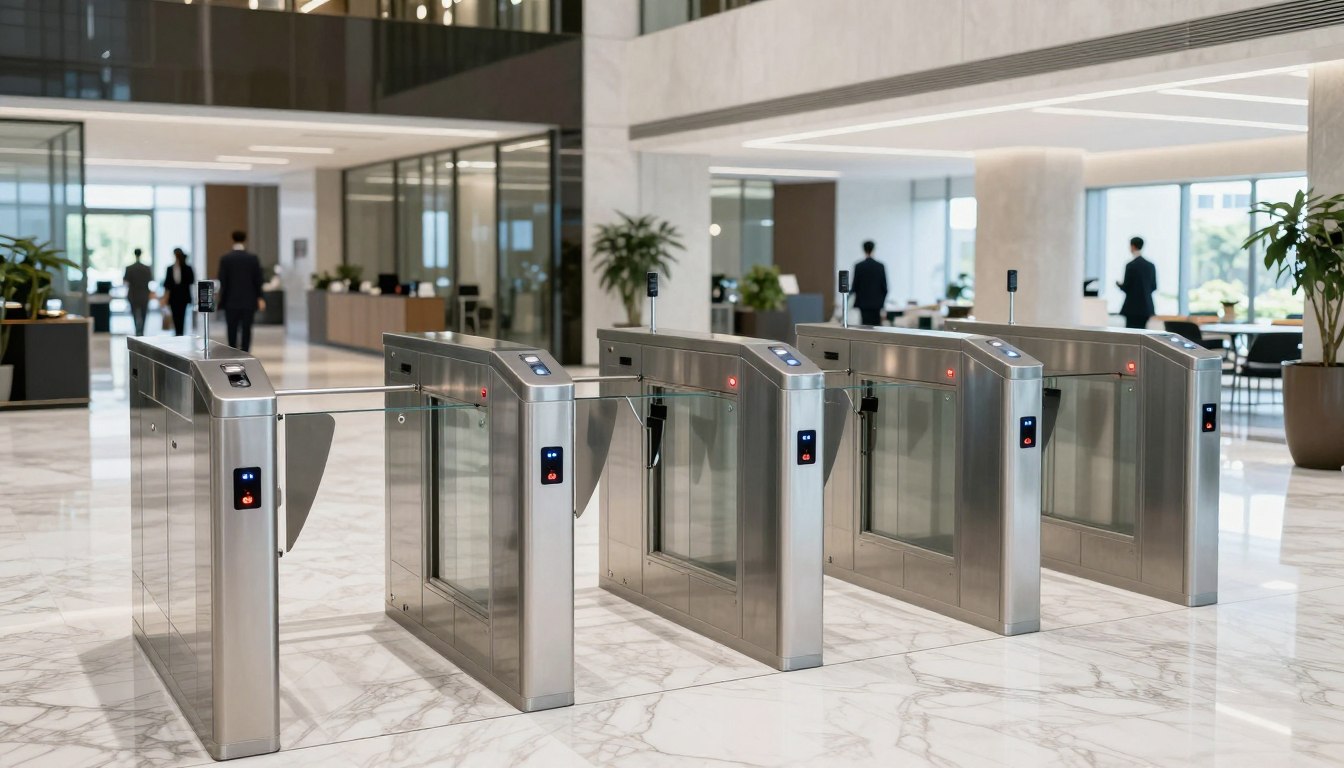
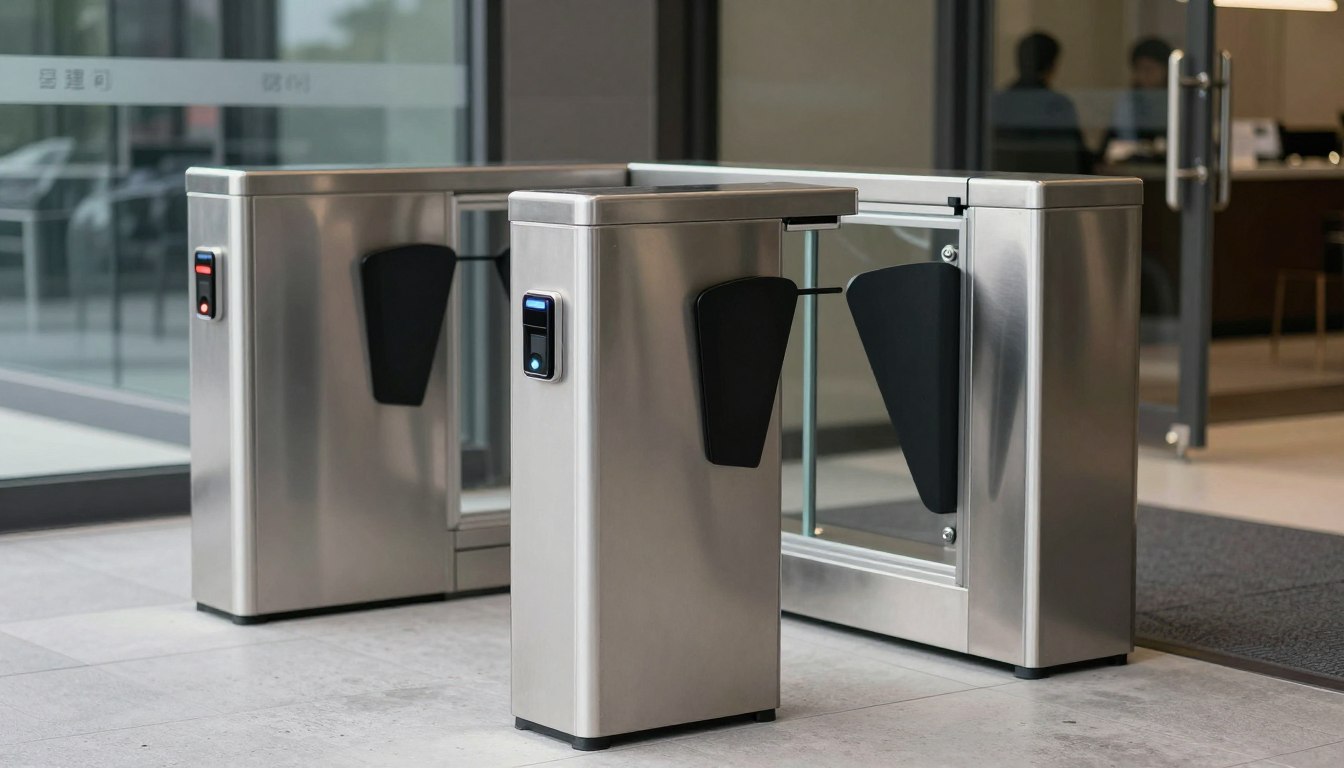
Reader selection must match the building environment. Outdoor doors require equipment rated for heat, moisture, and vandalism exposure. Glass entrances, turnstiles, elevator lobbies, and emergency exits each have different hardware and installation requirements. A site survey should confirm the door condition, lock type, power availability, cable path, and fire-life-safety requirements before equipment is ordered.
The Office Access Badge System Guide to Core Components
An effective access control system consists of more than badges and wall-mounted readers. Each component has a role in keeping entry reliable and manageable.
The reader captures a credential and sends the request to a controller. The controller applies access rules and operates the lock hardware. Door contacts confirm whether a door is open or closed, while request-to-exit devices allow people to leave safely. Power supplies, backup power, cabling, and network connections support the system behind the door.
The management platform is equally significant. It is where administrators issue badges, create access groups, set schedules, review activity, and remove access when employment or contractor status changes. Cloud-managed platforms can simplify multi-site administration, while on-premises systems may suit organizations with particular IT governance, connectivity, or data control requirements. The right choice depends on operational policy, internal support capacity, and the consequences of an internet outage.
A well-designed system also defines fail-safe and fail-secure behavior. Some doors must release during a fire alarm event to support safe egress. Others may remain secured during a power interruption, subject to local codes and the application. These decisions must be coordinated with qualified installers, door hardware specialists, and the authority having jurisdiction. Security should never interfere with life safety.
Plan the Infrastructure Before Installation
Access control performs best when it is treated as part of the workplace infrastructure. Retrofitting doors without considering structured cabling, network switching, power, and pathways often leads to exposed wiring, incomplete monitoring, or expensive changes later.
During design, determine whether controllers will connect over the corporate network, a dedicated security network, or another managed architecture. Network segmentation, secure administrative accounts, software updates, and backup procedures deserve the same attention given to other connected business systems. A badge platform may hold sensitive employee information and entry records, so it should not be left outside normal IT security practices.
Cabling should be sized and routed for maintainability, not simply installed along the quickest visible path. When an office is relocating or expanding, it is usually more cost-effective to coordinate access control cabling with data cabling, wireless access points, IP telephony, CCTV, and electrical works. One coordinated plan reduces contractor overlap and makes future troubleshooting easier.
Door hardware is another common source of project delays. A reader can only control a door that has the correct electric strike, magnetic lock, electrified lever, door closer, and alignment. Older doors may need repair or replacement before electronic access can operate consistently. Identifying these conditions during the survey prevents unpleasant surprises after the installation date is set.
Build a Deployment Plan That Limits Disruption
Most businesses cannot close their main entrance for an extended installation. A phased rollout can keep disruption low while giving the project team time to confirm how the system performs in real conditions.
Start with a pilot area such as the main entry and one restricted room. Test badge issuance, access schedules, door behavior, reporting, emergency release, and administrator permissions. Include reception staff, IT, facilities, and a small employee group in this stage. Their feedback often exposes practical issues, such as a reader location that creates congestion or a door schedule that does not reflect actual working hours.
Once the pilot is accepted, deploy remaining doors in planned groups. Issue credentials before cutover and maintain a controlled fallback process during the transition. Employees should know where to obtain help, what to do if a badge is lost, and how visitors will be admitted. Clear communication prevents access control from becoming a first-day frustration.
Commissioning should include documented testing for every opening. Confirm that authorized and unauthorized credentials behave as expected, doors report correctly, locks release under approved emergency conditions, and administrators can retrieve relevant events. The project handover should include as-built records, credential administration procedures, warranty information, and training for the people who will manage the system.
Keep Access Rights Current After Go-Live
The long-term value of an office badge system comes from disciplined administration. A system with strong technology but neglected user records can create the same exposure as an unlocked door.
Define a simple workflow for new hires, role changes, contractor access, lost badges, and departures. Access should be based on job function rather than assigned one person at a time wherever possible. For example, an accounting access group can be managed more consistently than individually adding the same doors to every new team member.
Review access rights at planned intervals, especially for sensitive areas. Audit reports can help investigate incidents, confirm procedures, and identify doors that are frequently propped open or used outside expected hours. Logs should be handled responsibly, with clear retention practices and access limited to authorized personnel.
System maintenance also matters. Test backup power, inspect door hardware, apply supported firmware and software updates, and verify that event reporting remains available. If the system integrates with CCTV, alarms, visitor management, or turnstiles, test those connections after updates rather than assuming they continue to operate correctly.
Evaluate Cost as a Lifecycle Decision
The lowest initial quote may exclude items that determine whether the system is dependable: door remediation, power supplies, network work, backup batteries, licensing, software support, credential printing, or training. Ask for a clear scope that distinguishes equipment, installation, infrastructure work, configuration, testing, and ongoing support.
Scalability has value, but overbuilding is also wasteful. A 10-door office does not necessarily need the same platform design as a 20-site enterprise. It does need an architecture that can add doors, users, and locations without replacing the original investment. Select a solution based on realistic growth plans, not only the door count on opening day.
An experienced systems integrator can coordinate access control with the network, cabling, CCTV, and door requirements that support it. I-Weblogic approaches these projects as connected workplace infrastructure, helping businesses reduce handoffs between separate vendors and plan for dependable day-to-day operation.
A well-planned badge system should become almost invisible to the people who use it. Employees enter where they need to work, administrators can make changes without delay, and leaders have clearer control over the spaces that matter most. That is the practical standard to use when evaluating every design and implementation decision.