
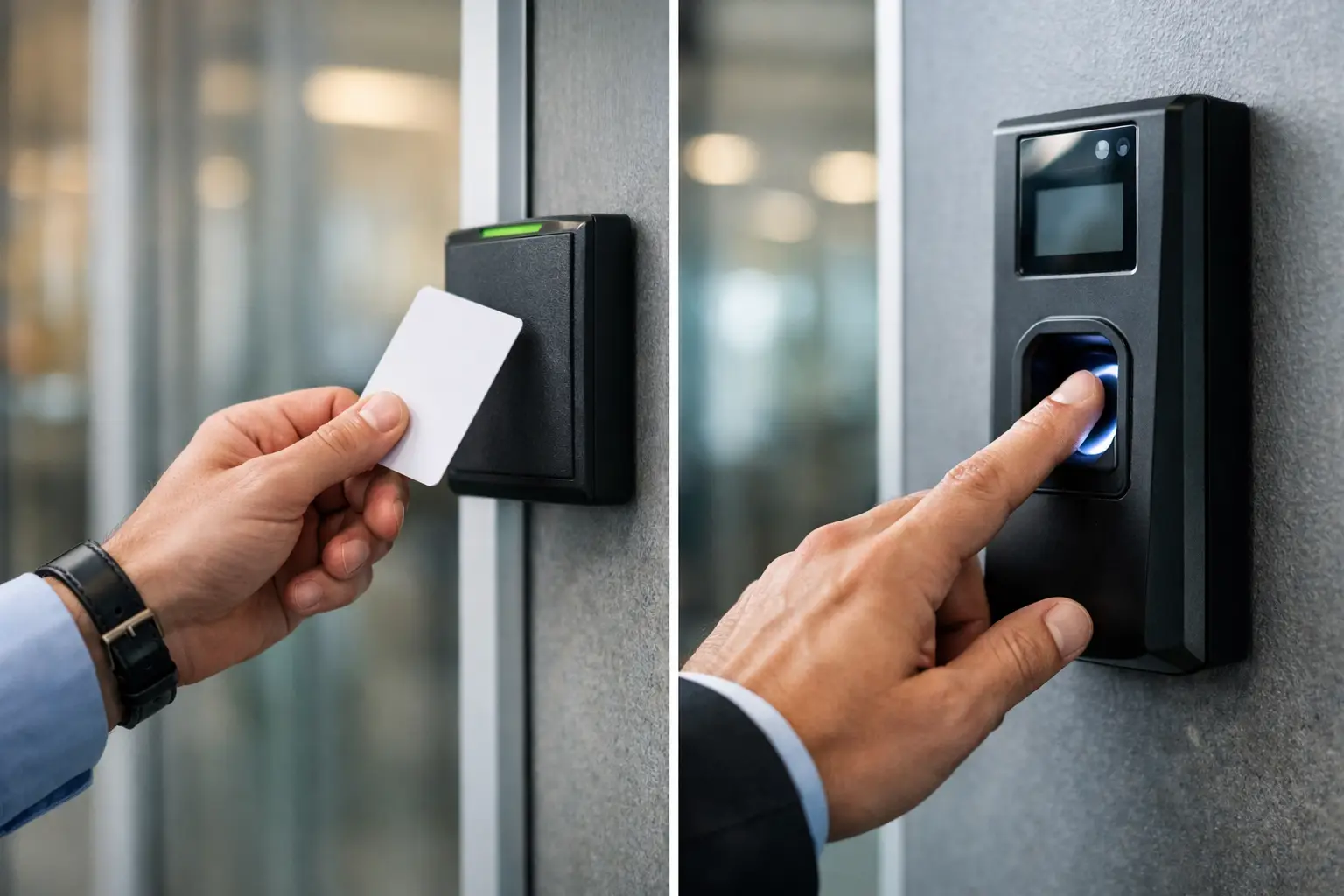
A lost access card can be canceled in minutes. A compromised biometric identifier is a much more sensitive issue. That practical difference sits at the center of the badge access vs biometric entry decision. For facilities, IT, and operations leaders, the right choice is not simply about selecting the most advanced reader. It is about balancing security risk, employee experience, privacy obligations, installation requirements, and the way people actually move through the workplace.
Both methods can support controlled, auditable access to offices, server rooms, warehouses, campuses, and multi-site operations. The stronger option depends on what you need to protect, how many users you manage, and how closely your access control system must work with doors, turnstiles, CCTV, cabling, and the wider network.
How Badge Access Works
Badge access uses a physical credential, typically a proximity card, smart card, key fob, or mobile credential, presented to a reader. The system checks the credential against permissions held in the access control platform, then grants or denies entry. Administrators can set schedules, restrict access by location, and review entry events when an incident needs investigation.
For most businesses, this approach remains the practical baseline. Cards are familiar to employees, fast at busy entry points, and relatively straightforward to issue, replace, and deactivate. A new employee can receive a credential on day one, while a departing employee’s access can be removed centrally without needing to change locks.
Badge systems are also flexible. A single credential may support building entry, secured floor access, parking barriers, lockers, printers, or visitor management workflows. In a corporate office or education environment with frequent movement between zones, that convenience matters.
The weakness is clear: a badge proves possession, not identity. Cards can be lost, loaned, stolen, or used by someone following an authorized person through a door. Higher-security environments can reduce this exposure with anti-passback settings, turnstiles, CCTV verification, and policies that discourage tailgating, but the credential itself can still be shared.
How Biometric Entry Changes the Security Model
Biometric entry verifies a personal characteristic rather than an item someone carries. Depending on the system, this may be a fingerprint, face, palm, iris, or vein pattern. The reader compares the presented biometric data with an enrolled template and permits entry when there is a valid match.
The principal advantage is stronger identity assurance. A user cannot casually hand their fingerprint or face to a colleague to gain access. That makes biometrics useful at locations where access must be attributable to a specific individual, such as data rooms, laboratories, high-value storage areas, restricted records rooms, and controlled production spaces.
It can also reduce day-to-day friction. Employees do not need to remember a card or carry a key fob, and administrators do not need to replace credentials as often. At a well-designed entry point, facial or palm recognition can support efficient movement without a person stopping to search for a badge.
However, biometric entry is not automatically the best answer for every door. Performance depends on reader placement, lighting, user enrollment quality, environmental conditions, and the technology selected. Fingerprint readers may be less convenient for staff wearing gloves or working in dusty settings. Facial recognition requires careful camera positioning and may create user concerns in shared workplaces. A reliable system needs testing in the actual operating environment, not just a favorable product demonstration.
Badge Access vs Biometric Entry: The Business Trade-Offs
The decision should begin with the operational requirement, not the reader. A reception door serving hundreds of employees each morning has different needs from a server room accessed by a small group of authorized technicians.
Security and identity assurance
Biometrics generally provide stronger confirmation that the approved person is the one entering. This is especially valuable where credential sharing would create material business, safety, or compliance risk. Badge access is still highly secure when properly managed, particularly for general workplace access, but it does not eliminate the possibility of card misuse.
For many organizations, the most sensible design is not an either-or decision. A badge or mobile credential can handle routine entry, while a biometric verification step protects selected high-risk doors. This layered approach applies security where it is justified without slowing every employee movement across the building.
Cost and lifecycle management
Badge access often has a lower initial cost per user and can be expanded easily as headcount grows. Cards and fobs are inexpensive compared with biometric readers, and replacement procedures are familiar to most office administrators. The larger costs still depend on the complete installation: controllers, locks, door hardware, power, network cabling, software licensing, and integration work.
Biometric systems can reduce recurring credential replacement, but equipment costs and implementation planning may be higher. Organizations should also budget for enrollment, user support, system administration, and a fallback method for exceptions. If a reader is offline, a user has an injury affecting fingerprint recognition, or a visitor needs temporary access, the process must remain secure and workable.
Privacy, consent, and employee confidence
Biometric data deserves stricter governance than a badge number. Businesses must understand applicable privacy laws, establish a clear purpose for collection, limit access to biometric records, define retention periods, and communicate how the data is protected. The exact legal requirements vary by jurisdiction, industry, and workforce arrangement, so policy review should be part of the project from the start.
Good biometric access control should store protected templates rather than simple image files, but that does not remove the need for responsible administration. Employees and visitors may have legitimate questions about enrollment, data use, and what happens when they leave the organization. Clear answers build trust and reduce rollout resistance.
Badge systems also require privacy controls because entry records show when individuals access locations. Yet the governance burden is generally lower than it is for biometric identifiers. If your organization does not have a compelling reason to collect biometrics, a well-managed badge system may be the more proportionate choice.
Speed, convenience, and user adoption
At high-traffic entry points, seconds matter. A queue at a turnstile can affect employee experience, visitor flow, and emergency egress planning. Badge readers are predictable because users know the action required: present the credential and proceed. Mobile credentials can further reduce physical card handling when employees already use smartphones for workplace tools.
Biometric systems can be equally fast when the reader and enrollment process are appropriate for the setting. They may be less practical when users wear personal protective equipment, change appearance frequently, or work in conditions that affect recognition. Test the proposed method with real user groups, including shift workers, contractors, and employees who may need accessibility accommodations.
Design the Full Access Control System, Not Just the Door Reader
An access reader is only one part of the security environment. The strongest results come from coordinated decisions around door hardware, controller capacity, network connectivity, power protection, emergency release requirements, and management software. A biometric reader on a poorly secured door or an access control platform with unreliable network connectivity will not deliver the intended protection.
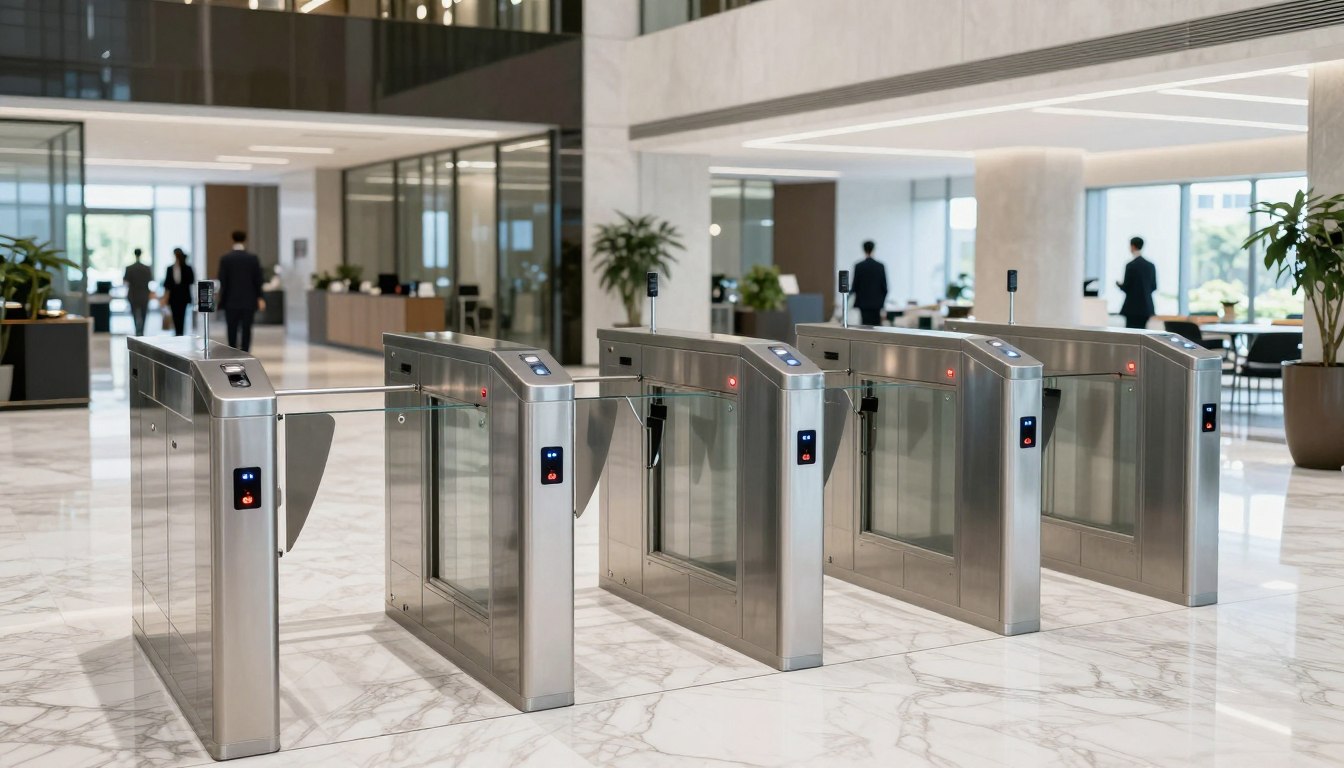
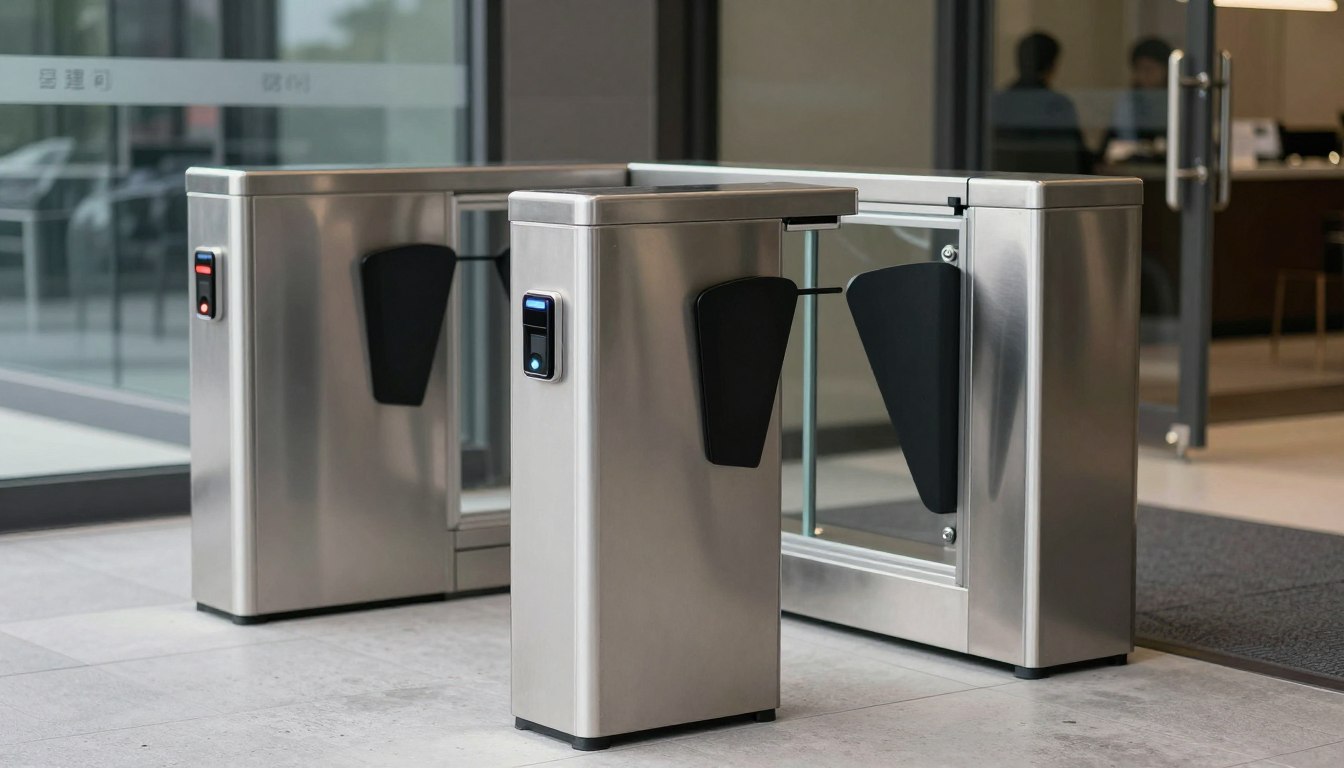
Integration can make the system more useful operationally. When access events are correlated with CCTV footage, security teams can investigate incidents faster. Turnstile integration can reduce tailgating at busy entrances. Centralized management helps multi-site organizations apply consistent permissions while allowing local teams to manage everyday exceptions. Network segmentation and secure configuration are also essential where readers and controllers communicate across the business network.
This is where experienced systems integration matters. During an office relocation, expansion, or security upgrade, physical security should be planned alongside structured cabling, wireless coverage, network equipment, and power requirements. Addressing these dependencies early reduces change orders, avoids duplicate work, and makes future expansion easier.
A Practical Selection Approach
Start by classifying doors according to risk and traffic. Main entrances, standard office areas, executive floors, IT rooms, stock areas, and sensitive records storage should not necessarily use the same authentication method. Then identify the consequences of unauthorized access at each zone, along with the expected number of daily users.
Next, assess your administrative capacity. A system that requires extensive manual enrollment or exception handling may not suit a lean operations team. Consider how contractors, visitors, temporary staff, and employees without compatible devices will be managed. Confirm whether the platform can scale to additional locations and integrate with the security and network systems you already operate.
Finally, make privacy and continuity part of the design. Establish who can access audit logs, how permissions are reviewed, what happens during network or power disruption, and how users enter when their primary credential fails. These details determine whether access control remains dependable under normal conditions and during an incident.
For most workplaces, badge access is a cost-effective, scalable choice for everyday movement. Biometric entry earns its place where verified identity carries greater weight than convenience or lower deployment cost. The most effective system is often a measured combination of both, designed around real business risk rather than a one-size-fits-all technology preference.
When planning your next security upgrade, begin with the doors, people, and operational scenarios that create the greatest exposure. That conversation will point to the right credential strategy and a system that supports growth without adding unnecessary complexity.
Pingback: Office Access Badge System Guide for Businesses - I-Weblogic Pte Ltd
Pingback: Secure Office Entry Methods for Modern Teams - I-Weblogic Pte Ltd
Pingback: Commercial Door Entry Solutions That Fit Your Site - I-Weblogic Pte Ltd