A phone system usually gets attention only when it fails – dropped calls, poor audio, confused routing, or a move to a new office that exposes how outdated the setup really is. That is why an office phone system comparison should start with operations, not features. The right system is the one that supports how your team works every day, fits your network and cabling environment, and can scale without forcing another replacement in two years.
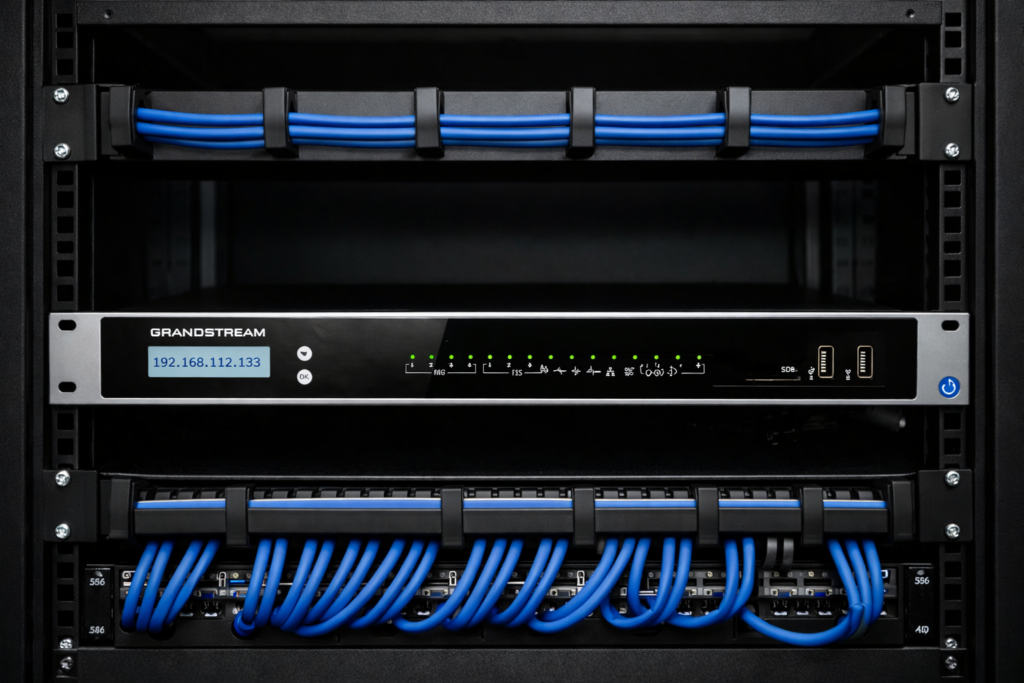
For most businesses, the real decision is not simply which handset or provider to choose. It is whether cloud VoIP, on-prem IP telephony, or a hybrid model makes the most sense for your site conditions, call volume, security requirements, and growth plans. Each option can work well. The difference is in how much control you need, how much internal IT support you have, and how much disruption your business can tolerate during deployment and maintenance.
Office phone system comparison by deployment model
Cloud VoIP is often the first option businesses consider because the upfront cost is usually lower. Instead of investing heavily in on-site PBX hardware, companies subscribe to a service and connect phones over their network. This works well for organizations with remote staff, multiple locations, or businesses that need to add and remove users quickly. It also reduces the burden of maintaining core phone infrastructure in-house.
The trade-off is dependency. Call quality and reliability are tied more closely to your network performance and internet stability. If your switching, wireless coverage, bandwidth allocation, or firewall policies are not designed properly, the phone system may underperform even if the service itself is solid. For that reason, cloud VoIP is often a strong choice, but only when the underlying network is ready for voice traffic.
On-prem IP telephony gives businesses more direct control. The PBX sits on-site, and that can be appealing for organizations with stricter internal policies, specific integration needs, or sites where internet dependency is a concern. Some companies also prefer the predictability of owning the infrastructure rather than paying recurring subscription costs for every user.
The downside is that ownership comes with responsibility. On-prem systems generally require more planning, more technical oversight, and more attention to redundancy, updates, and hardware lifecycle management. They can be cost-effective over time, but they are rarely the simplest option for lean teams.
Hybrid systems sit in the middle. They allow some functions to remain on-site while others move to the cloud. This can be useful during phased upgrades, mergers, office relocations, or when a business wants to keep certain call flows local while giving mobile or branch teams cloud flexibility. Hybrid setups can solve real operational problems, but they also require careful design. If the architecture is unclear, the result can be harder to support than either a fully cloud or fully on-prem approach.
What matters more than features
A long feature list can make two systems look similar when they are not. Auto attendant, voicemail, call forwarding, ring groups, and mobile apps are common enough now that they should not drive the whole decision. A better office phone system comparison looks at how well the system performs under business conditions.
Start with reliability. If your team handles customer service, sales inquiries, dispatch, appointment booking, or internal coordination across departments, dropped calls are more than an inconvenience. They affect revenue, productivity, and customer trust. Reliability depends on more than the phone platform. It is shaped by structured cabling quality, switch capacity, QoS configuration, Wi-Fi design where wireless handsets are used, and power backup planning.
Security is another practical factor that gets underestimated. Phone systems now sit inside broader IP environments. That means voice traffic, user access, remote management, and endpoint devices all create risk if not configured correctly. Businesses in regulated sectors, schools, shared office environments, and multi-site operations should look closely at access controls, segmentation, and administrative visibility.
Scalability also needs a realistic view. A 20-person office today may become a 60-person operation after expansion or relocation. A single site may become three branches. If adding users, extensions, or call paths requires major redesign, the system may be cheaper now but more expensive later. Good planning avoids that trap.
Cost comparison without guesswork
Cost is one of the main reasons businesses revisit their phone system, but comparing monthly pricing alone gives an incomplete picture. Cloud systems typically lower initial capital spending, which helps when cash flow or deployment speed is the priority. The monthly subscription can be easy to budget, especially for growing teams.
On-prem systems often involve a higher upfront investment for PBX hardware, licensing, installation, and supporting network adjustments. Over time, though, some businesses find the total cost more favorable, particularly if user counts are stable and the system remains in service for years.
The hidden costs usually sit elsewhere. Poor cabling, aging switches, weak wireless coverage, limited UPS protection, or poor integration with the rest of the office environment can create performance issues that force rework. The same applies when businesses buy a phone platform without considering how it connects to door access, intercoms, paging, meeting rooms, or multiple office zones.
That is why the cheapest option on paper is not always the lowest-cost decision. A better approach is to compare total deployment impact, ongoing management effort, expected lifespan, and the cost of downtime if the system fails at a critical moment.
How office environment changes the right answer
Not every business should choose the same phone system, even if they have similar headcount. A professional services office with predictable desk-based calling may do well with a straightforward cloud deployment and a stable LAN. A school campus or warehouse office may need broader integration with paging, access control, and distributed endpoints. A multi-floor corporate site may require more structured planning around cabling, PoE switching, and resilience.
Office moves are another point where phone decisions often go wrong. Companies treat telephony as a late-stage item, then discover too late that the cabling layout, network rack design, internet provisioning, and workstation placement were not coordinated with the voice rollout. That creates avoidable delays. In practice, the best phone projects are tied into the wider infrastructure plan from the start.
For businesses modernizing several systems at once, integration matters. Voice should not be isolated from the rest of the environment. If your organization is upgrading structured cabling, wireless networking, CCTV, or access control, it makes sense to evaluate the phone system in that same context. A coordinated implementation is usually more stable and easier to support than a patchwork of disconnected vendors.
Questions business buyers should ask vendors
The right vendor discussion should move beyond brand names and package tiers. Ask how the system will perform on your current network, what changes may be required, how failover is handled, and what happens if your office loses internet or power. Ask whether the provider can assess cabling, switching, and endpoint placement before recommending a design.
You should also ask who owns the problem when call quality drops. In many environments, voice issues are not caused by the handset or PBX alone. They stem from network congestion, poor segmentation, bad wireless design, or infrastructure that was never intended for real-time traffic. A vendor that can only talk about phones, but not the supporting environment, may leave gaps in accountability.
Support model matters too. Some businesses are comfortable with a standardized service and remote ticketing. Others need local deployment, site surveys, expansion planning, and a partner that can work across telephony, cabling, and network services. Neither model is automatically better, but they suit different operating realities.
Choosing the best fit for your business
If your priority is flexibility, rapid deployment, and easier support for hybrid work, cloud VoIP is often the strongest fit. If your priority is control, local infrastructure ownership, or specialized integration, on-prem IP telephony may be the better choice. If your business is transitioning gradually or balancing several site requirements, a hybrid model can be the practical middle ground.
What matters most is not choosing the most advanced option. It is choosing the one that fits your environment and can be implemented cleanly. For many organizations, that means treating telephony as part of a wider business infrastructure strategy rather than a standalone purchase. Companies such as I-Weblogic Pte Ltd are often brought in for exactly that reason – to align voice, cabling, network readiness, and site operations so the system works in real business conditions, not just in a product demo.
A good phone system should feel unremarkable once it is live. Calls connect clearly, teams can move without disruption, and expansion does not trigger another rebuild. That is usually the clearest sign you made the right choice.