An office can look finished while its infrastructure is already limiting the business. Wi-Fi dead zones, too few data outlets, inaccessible cable routes, and disconnected security systems are often discovered after staff move in, when changes cost more and disrupt operations. This telecommunication infrastructure planning guide helps decision-makers prevent that outcome by treating connectivity, cabling, and physical security as one coordinated project.
The objective is not to install the most equipment. It is to build a dependable foundation for how people work now, while leaving practical capacity for change. Whether the project is an office relocation, a retail rollout, a school upgrade, or an expansion across multiple sites, early decisions determine the cost, reliability, and maintainability of the environment for years.
Start With Business Operations, Not Equipment
Infrastructure planning should begin with the business functions the site must support. A 40-person office with video meetings, cloud applications, IP phones, visitor management, and hybrid work has different requirements from a warehouse with handheld devices, cameras, access-controlled doors, and intermittent high-bandwidth activity.
Ask department leaders where work happens, how people move through the space, what must remain available, and what growth is expected over the next three to five years. IT, facilities, operations, security, and finance should be involved early. Each team sees a different risk: IT may focus on capacity and administration, while facilities may identify ceiling constraints, power limitations, or landlord rules that affect installation.
Define service expectations in clear operational terms. For example, a reception desk may require uninterrupted IP telephony and visitor access control. Executive meeting rooms may need stable wireless coverage and wired connections for video conferencing. Finance or server rooms may require tighter physical access restrictions. These requirements are more useful than a generic request for “better Wi-Fi.”
Build a Site Baseline Before Designing
A proper site assessment turns assumptions into a plan. During a relocation or renovation, obtain current floor plans, reflected ceiling plans, electrical layouts, and landlord or building-management requirements. In an existing site, assess what is already installed and what can realistically be reused.
The assessment should map the telecommunications room or rooms, riser access, cable pathways, ceiling space, power availability, grounding, cooling, and the routes between floors or buildings. It should also identify locations for workstations, printers, wireless access points, cameras, doors, turnstiles, meeting-room equipment, and digital displays.
Existing cabling should be tested and documented rather than accepted on appearance alone. Older copper cabling may support basic connectivity but fall short of the power and bandwidth requirements for newer wireless access points, cameras, or high-speed workstation connections. Fiber may be needed between floors, buildings, or network closets where copper distance limits apply.
A wireless survey is equally valuable. Coverage is affected by concrete walls, glass partitions, metal shelving, elevator cores, machinery, and dense user areas. Designing from a floor plan alone can lead to access points in poor positions or an expensive round of adjustments after occupancy.
Plan the Physical Layer for Capacity and Access
Structured cabling is the part of the project that is hardest and most disruptive to alter later. It deserves more attention than it typically receives. The design should provide appropriately located outlets, labeled pathways, organized racks, and enough spare capacity to accommodate new users and systems.
Avoid planning only for assigned desks. Consider meeting rooms, reception counters, training rooms, break areas, printers, wireless access points, CCTV cameras, access-control readers, and future workspace changes. A small additional investment in outlets and containment during construction is usually far less costly than opening ceilings or walls later.
Cable category selection depends on bandwidth targets, device power requirements, distance, budget, and anticipated lifespan. Cat6 may be suitable for many business environments, while Cat6A can be justified where higher-speed connectivity, greater power delivery, or a longer upgrade horizon is required. The right choice depends on the design, not a blanket rule.
Fiber planning should include both current backbone needs and future expansion. Multi-floor offices, campuses, and multi-building facilities benefit from a fiber backbone that provides distance, capacity, and electrical isolation. Ensure there are spare strands or practical routes for adding them. Planning a pathway without room for growth only postpones the same construction issue.
Every cable, patch panel, faceplate, and rack position should be labeled consistently. Accurate labeling and as-built documentation reduce troubleshooting time, improve change management, and make it easier for internal teams or service providers to work safely after handover.
Coordinate Network, Voice, and Security Design
Cabling alone does not create a working business environment. The network design must account for traffic, device types, segmentation, internet resilience, and management requirements. Business systems should be separated according to risk and purpose. Staff devices, guest Wi-Fi, IP phones, cameras, building systems, and access-control equipment should not all operate as one unrestricted network.
Segmentation helps limit the effect of a compromised or malfunctioning device and makes policy management more practical. A firewall, properly configured switches, secure wireless settings, and monitored network equipment all play a role. The appropriate design depends on the organization’s risk profile, remote-access needs, compliance obligations, and internal IT capability.
IP telephony should be planned alongside the data network. Confirm the number of users, call flows, reception requirements, paging needs, internet capacity, power backup expectations, and integration with existing systems. Voice quality can suffer if it is treated as an afterthought on an overloaded network.
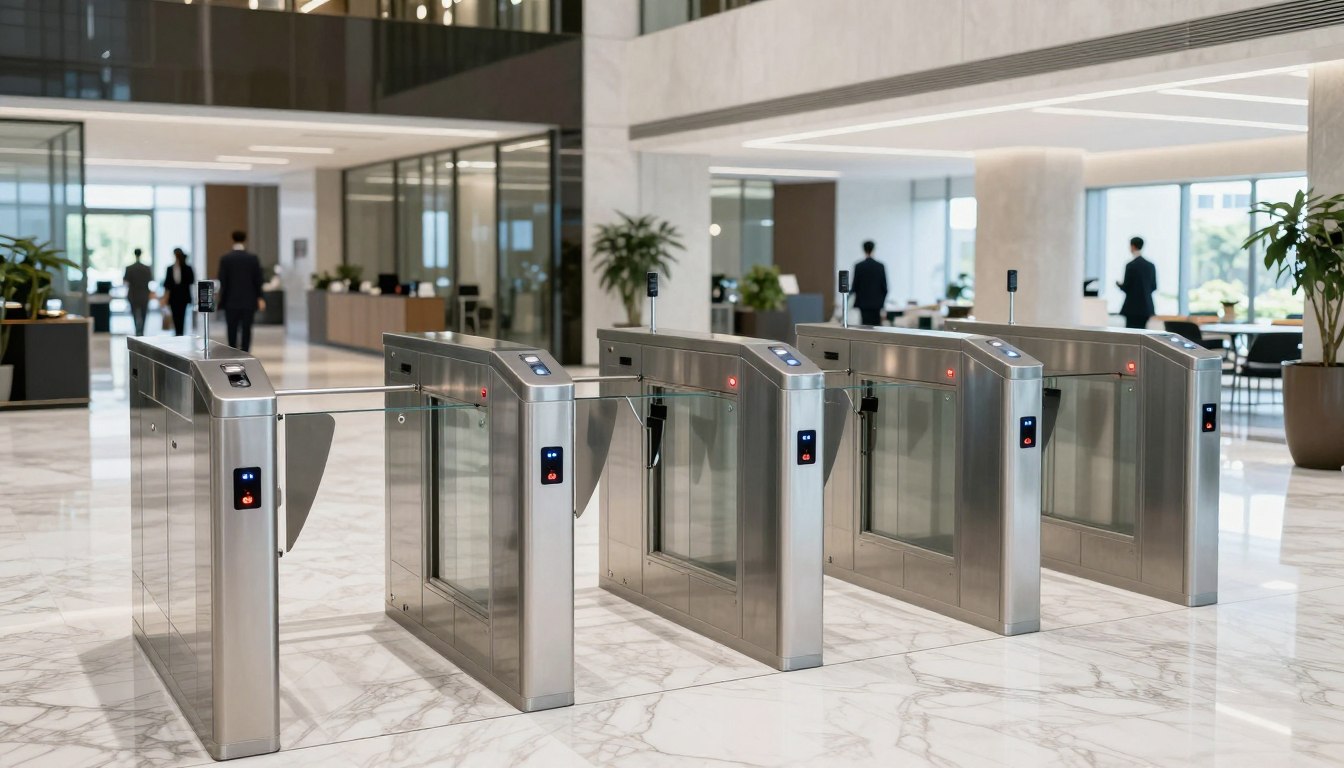
Physical security must also be included in the same discussion. CCTV cameras require thoughtful placement, storage planning, network bandwidth, and power. Biometric readers, keyless entry, door controllers, and turnstiles require coordination with doors, life-safety rules, electrical works, and user workflows. A door may be technically secure but operationally frustrating if visitor access, deliveries, emergency egress, and staff movement were not considered in advance.
Design for Failure, Maintenance, and Change
The best infrastructure plans acknowledge that equipment can fail and business needs can shift. The question is not whether every component needs duplication. It is which failures would create an unacceptable operational impact.
For some organizations, a secondary internet connection, backup power for core equipment, or redundant network links may be worthwhile. For others, the budget is better directed toward quality cabling, clear documentation, monitored equipment, and a defined response process. The right level of resilience should reflect downtime costs, not simply technical preference.
Plan the network room as an operational space, not a storage closet. It needs controlled access, sufficient rack space, ventilation, cable management, dedicated power, and room to service equipment. Placing essential switches in an inaccessible ceiling or crowding a rack to its limits can turn routine maintenance into a disruption.
Change is also inevitable. Departments expand, teams reorganize, and technology refreshes. Reserve rack units, switch ports, cable pathways, and electrical capacity where possible. This does not mean paying for unused equipment immediately. It means making later growth feasible without rebuilding the foundation.
Use a Phased Implementation Plan
A detailed implementation schedule protects the business from avoidable downtime. It should establish design approval, procurement lead times, cabling installation, testing, network configuration, security-system integration, user migration, and final documentation. Dependencies matter. Cameras cannot be fully commissioned without network connectivity, and a network cannot be reliably tested before cabling certification is complete.
During an office move, identify what must be operational on day one. Internet connectivity, core switching, wireless coverage, phones, reception systems, critical printers, and access control are common priorities. Noncritical enhancements can be phased if required, but the scope and timing should be explicit.
Testing should cover more than whether devices turn on. Cabling should be certified, wireless coverage validated, voice calls checked, security events tested, and failover behavior reviewed where backup services are included. Staff should also receive the documentation and basic handover information needed to operate the environment confidently.
Choose Accountability Over Fragmented Delivery
Infrastructure projects often involve electricians, renovation contractors, internet providers, IT teams, security vendors, and building management. Without coordination, gaps appear between scopes. One party installs a camera, another supplies network ports, and neither confirms recording, power, cable routing, or final testing.
A systems-integration approach reduces these handoff risks by coordinating structured cabling, wired and wireless networking, IP telephony, and physical security as connected elements. I-Weblogic brings this practical approach to infrastructure implementations, helping organizations align technical decisions with the realities of construction, operations, and future expansion.
Before work begins, confirm who owns the design, approvals, installation standards, testing, documentation, and post-install support. Lowest initial price is not always the lowest project cost if it creates rework, unclear accountability, or an environment that is difficult to maintain.
A well-planned infrastructure project gives employees technology they can rely on without having to think about it. That outcome begins long before devices are installed: with clear business requirements, disciplined site planning, and a delivery partner prepared to coordinate every layer that keeps the workplace running.